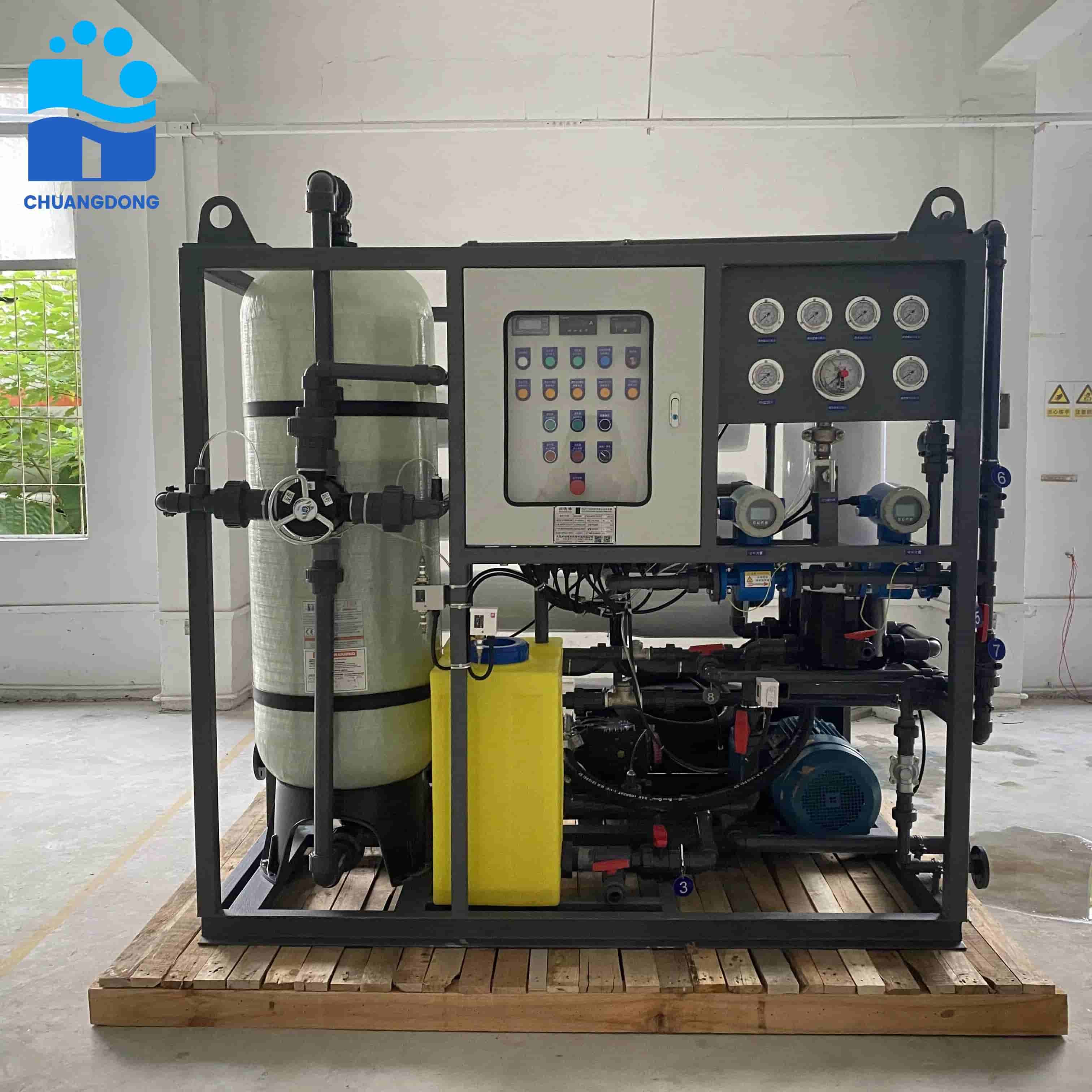
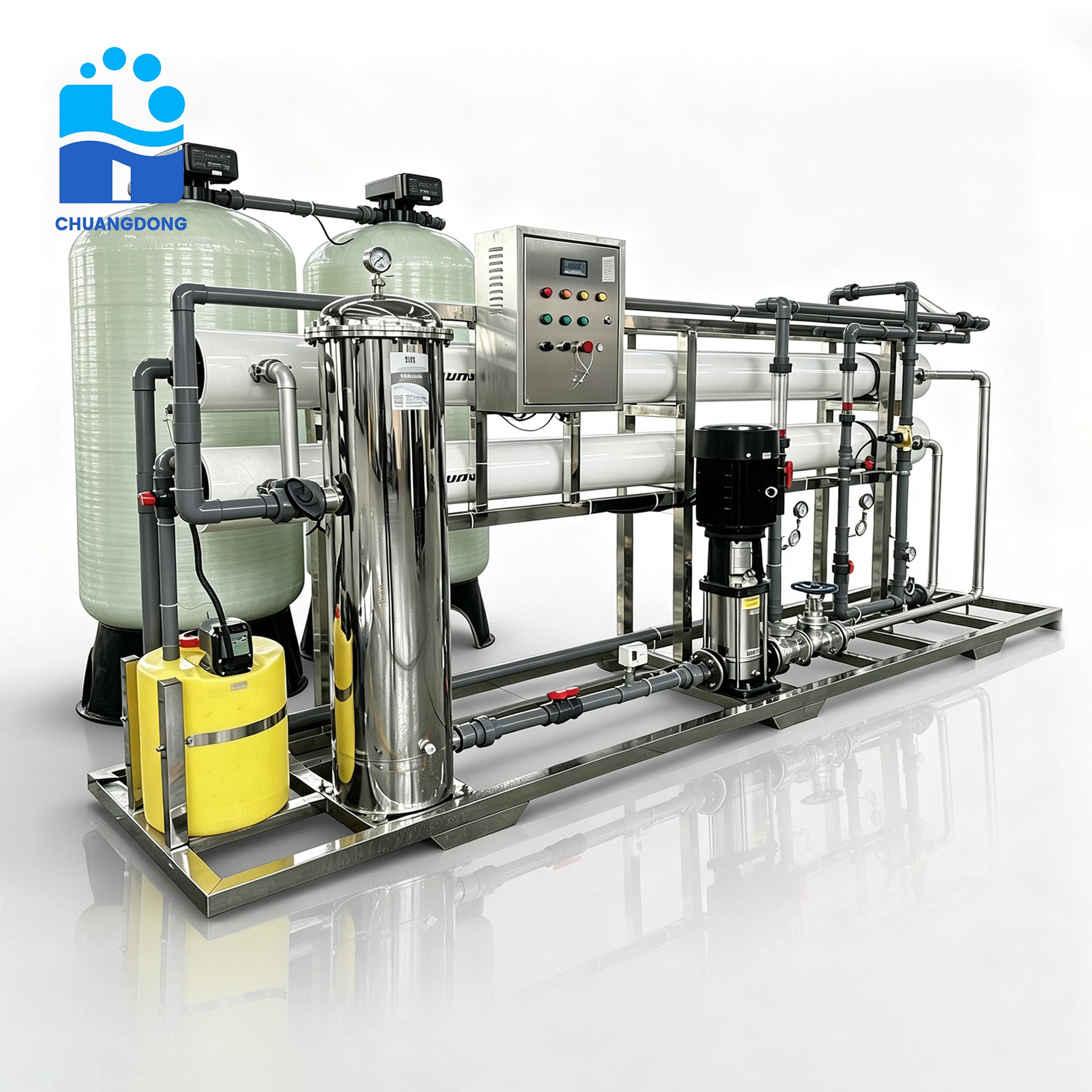
In ship operations, the water system is often not treated as a complete, unified system in the way fuel or power systems are. In fact, the water supply setup on many vessels is a patchwork of independent components—watermakers, pump units, pressure control devices, hot water systems, and similar treatment equipment—often sourced from different suppliers.
However, ensuring water quality onboard does not depend on the performance of any single piece of equipment. It depends on whether the entire supply chain can operate together cohesively. From freshwater production or shore-based bunkering, to subsequent treatment, storage, distribution, and final use—treating each link as a standalone part makes it impossible to truly control water quality safety or overall system stability.
Hidden Critical Issues of Fragmentation
A common problem with onboard water systems is that they are not viewed as an integrated whole. Equipment from different suppliers is managed separately during design, procurement, and maintenance, resulting in a lack of unified system planning. When problems arise—such as discolored water, pipe corrosion, or abnormal microbial growth—the focus tends to be on the symptoms at the end of the system. Yet these are often only surface manifestations of deeper issues. Overemphasizing downstream outcomes while ignoring potential risks in the early stages (source water, treatment, storage, and distribution) rarely solves water quality problems at their root.
Ensuring onboard water quality is not something any single device can achieve; it results from the collaborative operation of the entire water supply chain. The ship’s water supply system must be designed, operated, and managed as a complete whole.
Understanding Onboard Water Demand: Comparable to a Small Municipal Utility
An effective way to grasp shipboard water management is to compare it with a hotel on land. A hotel draws water from a municipal network, but the operator is still responsible for the internal water system—pump configuration, pipe material selection, flushing low-flow areas, reducing dead legs, installing backflow preventers, conducting regular water quality testing, and implementing a thorough water management plan.
By contrast, the challenges onboard are even more complex. Besides managing water storage, distribution, and use, ship operators are typically also responsible for freshwater production or desalination. That means the onboard water system is not just a simple distribution network; it requires an integrated, end-to-end control approach.
What Do We Lose When the Water System Is Managed Fragmentedly?
When the water treatment system is a collection of independent devices rather than a unified system, key design performance parameters are often overlooked. Core indicators such as membrane permeate flow, filter loading, hydraulic retention time, and contact efficiency between treatment media and water are rarely included in ship specifications. Similar issues exist downstream. For example, even if individual components like water heaters fully meet their respective design requirements, without overall system calculations there is no guarantee that return water temperatures and supply stability under actual operating conditions will meet expectations. Each component may work fine in isolation, but parameter mismatches and operational variances across links accumulate, gradually eroding the overall efficiency, stability, and safety of the water supply system.
Neglected System Effects
Under fragmented management, each supplier optimizes its own scope. For instance, to meet delivery capacity requirements, water distribution pipes are often oversized. However, larger pipe diameters reduce flow velocity and increase water residence time, raising the risks of scaling, sediment buildup, and microbial growth. At the same time, bigger pipes add weight and installation costs. These potential consequences are seldom fully assessed during individual equipment selection or procurement. Such problems are not isolated incidents—they are common outcomes of a fragmented approach that overlooks overall system performance.
Why a Systematic Perspective Is Crucial
Water systems are often considered nonessential and are easily neglected. Rarely do they receive the same level of systems engineering and operational rigor as other onboard systems. On many ship projects, the water supply system is classified as auxiliary because, unlike propulsion or power systems, it does not directly generate operational value. Consequently, it seldom benefits from thorough systems engineering analysis or lifecycle management.
Yet the water supply system is inherently highly interconnected. Under current market frameworks, selecting different suppliers typically means each is responsible only for optimizing its own equipment’s performance, with no coordinated design for overall system performance. No one is held accountable for total system effectiveness.
From Equipment Thinking to System Thinking
As the international maritime industry continues to raise its standards for drinking water safety and operational reliability, focusing solely on the operation and management of individual equipment is no longer sufficient.
The critical shift is simple: stop evaluating the onboard water supply system as isolated pieces of equipment, and instead treat it as an integrated whole. Only by adopting a holistic system perspective—unified planning and management of water treatment, storage, and distribution—can we achieve consistently stable water quality control and reduce potential operational risks.
Even more importantly, this systemoriented management philosophy raises a key question: within the entire water supply chain, what is accountable for the overall system performance and the final water quality outcome?
If you are looking for a more reliable marine water supply solution, you are welcome to further discuss with Chuangdong Water Treatment. From solution design, equipment integration to on-site commissioning, we are committed to providing our clients with more stable and efficient integrated water treatment system support. We can also provide tailored system configuration recommendations based on your specific requirements.
 ×
×
 Hot News
 EN
EN