 ×
×
The industrial demand for a stable and high-quality process water supply is increasing, making an Industrial RO System an important part of modern water treatment infrastructure. There are several approaches to designing an Industrial RO System, but they all include some common components, such as membranes, pumps, and devices used to control flow and pressure. These components are integrated into the system to form a complete Industrial RO System.
For businesses planning to build a new water treatment plant, upgrade an existing facility, or integrate Reverse Osmosis Technology into their industrial processes, understanding these factors is essential for selecting the right system and avoiding unnecessary operating and maintenance costs.
An Industrial RO System, also known as an industrial reverse osmosis system, is a pressure-driven water purification system. Unlike conventional filtration, which mainly removes suspended particles, an Industrial RO System
uses a semi-permeable reverse osmosis membrane to separate water from dissolved substances, such as dissolved salts and other contaminants. Part of the water passes through the membrane as permeate, while the concentrated contaminants remain in the waste or concentrate stream.
Reverse Osmosis (RO) is a membrane separation process that reverses the natural direction of water movement through a membrane. Under natural osmosis, water typically moves from the side with a lower salt concentration to the side with a higher salt concentration through a semi-permeable membrane to balance the concentration difference between the two sides. In an Industrial RO System, when pressure higher than the osmotic pressure is applied to the feed water, water is forced to move in the opposite direction through the reverse osmosis membrane, passing toward the lower-salt side and producing purified water. During this process, the RO membrane primarily rejects dissolved salts, TDS, minerals, and various dissolved ions. The membrane system can achieve a dissolved salt rejection rate of 96%–99% or higher.
The result is two water streams: one is the high-quality water that passes through the membrane, known as permeate, while the other is the concentrated waste stream, known as concentrate or reject water. Modern thin-film composite (TFC) membranes offer high salt rejection and water flux, enabling Industrial Reverse Osmosis Systems to efficiently treat feed water from different sources.
If you would like to learn more about Reverse Osmosis Technology and how reverse osmosis membrane separation works in practice, you can continue reading our detailed introduction to reverse osmosis technology and membrane separation principles.
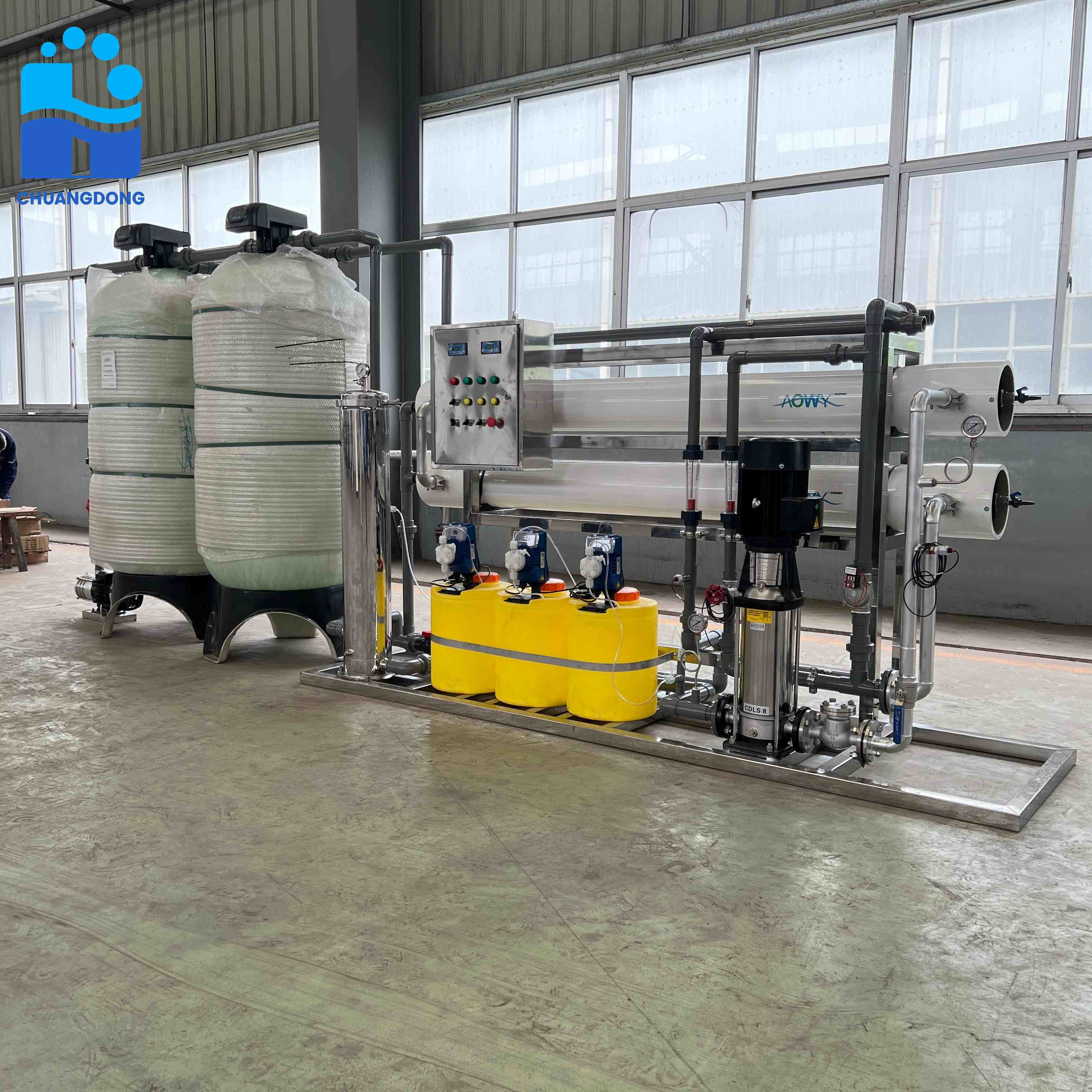
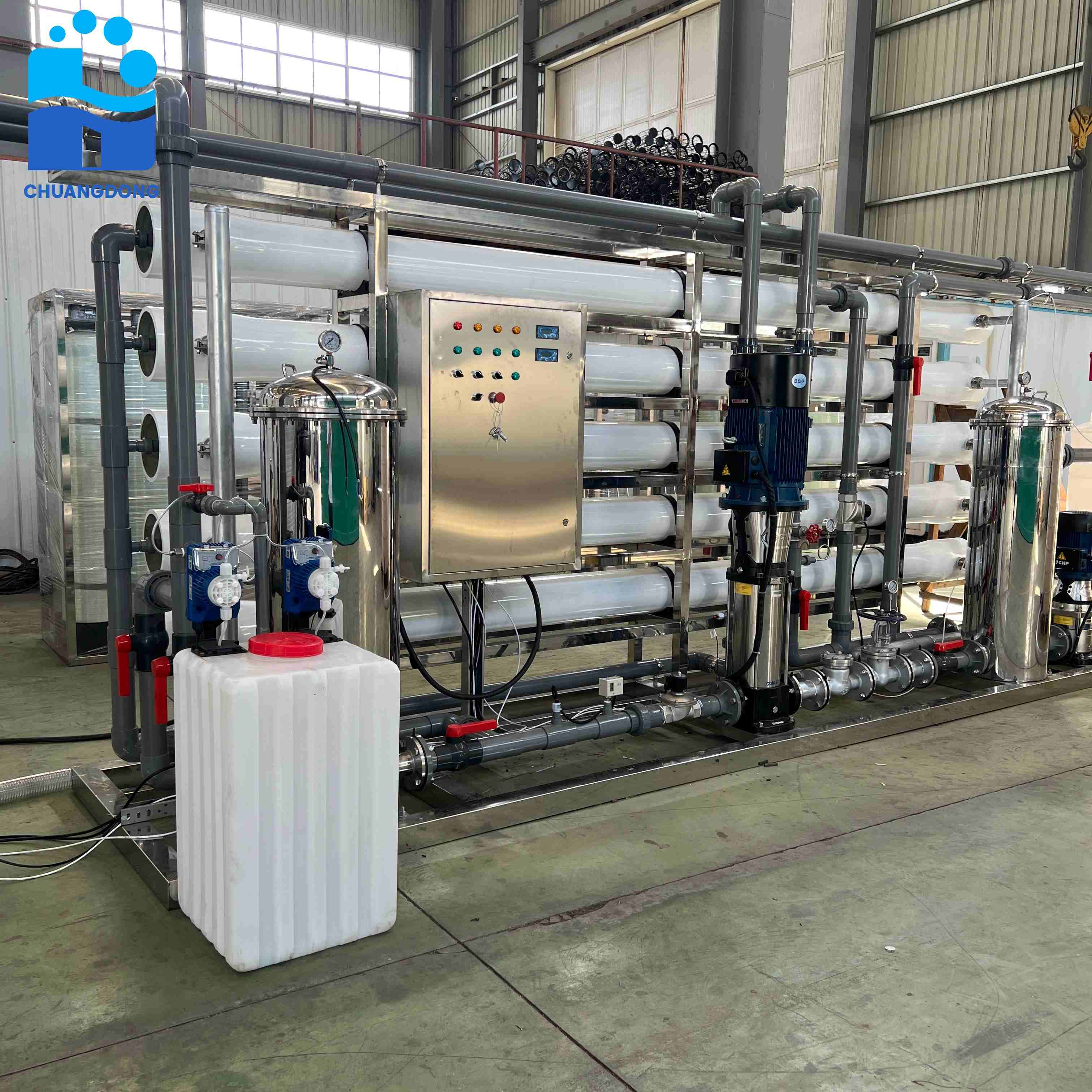
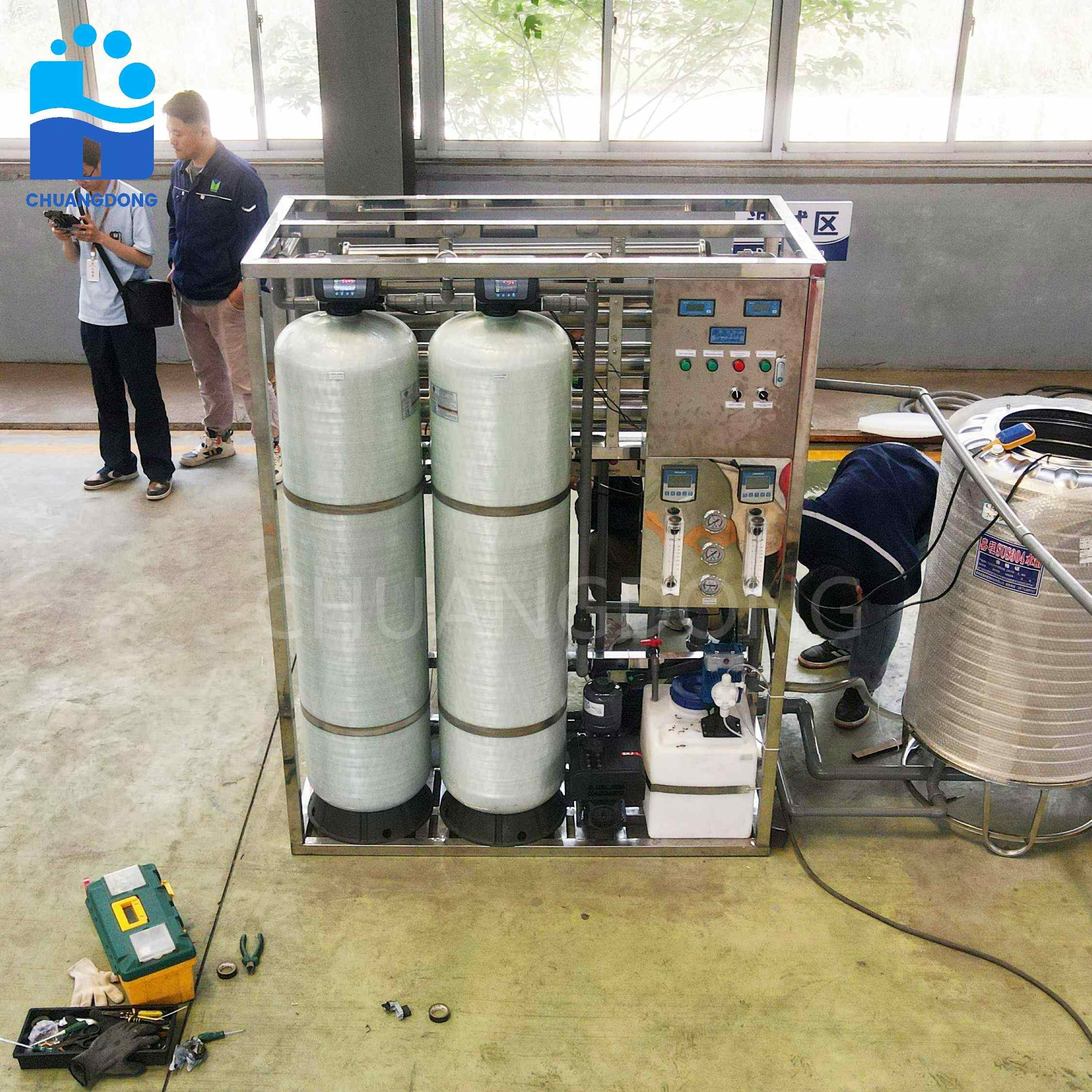
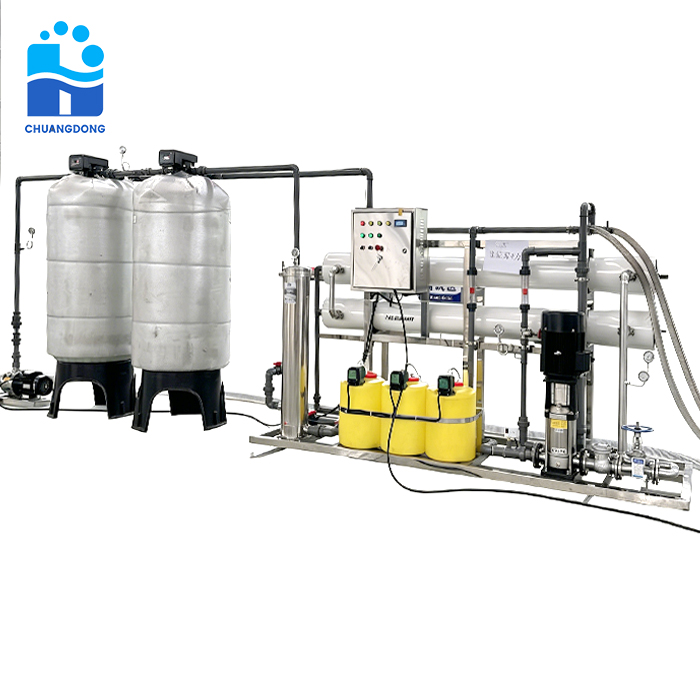
A complete Industrial RO System typically consists of multiple interconnected components. Below, we will break down the most important components and introduce the trusted brands used by Chuangdong.
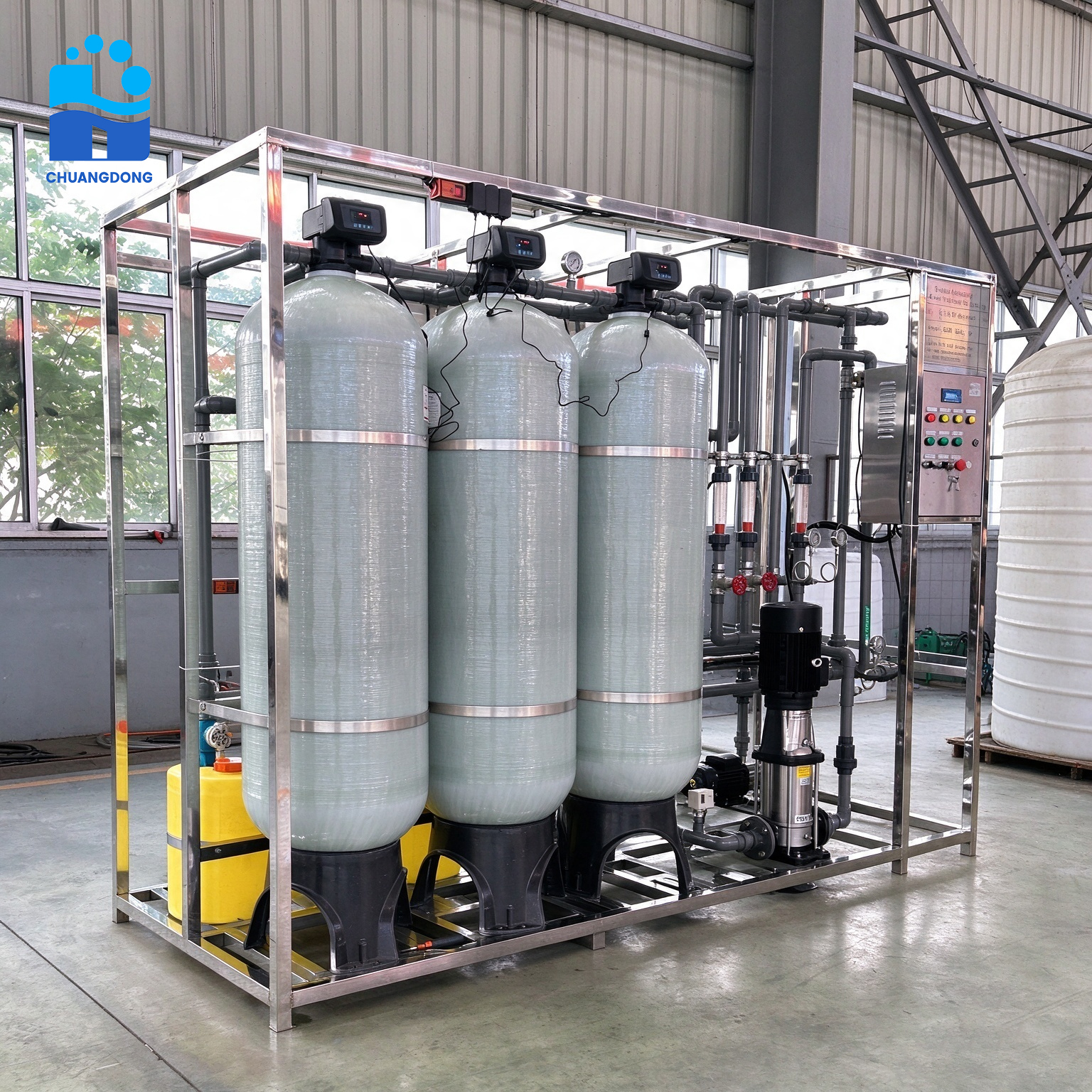
Pretreatment helps prevent scaling and fouling of downstream membrane elements. Depending on the water source, the Pretreatment System may include Activated Carbon Filtration, Water Softening, Antiscalant Dosing, Iron and Manganese Removal, Ultrafiltration, and Cartridge Filtration. The purpose is to protect the RO membrane and create suitable operating conditions for the reverse osmosis system.
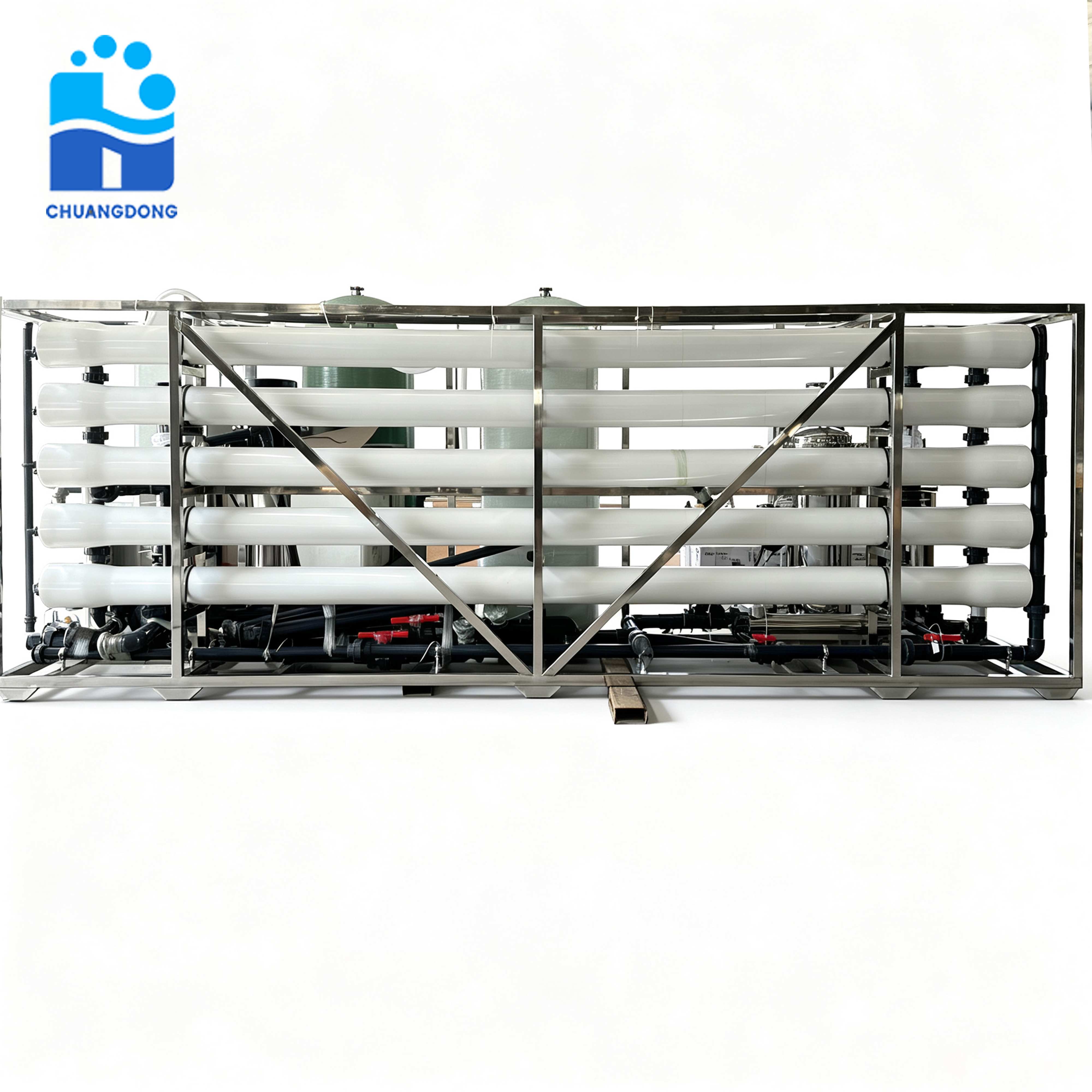
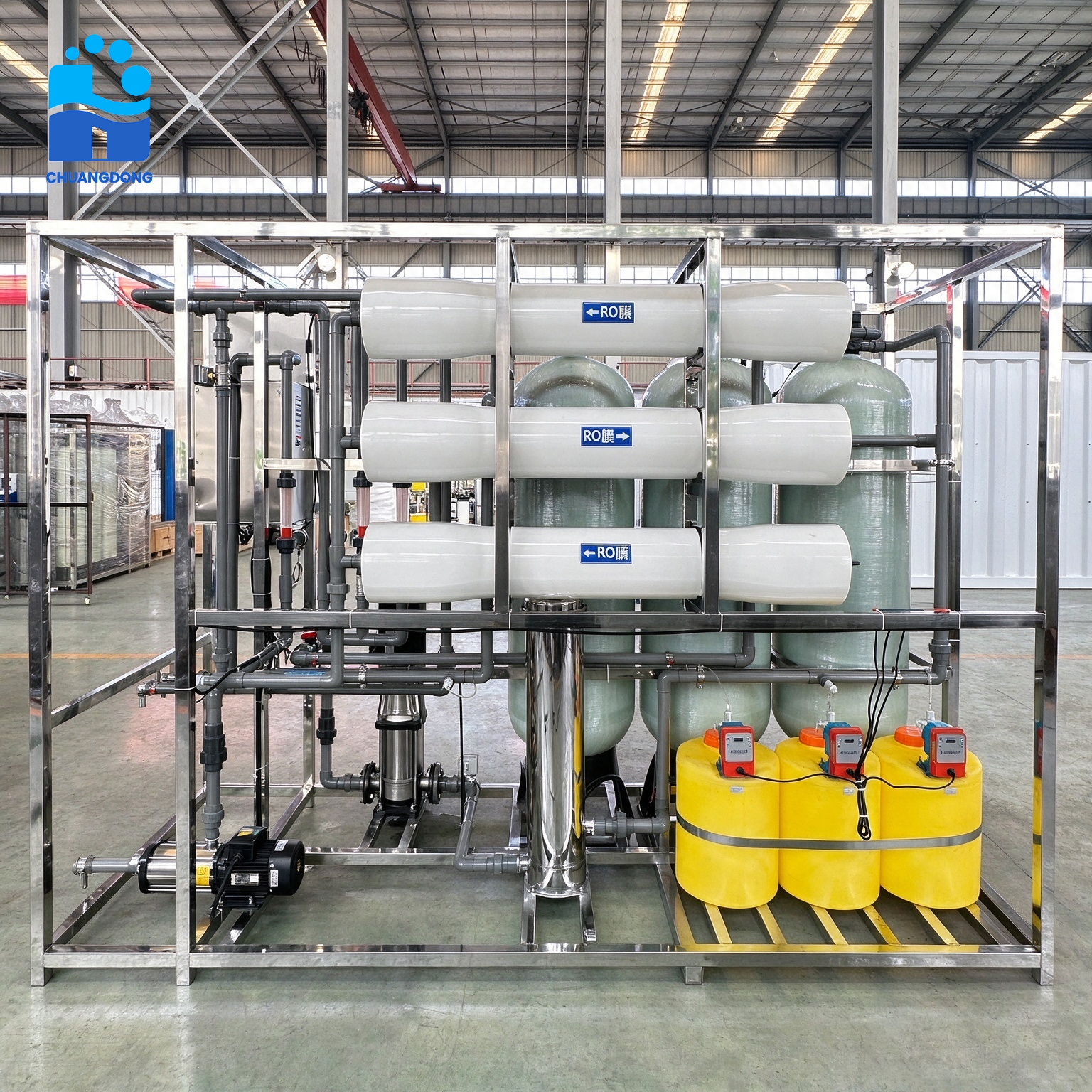
The membrane is the core of any Reverse Osmosis System. Chuangdong uses proven membrane elements from leading manufacturers such as DuPont FilmTec, Hydranautics, and Toray. These membrane elements provide high salt rejection and long service life, based on the characteristics of the feed water and the required treatment performance.
In addition, each membrane is housed in a pressure vessel designed to safely withstand the operating pressure. High-quality membranes and pressure vessels together set the performance limits of your industrial water treatment plant.
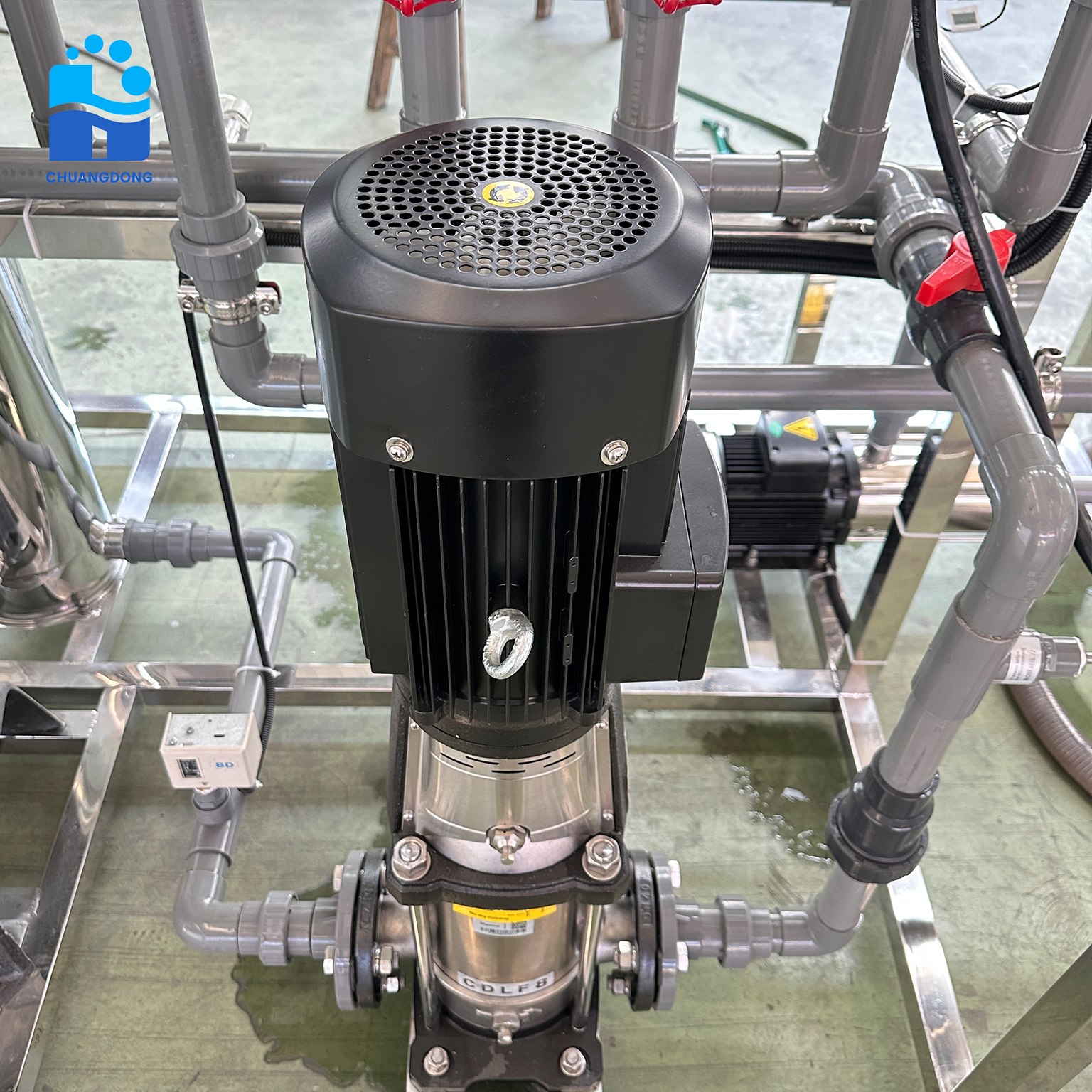
The High-Pressure Pump provides the pressure required to push water through the RO membranes. Pump reliability directly affects system uptime. Chuangdong works with premium brands such as Grundfos and CNP, providing additional support for the reliable operation of the entire Industrial RO System.
Intelligent control turns the equipment itself into a self-managing system. Chuangdong integrates flow, pressure, and conductivity instruments, together with Schneider Electric and Siemens PLC control platforms. This allows operators to monitor real-time operating data and receive alarms when necessary.
 |
 |
 |
Flow rate is one of the first specifications that should be determined when selecting an Industrial RO System. To properly evaluate a Brackish Water RO System, three factors need to be considered: feed water TDS, permeate flow rate, and the target permeate water quality.
The feed water quality determines the recovery rate and pump pressure. The higher the salinity, the larger the feed pump required, and the slightly higher the energy consumption per cubic meter. Chuangdong can build Industrial RO Systems for small workshops, with capacities ranging from 100 liters per hour to 100 m³/h and higher for municipal and industrial projects.
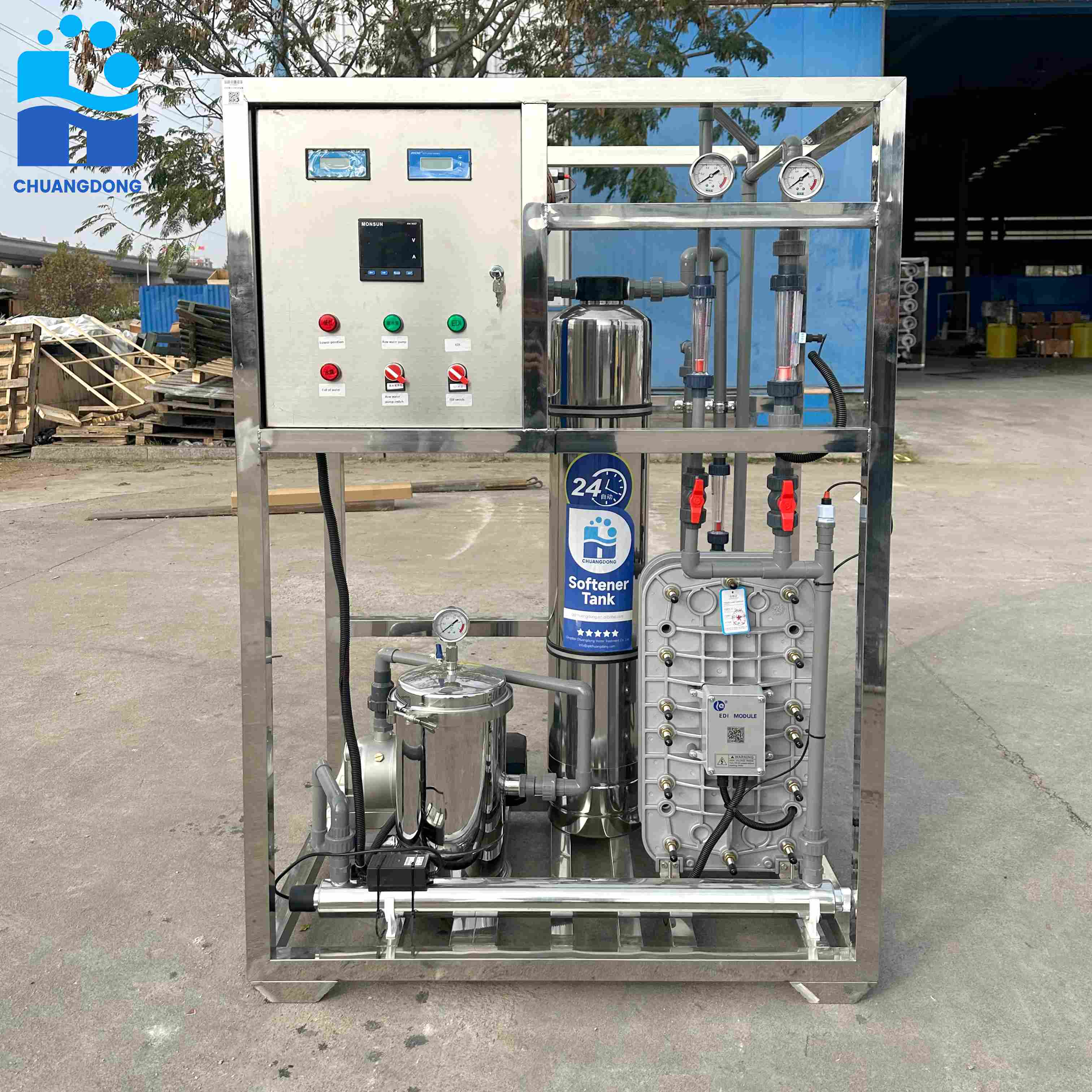
For larger-scale applications, our Industrial RO Systems can be expanded into multiple system configurations. In addition, when you require ultrapure water for boilers, pharmaceutical production, or electronics manufacturing, we can also add a second-pass RO system or an EDI (Electrodeionization) system.
In an RO System, the reverse osmosis membrane cannot directly treat untreated raw water. Suspended solids, chlorine, hardness, iron, organic matter, microorganisms, and other contaminants may cause fouling, scaling, or membrane damage. It is essential to match the Pretreatment System to your specific feed water quality, and this is where an experienced manufacturer plays an important role.
Groundwater in many export markets may contain high levels of iron, manganese, silica, or hardness. Without proper treatment, iron can stain the membrane, while hardness can cause scaling. To prevent these issues, Chuangdong pays particular attention to designing customized Pretreatment Systems. For example, for surface water or more challenging feed water, we may add Ultrafiltration (UF) or Microfiltration (MF) to provide a stronger barrier against suspended solids and colloidal contaminants.
When hardness levels are high, we can combine the Reverse Osmosis System with a hard water treatment system and an upstream Water Softener. This combination helps keep the membrane clean, maintain stable recovery, and protect the service life of your equipment investment.
Effective pretreatment can improve RO membrane life, system stability, permeate water quality, recovery performance, cleaning intervals, and overall operating efficiency.
Based on our experience with actual customer projects, we have found that Reverse Osmosis (RO) Systems, as an important separation technology, are widely used in water-intensive industries. They can provide high-purity process water for industrial production while also supporting water recovery and reuse.
In the power generation and large-scale manufacturing industries, Industrial RO Systems can be used for boiler feed water treatment. By effectively reducing total dissolved solids (TDS), silica, and scale-forming minerals, they provide stable feed water quality for high-pressure boilers and steam turbines.
In industries with strict water quality requirements, such as semiconductor and microelectronics manufacturing, the multi-stage Reverse Osmosis Systems designed by Chuangdong are typically used as an important pretreatment stage for ultrapure water (UPW) production.
In addition, in food and beverage processing, chemical manufacturing, and municipal seawater desalination, RO Systems can be used to treat and reuse process wastewater, enabling water resources to be recycled and supporting Zero Liquid Discharge (ZLD) solutions. By reducing wastewater discharge, improving water utilization, and meeting strict environmental requirements, Industrial RO Systems can support more efficient and sustainable industrial water management.
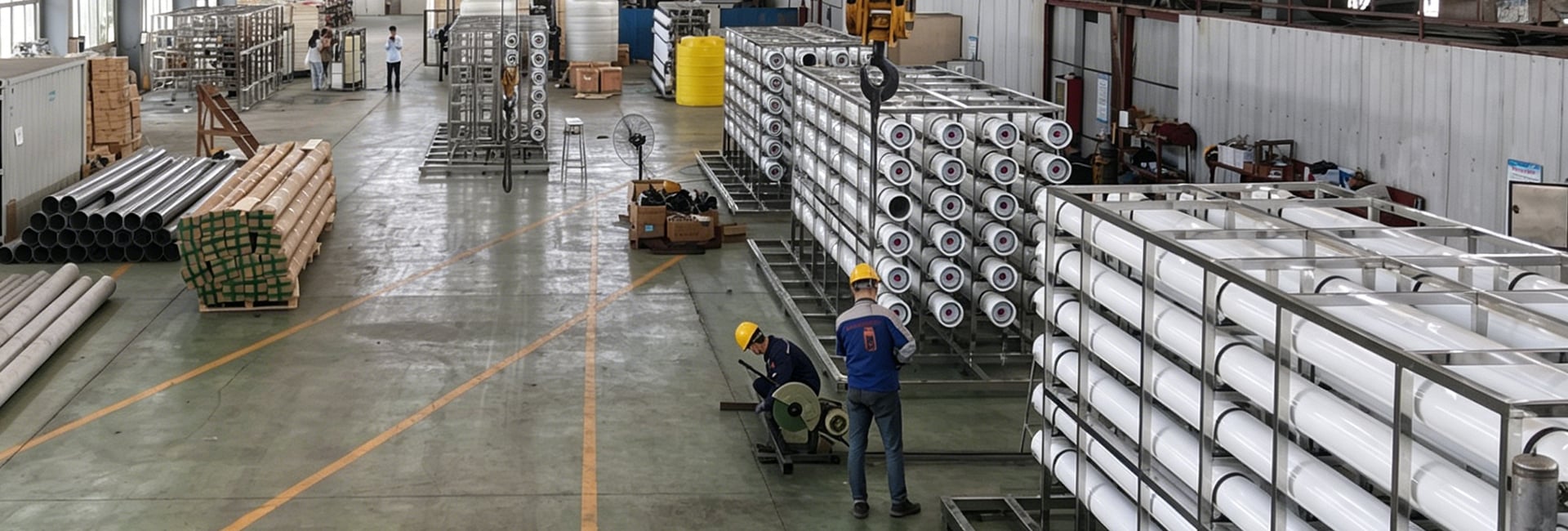
Compared with purchasing a standalone reverse osmosis unit, a Turnkey Water Treatment Solution focuses more on the overall performance and long-term operation of the complete water treatment system. From Raw Water Analysis, process design, and system configuration to equipment manufacturing, engineering installation, commissioning, and ongoing technical support, a turnkey solution covers the entire design and project delivery process. This helps avoid compatibility issues that can easily occur between a standalone RO unit and other water treatment equipment.
For an Industrial RO Water Treatment System, the performance of the RO membrane depends not only on the membrane elements themselves but also closely on the upstream pretreatment process. By integrating pretreatment steps such as multimedia filtration with the RO System, the overall system can effectively reduce the impact of suspended solids, colloids, organic matter, and other contaminants on the RO membrane, helping reduce membrane fouling.
Based on different feed water qualities and treated water requirements, our systems can also integrate advanced treatment units such as EDI (Electrodeionization) and mixed-bed ion exchange systems to meet water quality requirements for boiler feed water, electronics manufacturing, pharmaceutical production, and food and beverage applications.
In addition, Chuangdong's complete Turnkey Water Treatment Solution uses a unified PLC automatic control system for centralized monitoring and operation management of the entire system. Compared with purchasing and installing equipment separately from multiple suppliers, an integrated Industrial Water Treatment System reduces project coordination work and shortens the installation and commissioning period, while significantly reducing long-term operating costs.
For industrial companies that require a stable water supply and continuous production, a Turnkey Water Treatment Project can provide a more complete RO Water Treatment Solution.
In the field of industrial water treatment, not every equipment supplier has the capability to provide durable and long-lasting Industrial RO Systems. Before making a purchasing decision, it is recommended to consider the following simple criteria to distinguish a manufacturer with genuine production capabilities from an ordinary equipment supplier:
Design Based on Actual Water Quality:
A professional RO System Manufacturer will never blindly provide a standard product quotation. Instead, the system should be designed based on your raw water quality report. The brands of key components should also be clearly identified: a high-quality system should clearly specify the brands of the High-Pressure Pump, RO Membrane Elements, and PLC Control System, rather than vaguely referring to them as “imported components.”
Pre-Delivery Testing:
The complete system should undergo water-flow testing, pressure testing, and commissioning before shipment to reduce the risks associated with on-site installation and commissioning.
Operation, Maintenance, and Spare Parts Support:
Check whether the manufacturer can provide a continuous supply of RO membrane elements, filter cartridges, spare parts, as well as responsive remote or on-site technical support.
Choosing a long-term partner with a deep understanding of water quality characteristics and operating conditions is a cornerstone of project success. Our water treatment engineering systems have been successfully delivered and operated in multiple countries and regions across the Middle East, Africa, Southeast Asia, South America, and other global markets. With extensive experience in handling various challenging water qualities and demanding operating conditions, we help ensure that each system can operate reliably after arriving at the project site. Click here to learn more about Chuangdong's project cases.
Investing in a reliable Reverse Osmosis System can recover its cost within a short period. The key lies in accurate water source analysis, properly matched Pretreatment, high-quality components, and a manufacturer that supports the system design. Chuangdong Water Treatment is ready to help. If you need a customized design and quotation, please fill out the contact form, and our technical team will contact you within 24 hours.
 Hot News
2026-09-09
2026-04-03
2026-03-19
2026-03-18
2026-03-13
2026-01-20
Founded in 1995, Company is a leading machine manufacture and exporting company, with 25+ years of experience in the industry.
No. 818 Feiyu Road, Yinzhu Subdistrict, Huangdao District, Qingdao City
Copyright © 2026 Qingdao Chuangdong Water Treatment Co., Ltd. All rights reserved. Privacy Policy
 EN
EN