 EN
EN



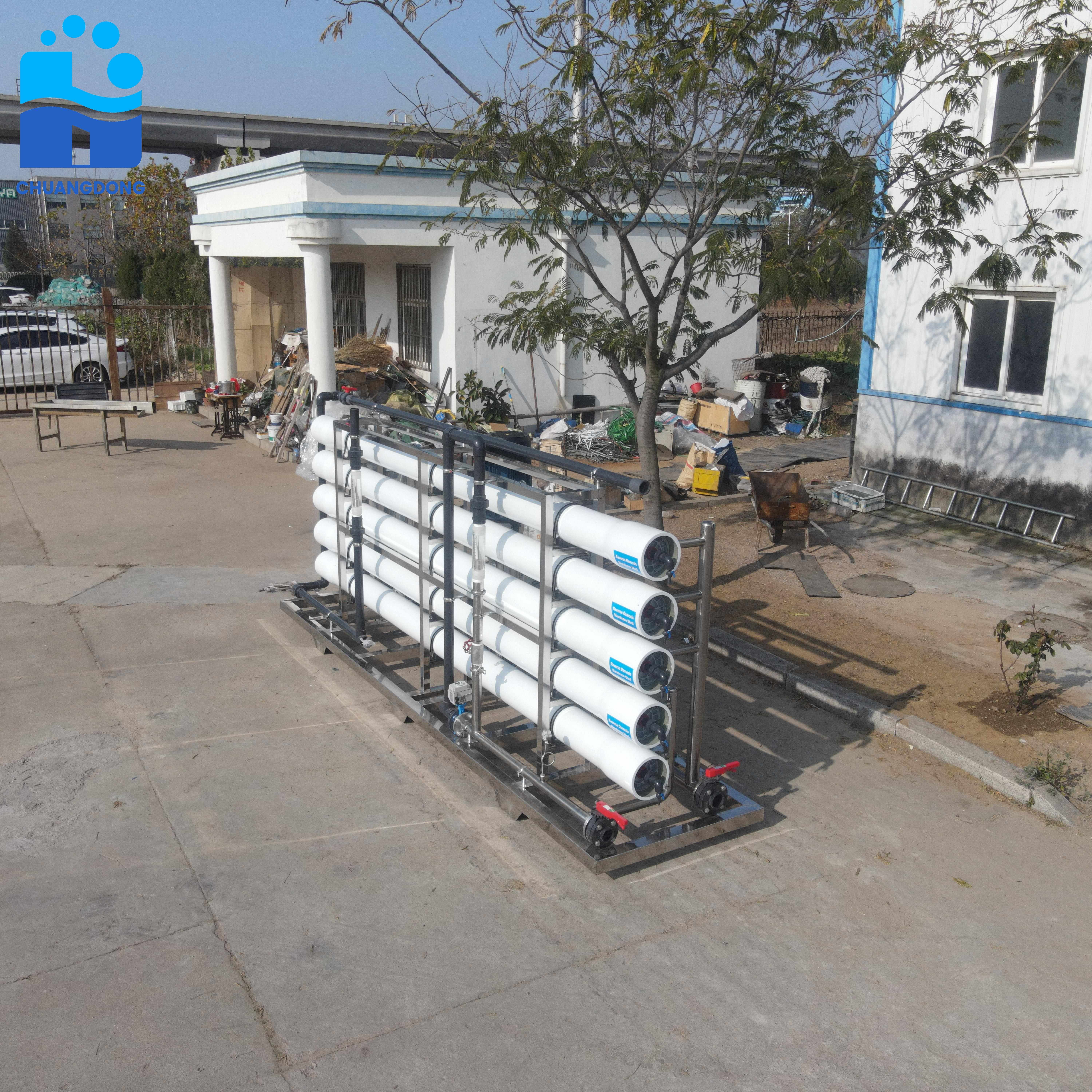
Microplastic contamination has emerged as one of the most pressing environmental and health challenges of the 21st century, with these microscopic particles infiltrating water supplies worldwide. As industrial facilities, municipal water treatment plants, and commercial operations seek effective solutions, understanding the precise mechanism by which advanced filtration technology removes these contaminants becomes critical. The 0.0001-micron membrane technology integrated into modern reverse osmosis systems represents a breakthrough in water purification, offering molecular-level filtration that specifically targets microplastic particles ranging from nanometers to several hundred micrometers in size.
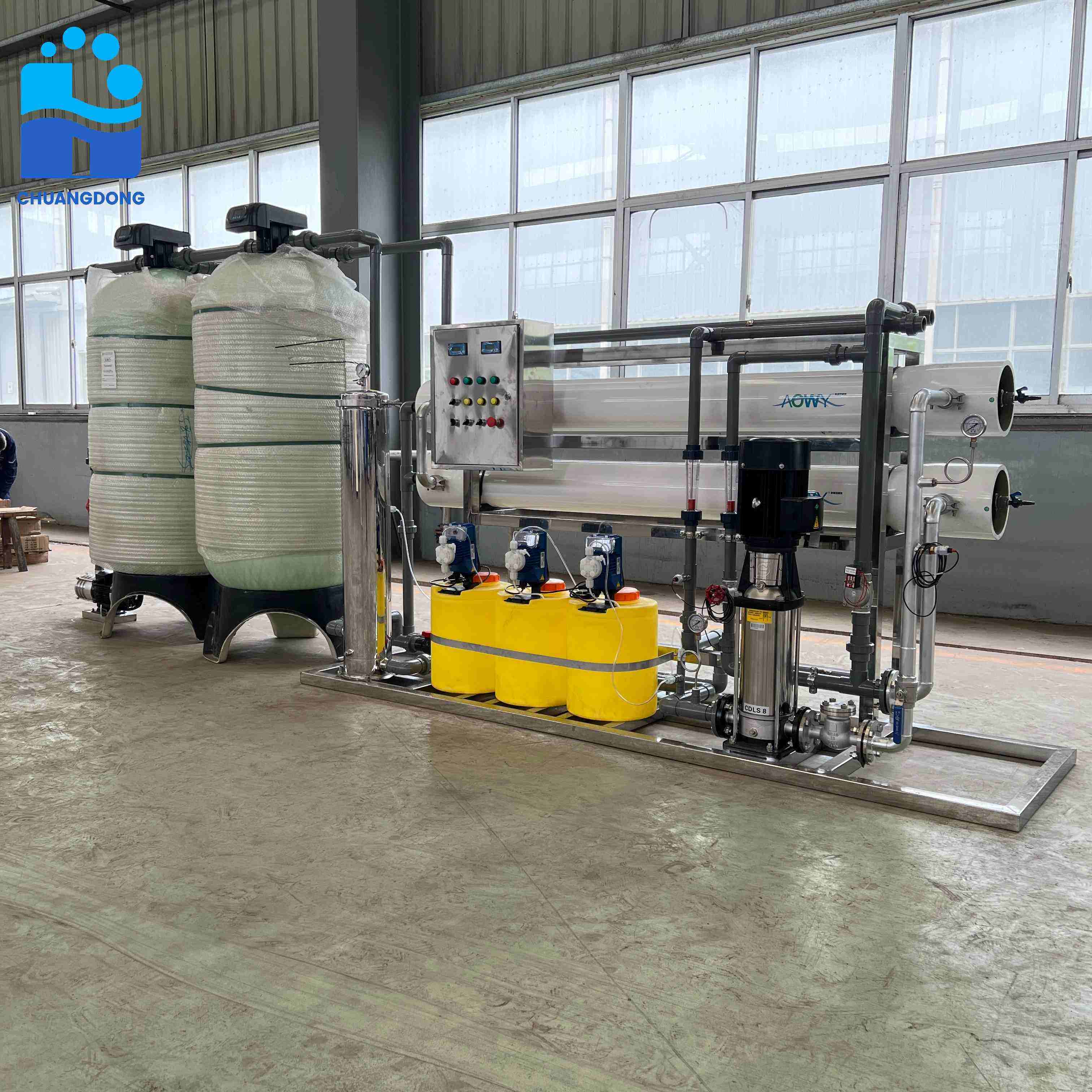
The mechanism through which 0.0001-micron membranes achieve microplastic removal operates on fundamental principles of size exclusion, surface charge interaction, and hydrodynamic resistance. Unlike conventional filtration methods that rely solely on physical screening, this ultra-fine membrane technology creates a semi-permeable barrier at the molecular scale, systematically blocking particles larger than the pore diameter while allowing water molecules and select ions to pass through. This article explains the complete filtration mechanism, explores how membrane architecture creates multiple rejection pathways, examines the relationship between microplastic characteristics and removal efficiency, and provides practical guidance on optimizing system performance for industrial applications where water purity is non-negotiable.
The Physical Mechanism of 0.0001-Micron Membrane Filtration
Understanding Membrane Pore Architecture and Size Exclusion Principles
The 0.0001-micron membrane employed in advanced reverse osmosis systems features a precisely engineered pore structure that operates on the principle of absolute size exclusion. This membrane specification, equivalent to 0.1 nanometers or one angstrom, represents the effective rejection threshold for particles and molecules. The membrane structure consists of multiple layers: a thin polyamide active layer with the 0.0001-micron pore rating, a microporous polysulfone support layer, and a non-woven polyester backing that provides mechanical strength. The active layer, typically only 0.2 micrometers thick, contains the densely packed pores that determine filtration performance.
Microplastics, which range from 1 nanometer to 5 millimeters in diameter, encounter a physical barrier when confronted with this membrane architecture. The majority of microplastic particles measured in water supplies fall between 1 micrometer and 100 micrometers, making them substantially larger than the membrane pore openings. As contaminated water approaches the membrane surface under hydraulic pressure, microplastic particles cannot pass through the microscopic pores due to their physical dimensions. This size-based rejection mechanism provides a deterministic removal pathway that does not depend on chemical affinity or electrical charge, ensuring consistent performance across varying water chemistry conditions.
The effectiveness of this filtration approach stems from the membrane's ability to create a molecular sieve effect. Water molecules, with a kinetic diameter of approximately 0.28 nanometers, can navigate through the membrane structure via diffusion pathways, while microplastic particles—even those at the nanoplastic scale measuring 10-100 nanometers—encounter insurmountable spatial constraints. The reverse osmosis system creates operating pressures between 150 and 400 pounds per square inch, forcing water molecules through the membrane while concentrating rejected microplastics on the feed side.
Hydrodynamic Flow Patterns and Particle Rejection Dynamics
Beyond simple size exclusion, the hydrodynamic environment created by membrane filtration contributes significantly to microplastic removal efficiency. As water flows tangentially across the membrane surface in a crossflow configuration, it creates shear forces that prevent microplastic particles from depositing and accumulating on the membrane. This crossflow velocity, typically maintained between 0.1 and 0.5 meters per second in industrial reverse osmosis systems, establishes a boundary layer where rejected particles remain suspended in the concentrate stream rather than forming a fouling layer.
The interaction between microplastic particles and the membrane surface involves complex fluid dynamics. Particles approaching the membrane experience drag forces from the permeate flow attempting to pull them toward the surface, balanced by crossflow forces sweeping them along the membrane. Larger microplastic particles experience greater crossflow drag due to their increased surface area, making them more easily swept away in the concentrate stream. Smaller particles, particularly those in the nanoplastic range, exhibit Brownian motion that can bring them into proximity with the membrane surface, but the 0.0001-micron pore barrier still prevents passage.
The hydraulic resistance of the membrane creates additional rejection mechanisms. As the reverse osmosis system operates, the pressure differential across the membrane establishes a convective flow pattern where water molecules pass through at rates determined by membrane permeability. Microplastic particles, unable to penetrate the membrane structure, accumulate temporarily in the concentration polarization layer—a region of elevated solute concentration immediately adjacent to the membrane surface. The system's concentrate discharge continuously removes this layer, carrying away rejected microplastics and maintaining membrane performance.
Microplastic Characteristics and Membrane Interaction Mechanisms
Physical Properties Affecting Retention Efficiency
Microplastic particles exhibit diverse physical characteristics that influence their behavior during membrane filtration. Particle size distribution represents the primary factor determining rejection efficiency, with larger particles experiencing complete retention while smaller nanoplastics face more complex interaction dynamics. Research indicates that microplastic fragments in water supplies commonly range from 5 to 500 micrometers, with secondary populations in the 100-nanometer to 1-micrometer range. The 0.0001-micron membrane specification ensures that even the smallest detected microplastic particles—those approaching 50 nanometers—face a pore opening approximately 500 times smaller than their diameter, creating an absolute physical barrier.
Particle shape significantly impacts filtration behavior. Spherical microplastic beads, commonly originating from personal care products and industrial abrasives, present consistent geometric profiles that facilitate predictable rejection. Fibrous microplastics from textile sources, which can measure 10-20 micrometers in diameter but extend to several millimeters in length, may orient parallel to membrane surfaces, potentially increasing surface contact. Film fragments from degraded plastic bags and packaging materials exhibit irregular geometries with variable thickness profiles. The reverse osmosis system effectively rejects all these morphologies because even the thinnest dimension of such particles exceeds the membrane pore diameter by orders of magnitude.
Microplastic density affects particle behavior in the hydrodynamic environment of membrane filtration. Common plastic polymers exhibit densities ranging from 0.90 grams per cubic centimeter for polyethylene to 1.38 grams per cubic centimeter for polyethylene terephthalate. Particles with densities below that of water tend to rise toward the surface in quiescent conditions, while denser particles settle. Within the pressurized environment of a reverse osmosis system, these density differences become less significant as hydraulic forces dominate particle transport. The crossflow velocity maintains all particles in suspension regardless of density, ensuring consistent exposure to the membrane rejection mechanism.
Surface Chemistry and Electrostatic Interaction Effects
The surface chemistry of both microplastic particles and reverse osmosis membranes creates secondary interaction mechanisms that enhance removal efficiency. Most microplastic particles acquire surface charges through environmental weathering, adsorption of organic matter, and interaction with dissolved ions. Polyamide reverse osmosis membranes typically carry a negative surface charge at neutral pH values common in water treatment applications. This electrokinetic property creates repulsive forces when negatively charged microplastic particles approach the membrane, providing an additional barrier beyond physical size exclusion.
Hydrophobic interactions further influence microplastic-membrane behavior. Many microplastic polymers exhibit hydrophobic surface characteristics, meaning they preferentially interact with non-polar substances rather than water molecules. Reverse osmosis membranes, particularly modern thin-film composite designs, feature relatively hydrophilic active layers that attract water molecules while repelling hydrophobic contaminants. This creates an energetically unfavorable interface for microplastic adhesion, reducing the tendency for particles to deposit on the membrane surface and potentially compromise filtration performance.
The presence of natural organic matter and dissolved substances in feed water can modify these surface interactions. Organic compounds may adsorb onto microplastic surfaces, altering their effective charge and hydrophobicity. Similarly, membrane surfaces can experience conditioning through organic adsorption, changing their interaction profile. Advanced reverse osmosis systems incorporate pre-treatment stages including activated carbon filtration and antiscalant dosing that manage these organic compounds, maintaining optimal membrane surface properties for consistent microplastic rejection while preventing membrane fouling that could compromise separation efficiency.
Multi-Barrier Removal Pathways in Complete System Design
Pre-Treatment Stages and Preliminary Particle Removal
A comprehensive reverse osmosis system incorporates multiple treatment barriers that work sequentially to achieve complete microplastic removal. The filtration train typically begins with coarse screening using 100-500 micrometer mesh filters that remove larger debris, suspended solids, and macroscopic plastic fragments. These preliminary filters protect downstream components while removing the largest fraction of microplastic contamination. Following coarse filtration, multimedia filters employing layers of anthracite, sand, and garnet provide depth filtration that captures particles down to 10-20 micrometers through mechanical straining and surface adsorption.
Cartridge pre-filters installed immediately before the reverse osmosis membranes provide fine filtration at 5-micrometer or 1-micrometer ratings. These disposable or cleanable cartridges serve as the final mechanical barrier before reverse osmosis, removing microplastic particles in the 1-20 micrometer range that constitute a significant portion of environmental contamination. This staged approach reduces the particle load reaching the reverse osmosis system, extending membrane life and maintaining optimal rejection performance. The multi-barrier design ensures that even if a small percentage of microplastics pass through pre-treatment stages, the 0.0001-micron membrane provides absolute retention.
Pre-treatment chemistry plays a supporting role in microplastic management. Coagulation and flocculation processes, when employed, can aggregate smaller microplastic particles with other suspended matter, increasing effective particle size and improving removal in sedimentation and filtration stages. However, the reverse osmosis system does not depend on these chemical processes for microplastic rejection, ensuring performance consistency regardless of upstream treatment variations. The membrane's size-exclusion mechanism operates independently of chemical conditioning, providing reliable removal even when feed water characteristics fluctuate.
Post-Treatment Validation and Quality Assurance
After permeate exits the reverse osmosis membrane, it undergoes post-treatment polishing that provides verification of microplastic removal. Activated carbon polishing filters address any trace organic compounds while providing a final physical barrier. UV disinfection systems sterilize the treated water without introducing chemical additives. These post-treatment steps do not typically encounter microplastics because the membrane has already achieved complete removal, but they provide redundancy and address other water quality parameters required for specific applications.
Quality monitoring systems integrated into advanced reverse osmosis installations provide real-time verification of treatment performance. Turbidity meters measuring suspended particle concentrations in permeate offer indirect confirmation of microplastic removal, as these particles contribute to overall turbidity. Particle counters using laser light-scattering technology can detect and size particles in treated water, providing direct evidence of removal efficiency. When properly designed and operated, reverse osmosis systems consistently produce permeate with particle counts below detection limits, confirming that the 0.0001-micron membrane effectively eliminates microplastic contamination.
Periodic laboratory analysis using advanced techniques such as Raman spectroscopy, Fourier-transform infrared spectroscopy, or pyrolysis gas chromatography-mass spectrometry can identify and quantify microplastic particles in both feed and permeate streams. These analytical methods detect particles as small as 1 micrometer and can characterize polymer types, confirming that the reverse osmosis system removes polyethylene, polypropylene, polystyrene, polyethylene terephthalate, and other common microplastic polymers. Long-term monitoring data from industrial installations consistently demonstrates removal efficiencies exceeding 99.9 percent for all microplastic size fractions, validating the effectiveness of 0.0001-micron membrane technology.
Operational Parameters Affecting Microplastic Removal Performance
System Pressure and Recovery Rate Optimization
Operating pressure represents a critical parameter in reverse osmosis system performance, directly influencing water flux through the membrane while affecting microplastic rejection dynamics. Standard industrial systems operate at pressures between 150 and 400 pounds per square inch, with specific values determined by feed water salinity, desired recovery rate, and membrane characteristics. Higher operating pressures increase water flux through the membrane but can also compress the concentration polarization layer, potentially bringing microplastic particles into closer proximity with the membrane surface. However, the absolute size-exclusion mechanism of the 0.0001-micron membrane ensures consistent microplastic rejection across the entire operating pressure range.
Recovery rate, defined as the percentage of feed water converted to permeate, affects concentrate stream characteristics and microplastic concentration factors. Typical recovery rates for industrial reverse osmosis systems range from 50 to 85 percent, meaning that microplastic particles rejected by the membrane become concentrated by factors of 2 to 6.7 in the discharge stream. Higher recovery rates improve water efficiency but increase concentrate stream viscosity and particle density, potentially affecting crossflow dynamics. System designers balance recovery rate targets against concentrate disposal requirements and membrane fouling potential, ensuring that microplastic removal efficiency remains consistently high throughout the operating envelope.
Crossflow velocity maintains the hydrodynamic conditions necessary for sustained microplastic rejection. Velocities below 0.1 meters per second may allow excessive particle deposition on membrane surfaces, reducing effective membrane area and potentially compromising long-term performance. Velocities above 0.5 meters per second increase pumping energy requirements without providing proportional benefits. The reverse osmosis system maintains optimal crossflow through careful hydraulic design, including feed channel spacer geometry, pressure vessel configuration, and flow distribution manifolds that ensure uniform conditions across all membrane elements.
Temperature Effects and Membrane Property Variations
Feed water temperature influences reverse osmosis membrane performance through its effects on water viscosity and membrane permeability. Higher temperatures reduce water viscosity, allowing increased flux through the membrane at constant pressure. Temperature also affects polymer chain mobility in the membrane matrix, slightly altering effective pore size. However, these temperature-related variations occur at scales far below the microplastic particle dimensions, ensuring that rejection efficiency remains unaffected across the typical operating range of 5 to 35 degrees Celsius encountered in industrial applications.
Membrane aging and chemical exposure can potentially alter rejection characteristics over extended operating periods. Polyamide membranes exhibit exceptional chemical resistance to most water constituents but may experience gradual compaction under sustained hydraulic pressure or degradation from exposure to oxidizing agents like chlorine. Regular monitoring of permeate quality parameters including conductivity, turbidity, and particle counts provides early detection of any membrane integrity changes. Preventive maintenance practices including chemical cleaning protocols and oxidant quenching ensure that the 0.0001-micron pore structure maintains its integrity throughout the membrane's rated service life, typically three to seven years in properly operated systems.
System startups and shutdowns present transient conditions that require careful management to maintain consistent microplastic removal. During startup, the reverse osmosis system undergoes a brief equilibration period as membranes wet, dissolved gases release, and hydraulic conditions stabilize. Modern control systems implement gradual pressure ramping and automated flushing sequences that minimize permeate quality variations during these transitions. Similarly, shutdown procedures include low-pressure flushing that removes concentrate from membrane elements, preventing particle deposition during idle periods. These operational protocols ensure that microplastic removal efficiency remains consistently high throughout all phases of system operation.
Industry Applications and Performance Validation
Industrial Water Treatment Requirements and Microplastic Concerns
Industrial facilities face increasingly stringent requirements for feed water quality in processes where microplastic contamination poses operational or product quality risks. Pharmaceutical manufacturing operations require water meeting United States Pharmacopeia standards for purified water and water for injection, specifications that implicitly demand complete microplastic removal. Electronics fabrication facilities producing semiconductors and integrated circuits need ultrapure water with particle concentrations measured in parts per trillion, making microplastic elimination essential. Food and beverage processors must ensure that ingredient water contains no contaminants that could compromise product safety or quality, including microplastic particles that might concentrate in final products.
Boiler feed water applications in power generation and industrial steam systems benefit from complete microplastic removal through reverse osmosis systems. While traditional concerns focused on mineral scaling and corrosion, microplastic particles present additional fouling potential in heat exchangers and steam generation equipment. The 0.0001-micron membrane removes these particles along with dissolved minerals, producing demineralized water that protects high-value equipment and maintains thermal efficiency. Chemical processing operations with similar requirements for contaminant-free water increasingly specify reverse osmosis treatment as the primary purification method.
Municipal water utilities exploring advanced treatment for potable water production view microplastic removal as an emerging priority. While regulatory standards have not yet established specific microplastic limits for drinking water, utilities implementing reverse osmosis systems for desalination, indirect potable reuse, or advanced treatment inherently achieve complete microplastic removal through the membrane barrier. This capability provides future-proof treatment that addresses anticipated regulations while delivering multiple water quality benefits including pathogen removal, pharmaceutical and personal care product reduction, and dissolved contaminant elimination.
Field Performance Data and Removal Validation Studies
Empirical studies conducted on operating reverse osmosis systems confirm the theoretical microplastic removal mechanisms described throughout this analysis. Research examining full-scale municipal reverse osmosis plants processing seawater and brackish water consistently demonstrates greater than 99.9 percent removal of microplastic particles across all size ranges detected in feed water. Analysis of permeate samples using microscopy, spectroscopy, and chromatography techniques typically finds microplastic concentrations below analytical detection limits, confirming that the 0.0001-micron membrane provides an absolute barrier to these contaminants.
Industrial installations treating surface water and groundwater sources with varying microplastic concentrations report similar performance outcomes. One study examining a 500-cubic-meter-per-day reverse osmosis system processing river water found feed concentrations of 12 to 47 microplastic particles per liter, with permeate concentrations consistently below 0.1 particles per liter—the detection limit of the analytical method employed. Another investigation of multiple industrial systems treating different source waters confirmed removal efficiencies exceeding 99.5 percent across polymer types including polyethylene, polypropylene, polyvinyl chloride, polystyrene, and polyethylene terephthalate.
Long-term monitoring programs tracking reverse osmosis system performance over multiple years demonstrate sustained microplastic removal efficiency. Membrane autopsy studies examining elements removed from service after three to five years of operation show microplastic particles captured on membrane surfaces and within pre-filter cartridges, but no evidence of particle penetration through the membrane matrix. These forensic examinations confirm that the size-exclusion mechanism remains effective throughout the membrane service life, providing reliable protection against microplastic contamination in treated water supplies for industrial and commercial applications.
FAQ
What size range of microplastic particles can a 0.0001-micron reverse osmosis membrane remove?
A reverse osmosis system with a 0.0001-micron membrane specification effectively removes microplastic particles across the entire size spectrum found in water supplies, from nanoplastics measuring as small as 50-100 nanometers up to fragments measuring several hundred micrometers. The membrane pore size of 0.0001 microns, equivalent to 0.1 nanometers, creates an absolute physical barrier that prevents passage of any microplastic particle regardless of polymer type or morphology. Since even the smallest microplastic particles detected in environmental samples measure approximately 500 times larger than the membrane pores, the removal mechanism operates with complete certainty across all relevant size fractions, achieving removal efficiencies consistently exceeding 99.9 percent in field applications.
How does the reverse osmosis membrane maintain microplastic removal efficiency as it ages?
The microplastic removal mechanism in a reverse osmosis system relies on physical size exclusion determined by membrane pore architecture rather than on surface properties or chemical affinity that might degrade over time. The polyamide active layer maintains its structural integrity throughout the rated service life of three to seven years when the system operates within design parameters and receives appropriate chemical cleaning maintenance. Regular monitoring of permeate conductivity, turbidity, and particle counts provides early detection of any membrane integrity changes, while preventive maintenance including proper oxidant control, scale inhibition, and periodic cleaning preserves the 0.0001-micron pore structure. Field data from membrane autopsy studies confirms that properly maintained membranes continue providing consistent microplastic rejection throughout their operational life, with removal efficiency remaining above 99.9 percent until membrane replacement becomes necessary due to flux decline or other performance factors.
Can microplastic particles smaller than 0.0001 microns pass through the membrane?
Particles smaller than 0.0001 microns, equivalent to 0.1 nanometers, would represent molecular dimensions rather than microplastic particles. The smallest entities classified as microplastics or nanoplastics measure approximately 50-100 nanometers, which is 500 to 1000 times larger than the membrane pore specification. At dimensions approaching 0.1 nanometers, materials exist as individual molecules or small molecular clusters rather than as plastic polymers, which require chains of thousands to millions of monomer units to form. Therefore, no microplastic particle can be smaller than the 0.0001-micron membrane pores while still maintaining the chemical structure and physical properties that define plastic materials. The reverse osmosis membrane provides an absolute barrier to all microplastic contamination while allowing water molecules, with a kinetic diameter of approximately 0.28 nanometers, to pass through via diffusion pathways within the membrane matrix.
Does the concentration of microplastics in feed water affect removal efficiency?
The removal efficiency of microplastics by a reverse osmosis system remains consistently high regardless of feed water concentration because the mechanism operates through absolute size exclusion rather than through adsorption or other capacity-limited processes. Whether feed water contains 10 particles per liter or 1000 particles per liter, the 0.0001-micron membrane rejects these particles with equal effectiveness because they physically cannot pass through pores that are orders of magnitude smaller than the particle dimensions. However, higher microplastic concentrations do affect practical operational considerations including pre-filter replacement frequency, membrane cleaning intervals, and concentrate disposal volumes. Systems treating heavily contaminated source waters benefit from enhanced pre-treatment including coarse filtration and cartridge filters that reduce particle loading on reverse osmosis membranes, extending cleaning cycles and maintaining optimal flux rates while the membrane continues providing complete microplastic removal regardless of influent concentration levels.
Table of Contents
- The Physical Mechanism of 0.0001-Micron Membrane Filtration
- Microplastic Characteristics and Membrane Interaction Mechanisms
- Multi-Barrier Removal Pathways in Complete System Design
- Operational Parameters Affecting Microplastic Removal Performance
- Industry Applications and Performance Validation
-
FAQ
- What size range of microplastic particles can a 0.0001-micron reverse osmosis membrane remove?
- How does the reverse osmosis membrane maintain microplastic removal efficiency as it ages?
- Can microplastic particles smaller than 0.0001 microns pass through the membrane?
- Does the concentration of microplastics in feed water affect removal efficiency?