 EN




Laboratory work demands precision at every level, and water quality plays a critical role in ensuring accurate results. When choosing between ultrapure water and distilled water for your lab, understanding the fundamental differences becomes essential. Ultrapure water and distilled water both remove contaminants, but they achieve vastly different purity levels through distinct production methods. This distinction directly impacts analytical accuracy, equipment longevity, and experimental outcomes. Selecting the right water type for your laboratory operations requires a clear understanding of each option's capabilities and limitations.
The quality of water used in laboratory applications directly influences measurement precision, reagent stability, and instrument performance. Many labs default to distilled water without recognizing that ultrapure water offers substantially higher purity standards. Understanding when ultrapure water becomes necessary versus when distilled water suffices can optimize both your budget and experimental reliability. This comprehensive comparison explores the characteristics, applications, and decision factors that should guide your lab's water selection strategy.
Understanding Water Purity Standards and Measurement
Distilled Water Characteristics and Purity Levels
Distilled water is produced through boiling and condensation, a simple thermal process that removes most large contaminants and dissolved minerals. This method typically achieves conductivity levels between 1 and 10 microsiemens per centimeter, which represents adequate purity for many routine laboratory applications. Distilled water contains residual ions, dissolved gases, and trace organic compounds that remain from the condensation process. While suitable for basic washing, dilution, and general lab preparation work, distilled water falls short for sensitive analytical procedures. The production cost of distilled water remains low, making it economical for high-volume laboratory needs where ultrapure water would be unnecessary.
Ultrapure Water Specifications and Performance
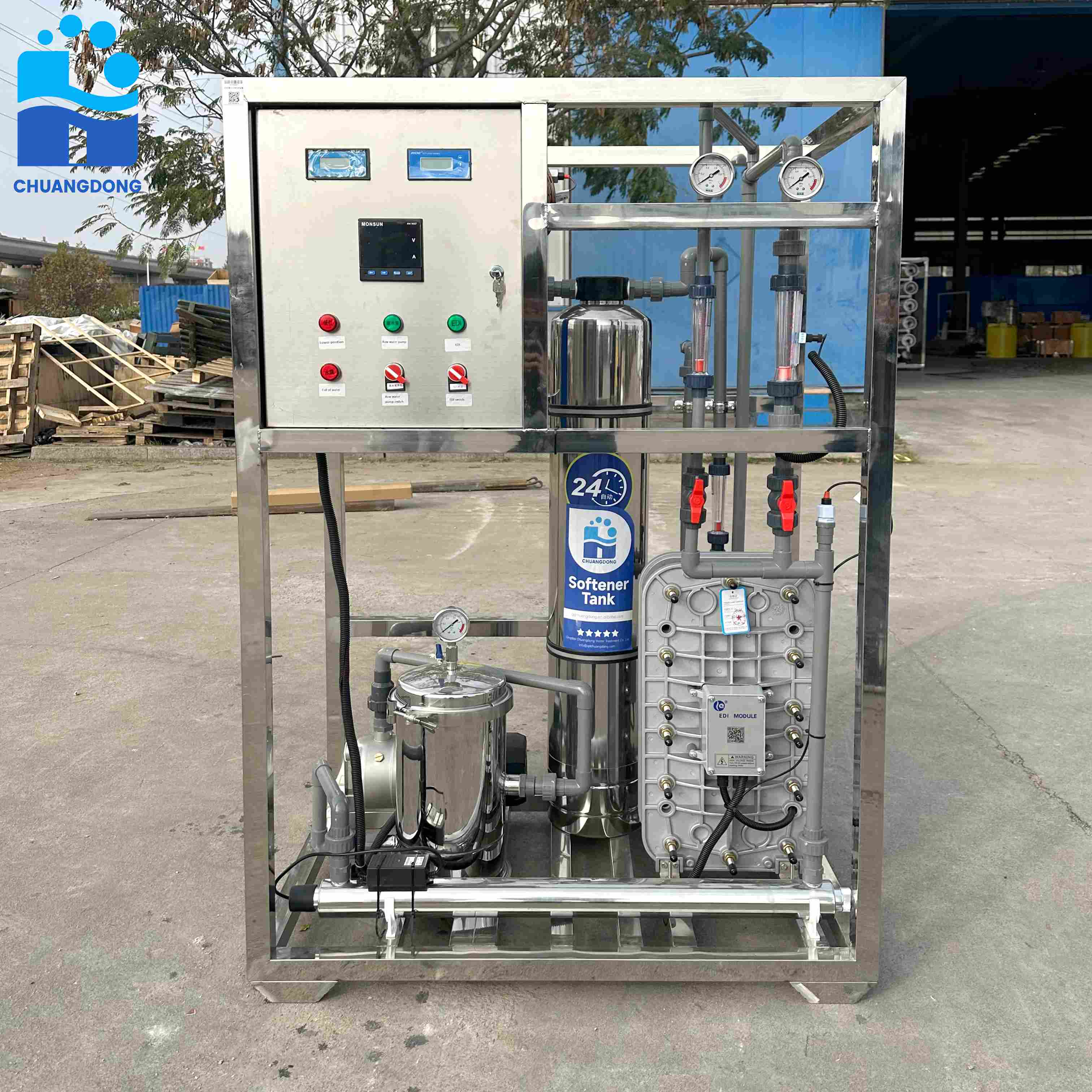
Ultrapure water represents the highest achievable water purity standard in laboratory settings, with conductivity levels below 0.055 microsiemens per centimeter. This ultrapure water meets or exceeds Type I water standards established by ASTM D1193, removing virtually all dissolved minerals, organic compounds, and ionic contaminants. Producing ultrapure water requires multi-stage treatment systems combining reverse osmosis, ion exchange, and electrodeionization technologies. The ultrapure water production process eliminates trace elements at parts-per-billion levels, making it ideal for the most demanding analytical applications. Unlike distilled water, ultrapure water maintains its purity throughout extended storage when properly maintained in appropriate containers.
Application-Specific Requirements and Selection
When Distilled Water Proves Sufficient
Distilled water adequately serves many routine laboratory functions where extreme purity does not directly impact experimental outcomes. General glassware rinsing, initial equipment cleaning, and preparation of non-critical solutions benefit from distilled water's cost-effectiveness. Biochemical assays with lower sensitivity thresholds, microbiology culture media preparation, and educational demonstrations typically tolerate distilled water's purity level. Many pharmaceutical labs use distilled water for intermediate washing steps before final rinsing with ultrapure water. Environmental testing, pH buffer preparation, and general laboratory cleaning operations remain appropriate applications for distilled water. Budget-conscious facilities can reduce operational costs by reserving ultrapure water exclusively for sensitive applications while using distilled water for routine tasks.
Analytical Applications Demanding Ultrapure Water
Trace element analysis, high-performance liquid chromatography, and mass spectrometry absolutely require ultrapure water to prevent contamination-induced measurement errors. Ultrapure water becomes mandatory for pharmaceutical testing, where regulatory compliance demands water meeting pharmacopeial standards. Semiconductor manufacturing quality assurance, precision instrument calibration, and research-grade molecular analysis all depend on ultrapure water's exceptional purity. Clinical laboratories performing advanced immunoassays and genetic testing rely on ultrapure water to achieve required sensitivity and specificity. Ultrapure water prevents ion interference in atomic absorption spectroscopy and eliminates background noise in electrochemical measurements. Biotechnology applications involving recombinant protein production, cell culture media formulation, and DNA sequencing require ultrapure water to maintain sterility and experimental integrity.
Equipment Impact and Long-Term Operational Considerations
Effects on Analytical Instrument Performance
Mineral deposits from distilled water accumulate in instrument water lines and heating systems, gradually reducing equipment efficiency and measurement accuracy. Distilled water's residual ions can create background interference in sensitive detection systems, compromising data quality over time. Ultrapure water prevents mineral buildup, extending instrument lifespan and maintaining consistent calibration stability. Regular use of ultrapure water in high-sensitivity instruments reduces maintenance frequency and associated downtime costs. The investment in ultrapure water systems often returns through improved instrument longevity and fewer recalibration requirements. Laboratories performing daily trace analysis find that ultrapure water protects expensive analytical equipment from ionic contamination and mineral-induced degradation.
Storage, Handling, and Quality Maintenance
Distilled water absorbs carbon dioxide and ions from air exposure, causing conductivity to increase significantly within days of production. Ultrapure water similarly absorbs contaminants but at slower rates when stored in appropriate containers designed to minimize air exposure. Proper storage containers, made from borosilicate glass or pharmaceutical-grade plastics, protect ultrapure water quality during extended holding periods. Many laboratories implement point-of-use ultrapure water generation systems that produce water on demand, eliminating storage-related quality degradation. Distilled water stored in open containers deteriorates rapidly, while ultrapure water maintains acceptable purity for several days in sealed, inert containers. The decision between purchasing prepared water or installing on-site ultrapure water systems depends on consumption volume and application criticality. High-throughput facilities typically benefit from dedicated ultrapure water generation systems, while smaller labs may purchase prepared ultrapure water in appropriate volumes.
Cost Analysis and Decision Framework
Budget Implications and System Investments
Distilled water costs significantly less per unit volume than commercially produced ultrapure water, making it economical for routine laboratory operations. Purchasing ultrapure water from suppliers typically costs five to ten times more than equivalent distilled water volumes. Installing on-site ultrapure water generation systems requires substantial capital investment but becomes cost-effective for labs consuming large daily volumes. Point-of-use ultrapure water systems reduce per-liter production costs after initial equipment investment, typically achieving cost parity with purchased ultrapure water within two to three years. Maintenance requirements for ultrapure water systems include periodic filter replacements and quality monitoring, adding ongoing operational expenses. Small laboratories with minimal ultrapure water requirements often prefer purchasing prepared water to avoid equipment investment, while research-intensive facilities justify system installation through volume-based economics.
Determining Optimal Water Strategy for Your Laboratory
A practical approach involves categorizing laboratory operations by their actual purity requirements rather than assuming all applications need ultrapure water. Analyzing your lab's analytical methods reveals which procedures generate results sensitive to water quality variations and which tolerate distilled water. Implementing a tiered water system using distilled water for routine operations and ultrapure water exclusively for sensitive applications optimizes both cost and performance. Documenting your lab's water usage patterns and application sensitivities creates a baseline for evaluating whether purchasing ultrapure water or installing on-site systems provides better value. Consulting with instrument manufacturers regarding their water quality recommendations ensures your choice matches equipment specifications. Regular quality monitoring of your chosen water type confirms that selected systems continue meeting your laboratory's actual performance standards and regulatory requirements.
FAQ
Can distilled water be used for HPLC analysis instead of ultrapure water?
Distilled water should not substitute for ultrapure water in HPLC applications because residual ions and organic compounds in distilled water interfere with chromatographic detection and baseline stability. HPLC requires ultrapure water to achieve reliable separation, accurate peak detection, and reproducible retention times. Using distilled water in HPLC causes elevated background noise, poor peak resolution, and compromised quantitative accuracy that can invalidate analytical results.
How long does ultrapure water maintain its purity after production?
Ultrapure water begins absorbing atmospheric carbon dioxide and airborne contaminants immediately after production, with conductivity increasing measurably within hours in open containers. Properly stored ultrapure water in sealed, inert containers maintains acceptable purity for approximately 24 to 48 hours before conductivity exceeds Type I specifications. Point-of-use ultrapure water systems eliminate storage concerns by generating water immediately before use, ensuring maximum purity for time-sensitive applications.
What is the typical cost difference between distilled and ultrapure water for laboratory use?
Distilled water typically costs between 0.50 to 2.00 dollars per liter when purchased in laboratory quantities, while ultrapure water ranges from 3.00 to 20.00 dollars per liter depending on supplier and volume. On-site ultrapure water generation systems reduce per-liter costs to approximately 0.25 to 1.50 dollars after amortizing equipment investment, making them economical for laboratories consuming more than 50 liters daily.