 ×
A reverse osmosis train makes a simple promise: apply enough pressure and the dissolved salts stay behind. What breaks that promise is rarely the membrane chemistry. It is the months of operation before it — hardness, iron, silica, chlorine and the pretreatment decisions taken before the first litre of permeate leaves the skid. When pretreatment is undersized, an Industrial RO Water Treatment System fouls at the last elements of the array, where recovery and salt concentration peak, and cost turns upward long before the elements reach rated life.
Plant managers then face a familiar trade-off: oversize the machine and capital idles in pumps and pressure vessels; buy a low-cost skid dimensioned from one laboratory report and the plant inherits short cleaning intervals and premature element replacement. Neither is an engineering decision.
Qingdao Chuangdong Water Treatment Co., Ltd. builds Industrial RO Water Treatment Systems from the raw water analysis outward. More than fifteen years in water treatment equipment, CE and ISO9001 certification, multiple patents, and RO, UF, EDI, seawater and brackish water systems delivered to customers in over eighty countries. The argument below follows the three failure modes that decide whether an Industrial RO Water Treatment System reaches its design life.
In This Guide
Reverse osmosis is a concentration process before it is a purification process. At 75% recovery the concentrate stream is roughly four times more concentrated than the feed, and the final elements sit in that saturated environment for their entire service life. In an Industrial RO Water Treatment System, sparingly soluble salts — calcium carbonate, calcium sulphate, barium sulphate, silica — precipitate exactly where flow is slowest and concentration highest.
Iron and manganese add a second mechanism: soluble ferrous iron oxidises into oxides that plate the membrane and feed spacer. Chlorine adds a third. Polyamide elements tolerate only a small, tightly controlled oxidant residual; above it the active layer degrades irreversibly and salt passage rises with no cleaning able to restore it.
The engineering point
Membrane failure is usually a pretreatment failure with a delay. An Industrial RO Water Treatment System quoted without a full raw water analysis — hardness, alkalinity, iron, manganese, silica, chlorine, SDI, temperature — is sold as hardware rather than as a water treatment outcome.
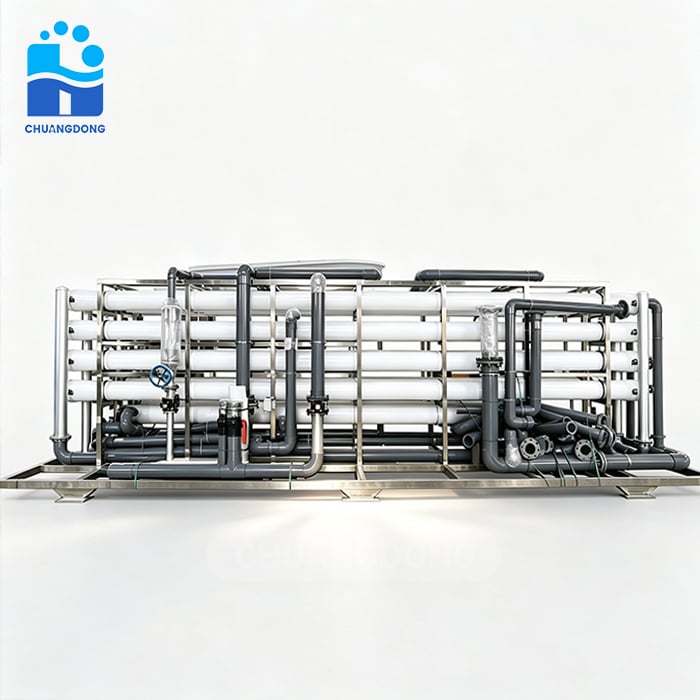
The band below reflects what Chuangdong builds and the brands it states openly. Figures are confirmed per project against the customer's water analysis and permeate target.
Core parameters and operational impact
| Key Metric / Parameter | Engineering Specification | Operational Impact and Benefit |
|---|---|---|
| Configuration | Single or double pass RO, optional EDI polishing stage | Process water through ultrapure water from one supplier |
| Capacity range | 100 L/h to 100 m³/h and above for municipal and industrial projects | Same design language from pilot skid to plant scale |
| Salt rejection | 96%–99% with thin-film composite elements | Predictable permeate quality against a defined TDS target |
| Membrane elements | DuPont FilmTec, Hydranautics, Toray, matched to feed chemistry | Element grade follows the actual fouling and pressure risk |
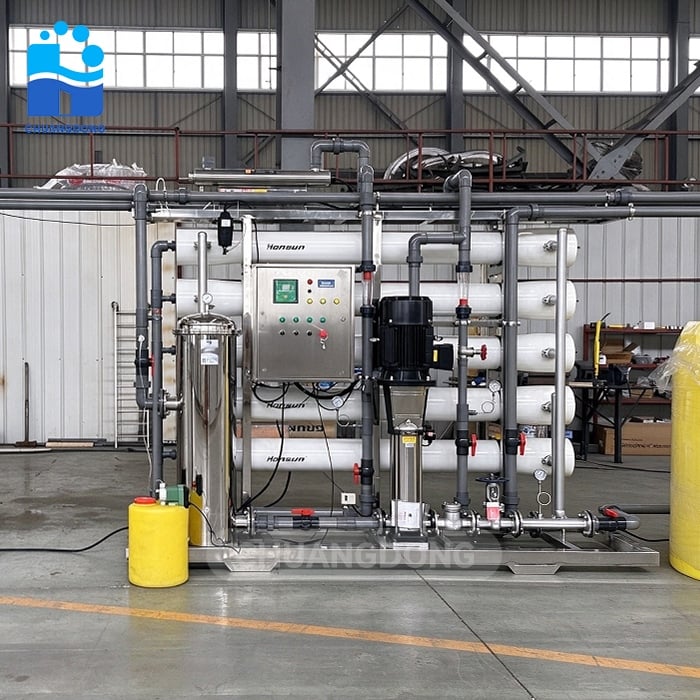
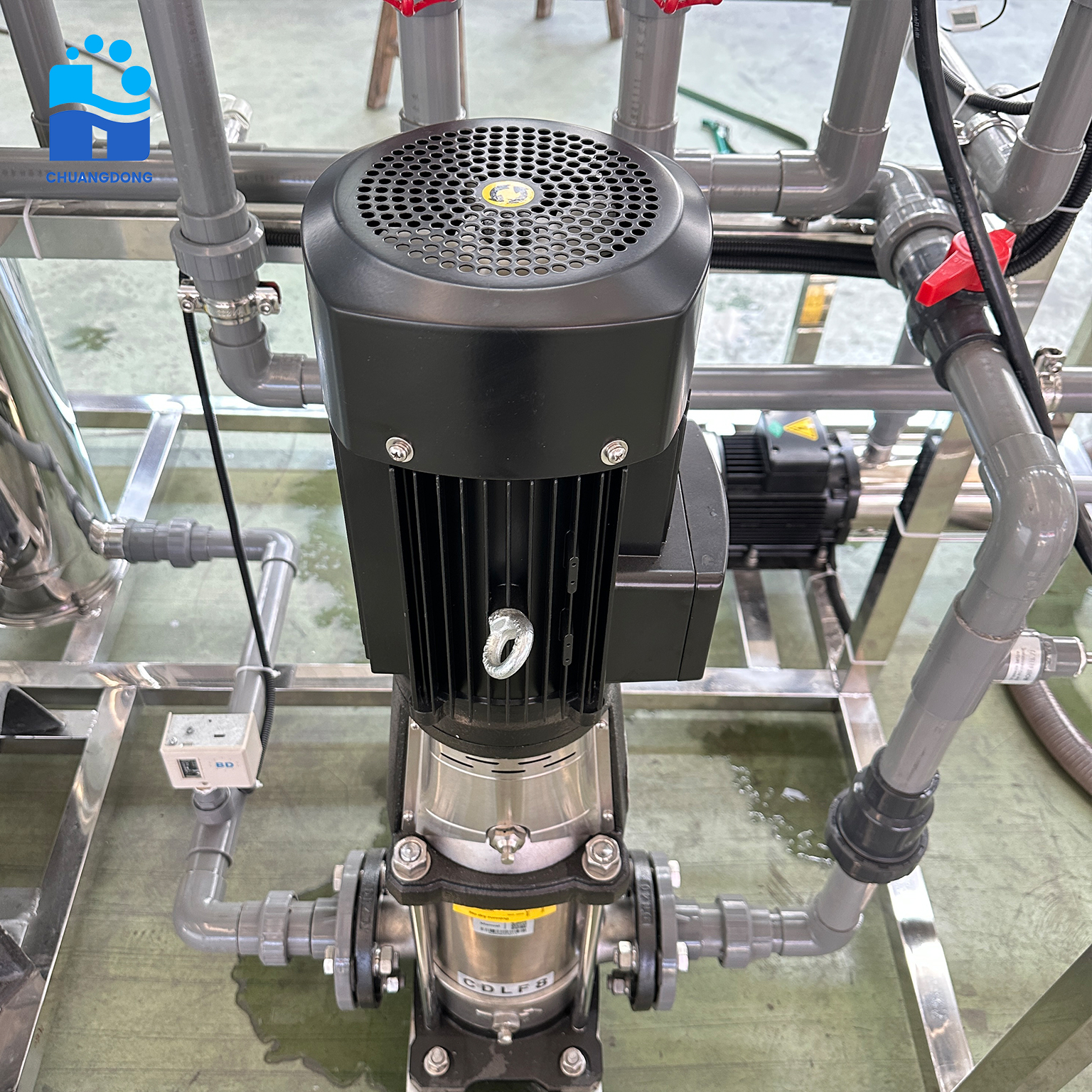
| High-pressure pump | Grundfos and CNP platforms, variable frequency where specified | Stable pressure, lower energy per cubic metre at part load |
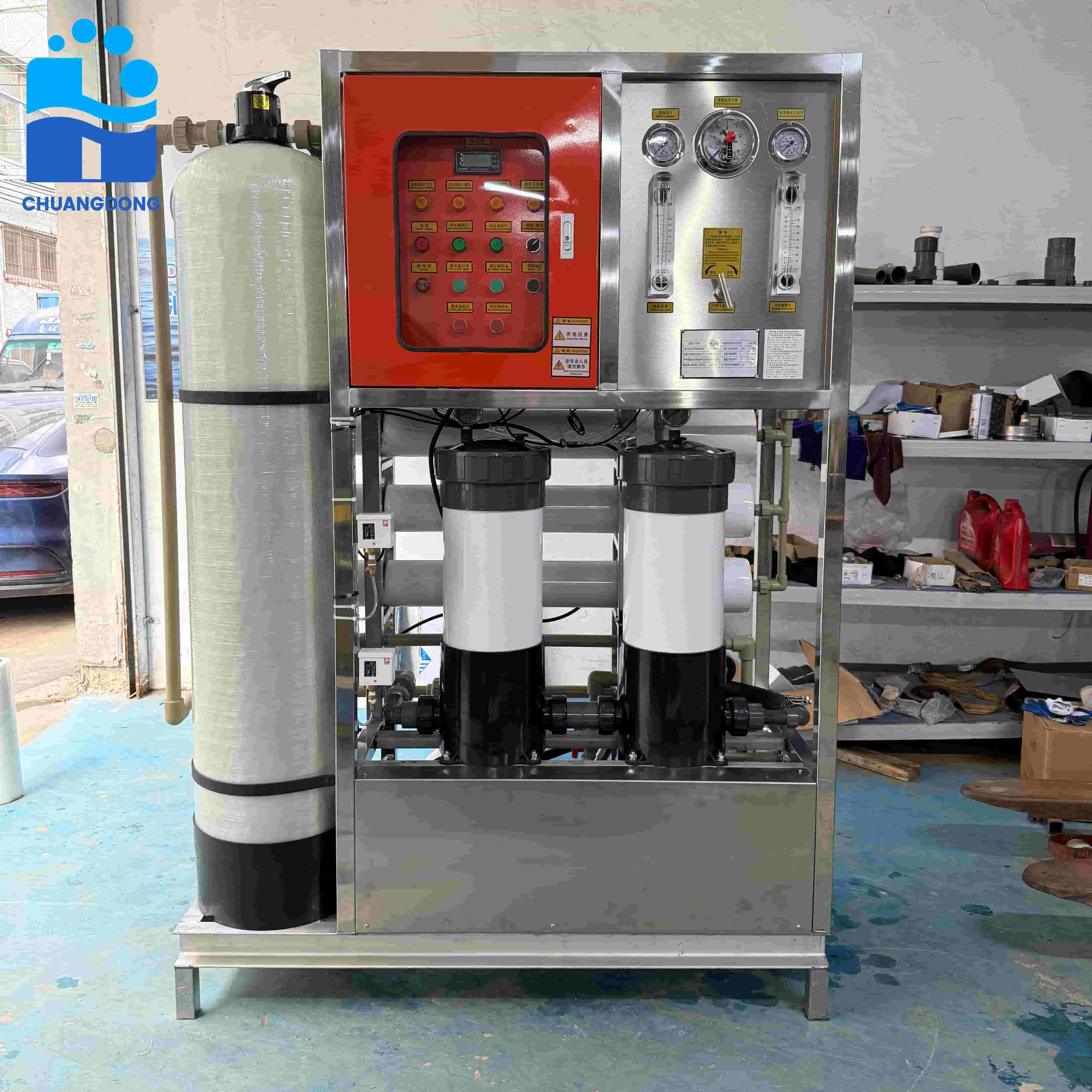
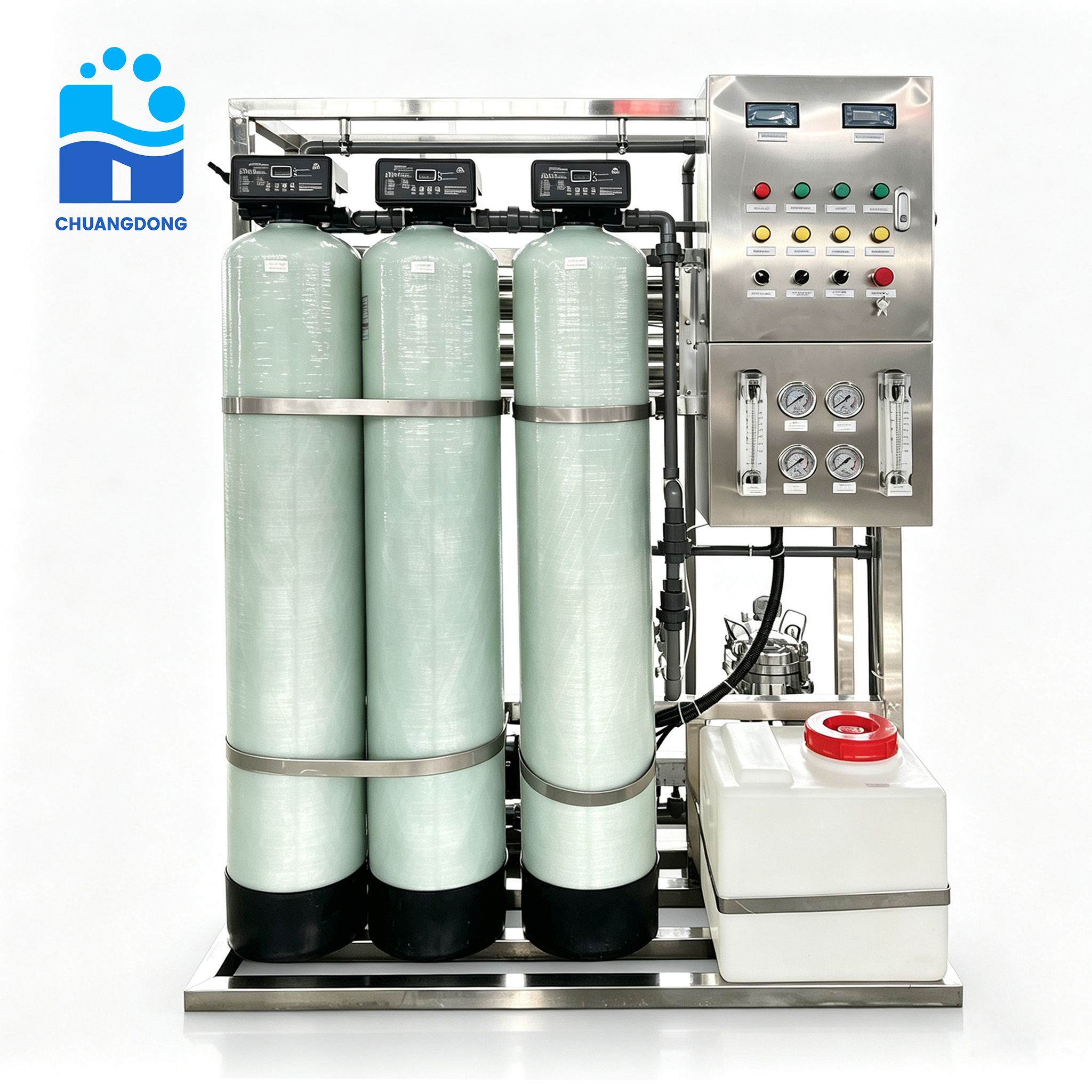
| Control system | Schneider Electric or Siemens PLC with flow, pressure, conductivity instrumentation | Live data and alarms instead of gauge interpretation |
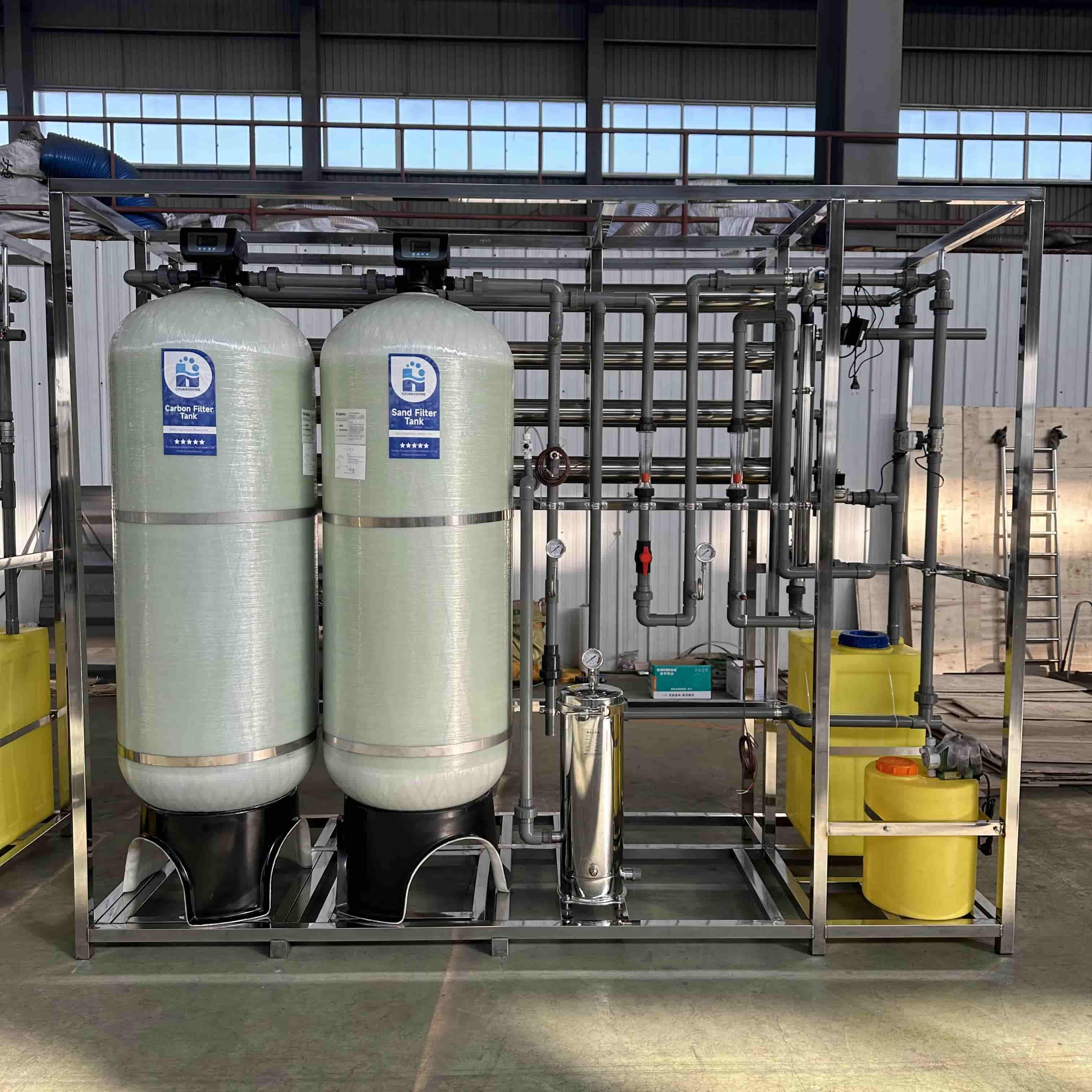
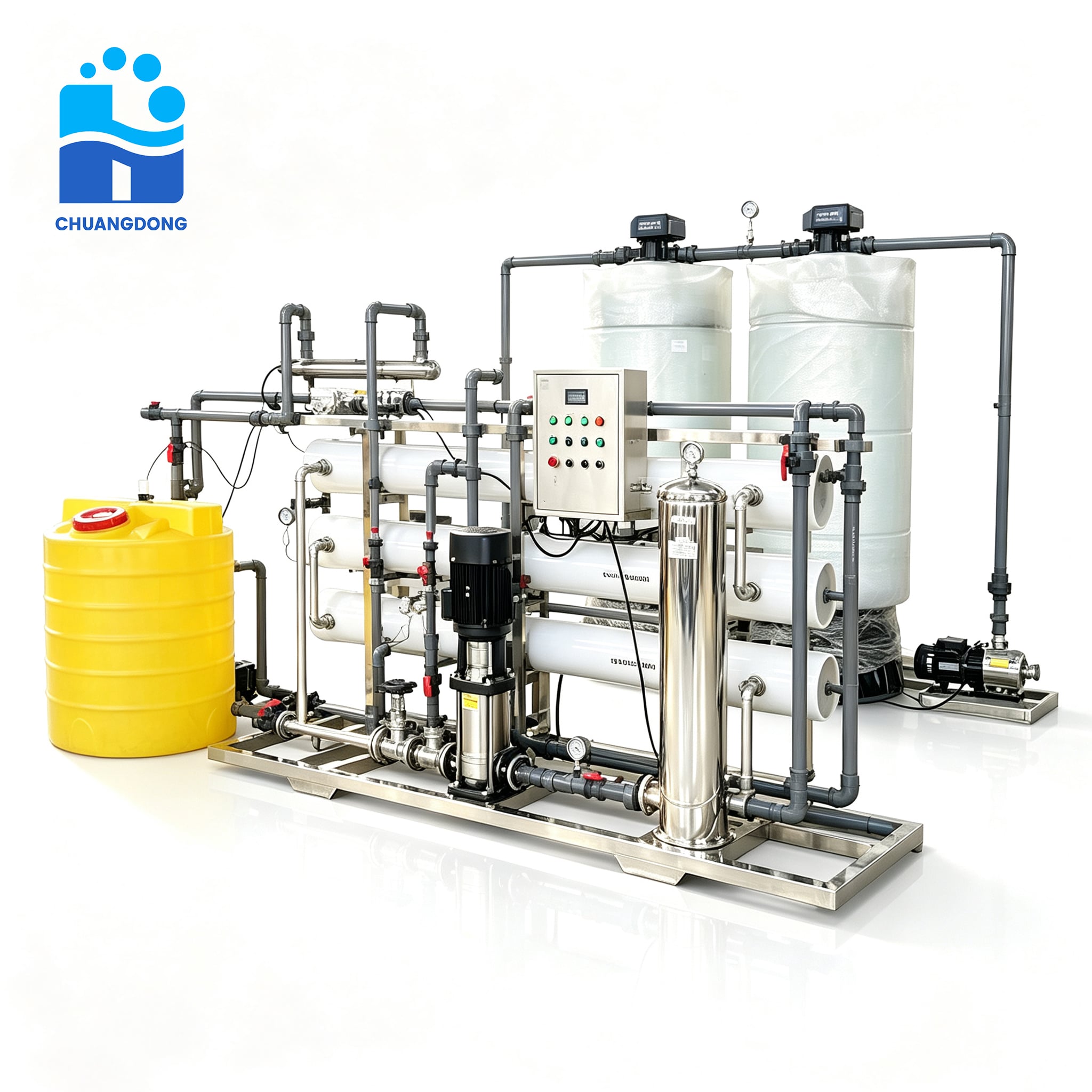
| Pretreatment | Multimedia and carbon filtration, softening, antiscalant dosing, iron and manganese removal, UF or MF, cartridge filtration | Membrane protected from the contaminants actually present |
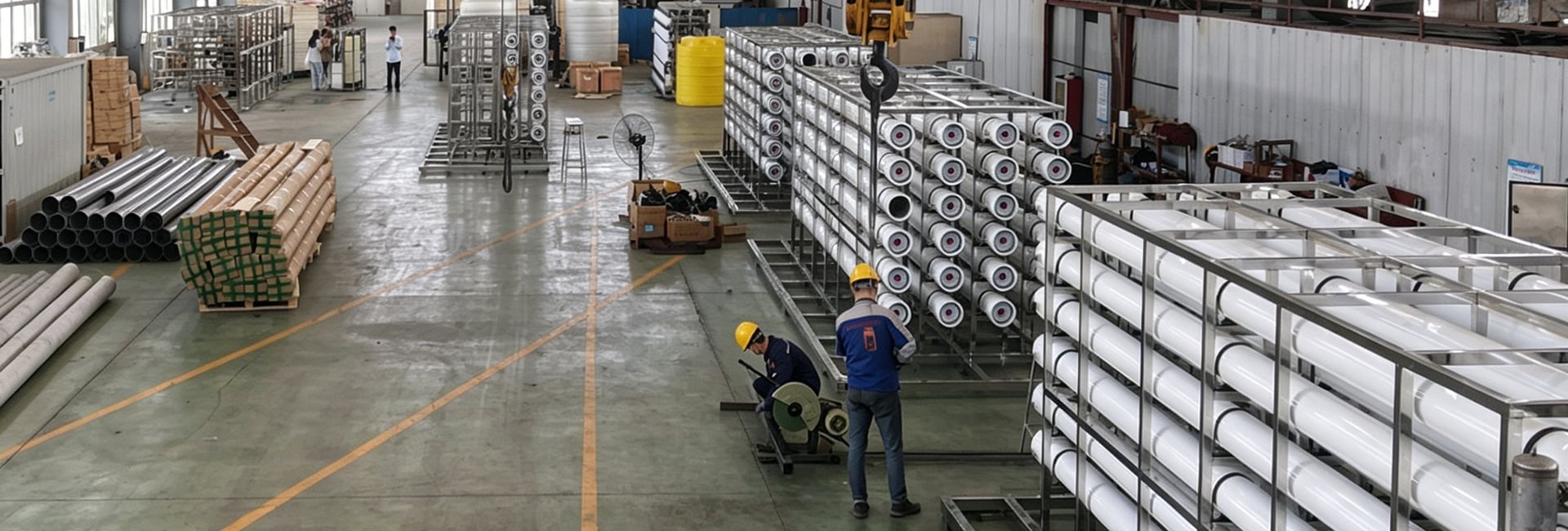
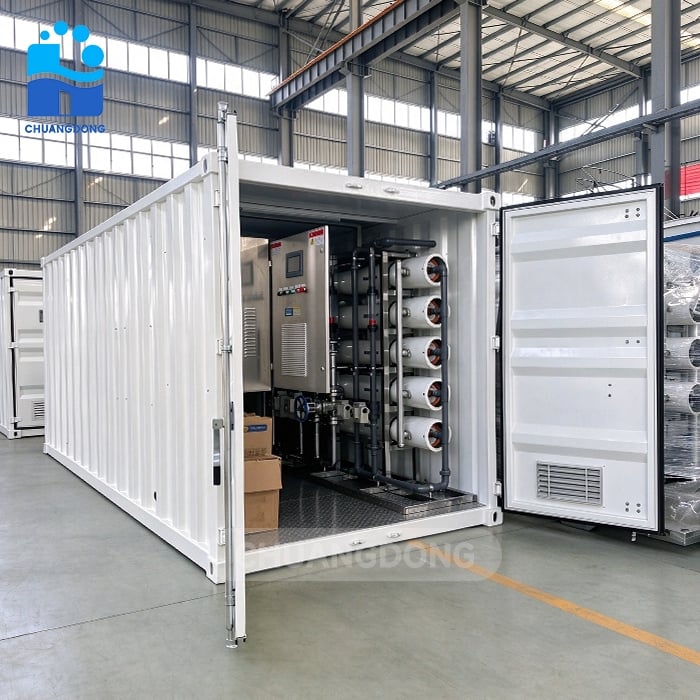
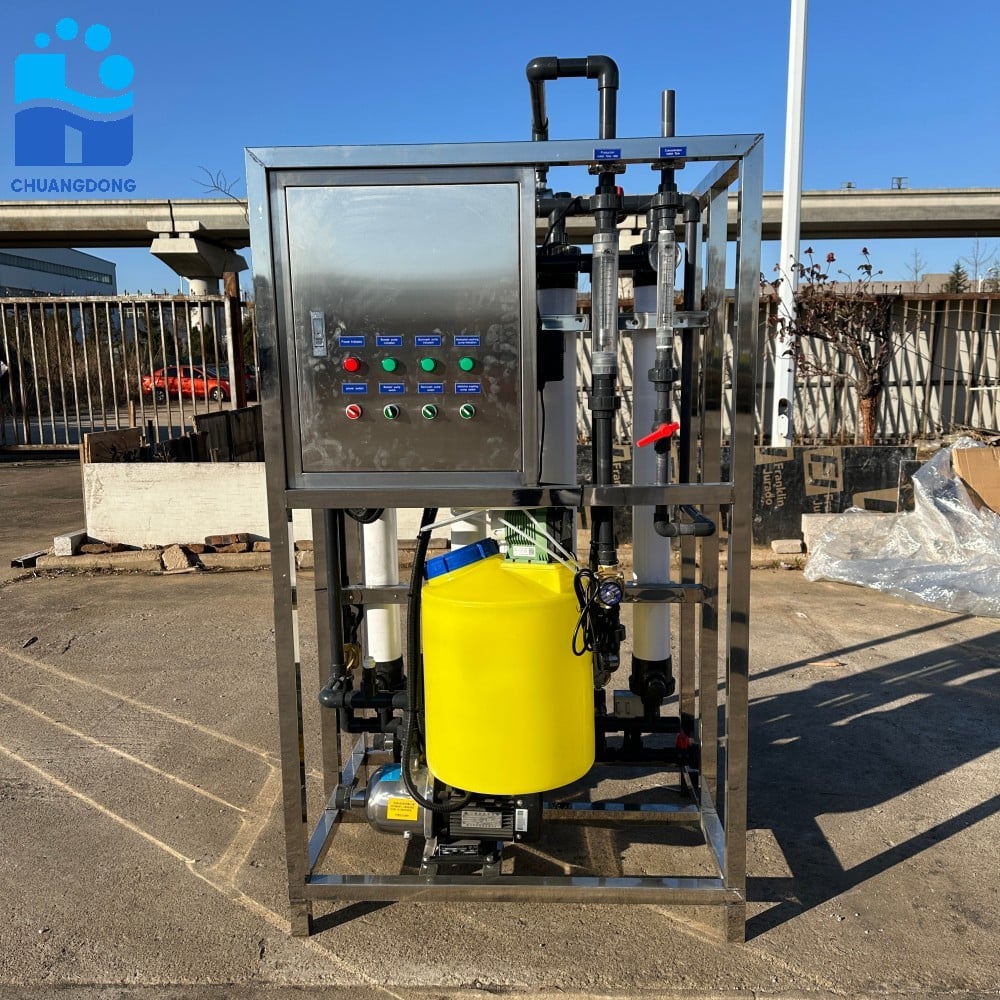
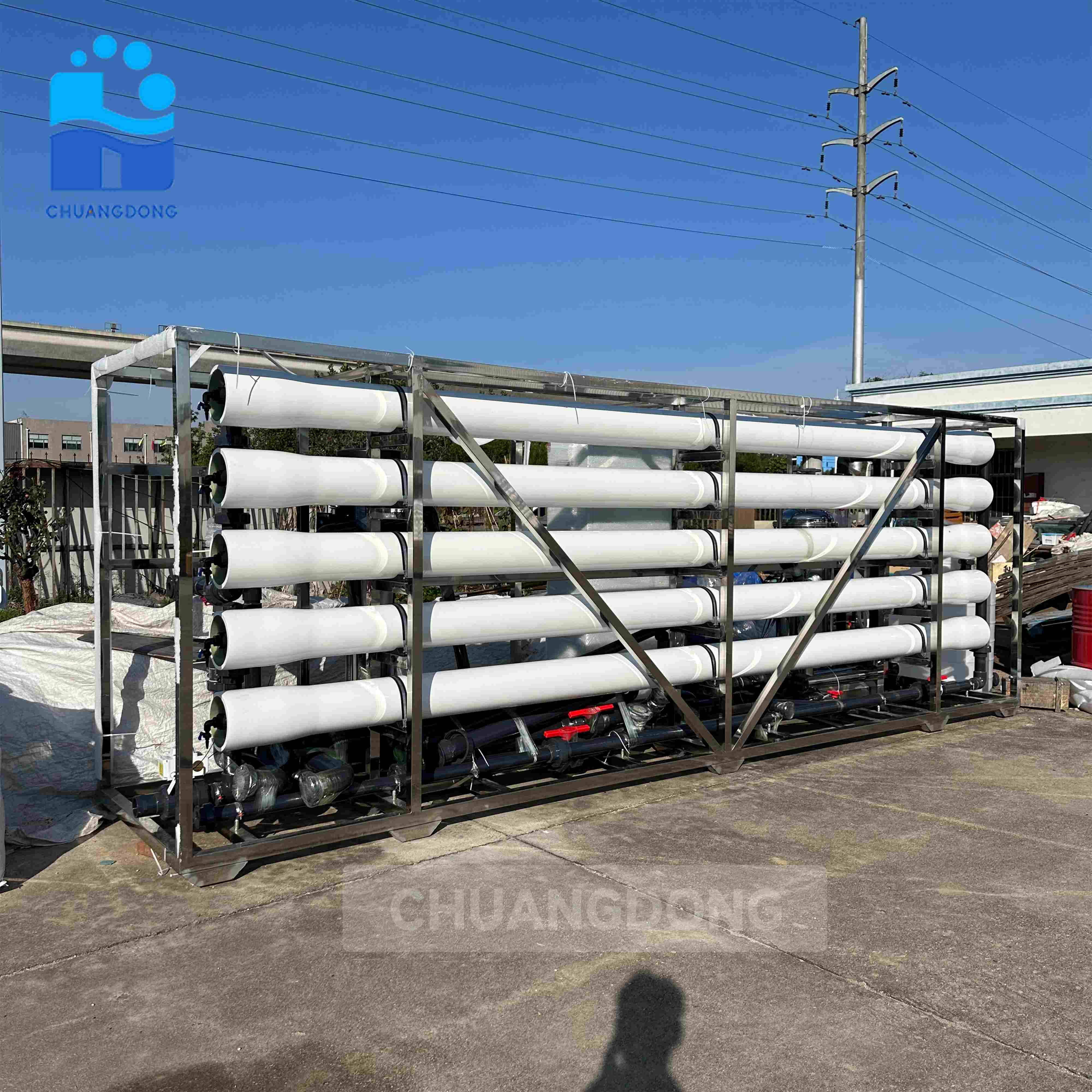
| Construction | Skid-mounted or containerised plant for remote and fast-track sites | Factory assembly and wet testing replace site fabrication |
| Certification and testing | CE and ISO9001 with multiple patents; water-flow test, pressure test, commissioning before shipment | Faults found in the factory, not in the first production week |
| Lead time | Standard 15–20 working days; custom 20–35 working days | Scheduling against a stated, repeatable slot |
Swipe the table sideways if any column is cut off.
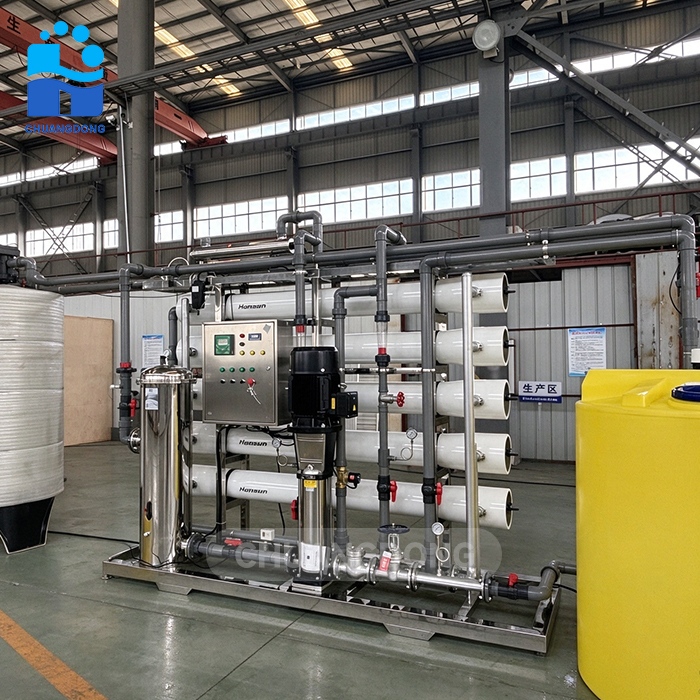
On paper the Industrial RO Water Treatment System meets specification. In the plant, differential pressure across the first stage climbs within weeks, permeate flow is trimmed back, and a cleaning cycle begins that never quite returns the train to its commissioning numbers. Raising the antiscalant dose treats the symptom while the pretreatment gap remains.
Chuangdong works backwards from the fouling risk in the customer's water report. High hardness with elevated alkalinity calls for softening or antiscalant dosing calculated against the Langelier Saturation Index of the concentrate, not the feed. Soluble iron and manganese call for oxidation and filtration ahead of the cartridges. Variable-turbidity surface water calls for UF or MF as a barrier. Free chlorine is removed by carbon or bisulphite dosing, so the polyamide layer is never exposed to an oxidant.
Catalogue skid versus engineered pretreatment
| Operational Factor | Minimal-Pretreatment Skid | Engineered Industrial RO Water Treatment System |
|---|---|---|
| Pretreatment basis | Standard filter set | Sized from full analysis and concentrate chemistry |
| Iron and manganese | Oxidise inside the plant | Oxidation plus dedicated filtration upstream |
| Antiscalant dose | Fixed, irrespective of recovery | Recovery-linked, on concentrate saturation |
| Chlorine protection | Assumed absent | Carbon or bisulphite barrier with residual monitoring |
| Cleaning interval | Reactive, alarm-driven | Planned, with triggers set at commissioning |
Swipe the table sideways if any column is cut off.
Nameplate capacity of an Industrial RO Water Treatment System is quoted at a reference temperature. Feed water at 10 °C in winter does not behave like feed water at 25 °C, and a train that delivers rated flow in summer can fall short in the coldest month, precisely when demand peaks. Fouling then consumes the margin that should have been reserved for it.
Sizing starts from three inputs: feed TDS, required permeate flow and target quality. Membrane arrays are staged and pressure calculated with a temperature correction, so winter performance is designed rather than discovered at commissioning. Where single pass is not enough for an Industrial RO Water Treatment System — high-pressure boiler feed, pharmaceutical, electronics — a second pass or EDI stage joins the same PLC architecture instead of being added later by a third party.
Configuration ladder by application
| Application | Typical Configuration | Design Focus |
|---|---|---|
| Boiler feed and heavy manufacturing | RO with softening or antiscalant | TDS, silica and scale reduction |
| Electronics ultrapure water | Double-pass RO plus EDI | Consistent low-conductivity permeate |
| Food, beverage and breweries | RO with carbon filtration | Repeatable mineral profile per batch |
| Municipal and community supply | Containerised RO plant | Rapid deployment, minimal civil works |
| Seawater and brackish sources | SWRO or BWRO with energy recovery | Pressure economy at high salinity |
| Reuse and zero liquid discharge | UF upstream plus staged RO | Recovery rate and discharge compliance |
Swipe the table sideways if any column is cut off.
An industrial RO plant often runs where the workforce is small, ambient temperature is high and nobody on site has commissioned a membrane train. A system that needs continuous manual adjustment is run outside its envelope within a month. Civil works are the other hidden cost: a stick-built plant means foundations, pipe racks, electrical routing and a commissioning window that competes with production.
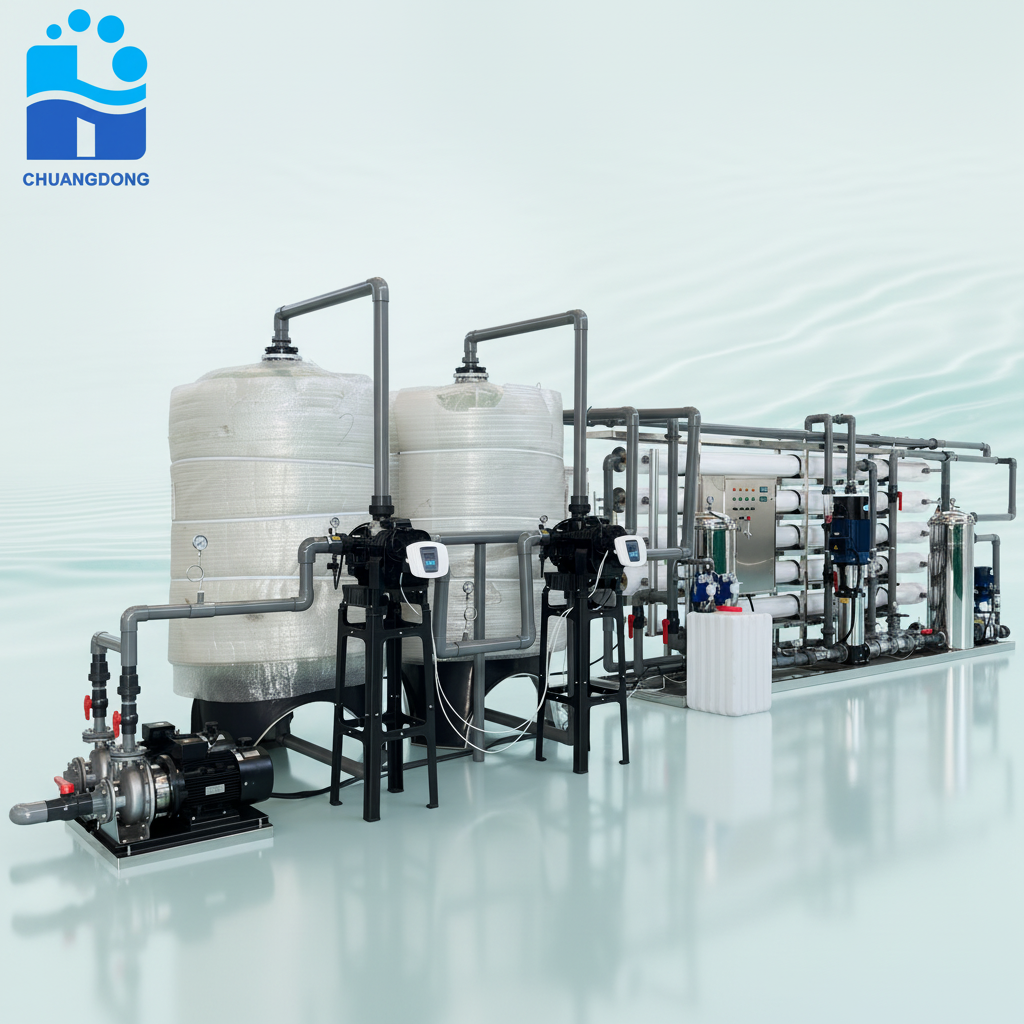
Chuangdong moves that complexity into the factory and into the controller. Flow, pressure and conductivity instrumentation feeds a Schneider Electric or Siemens PLC, so operators read live data and receive alarms rather than interpret gauges. Where site conditions are difficult or the schedule short, the same Industrial RO Water Treatment System ships as a containerised unit — piped, wired and wet-tested before dispatch, then set down and connected on site, as delivered to projects in Saudi Arabia, New Zealand, Ecuador and Kuwait.
Component transparency is the simplest test of a manufacturer. Chuangdong names the membrane, pump and control platforms on the quotation rather than calling them imported parts, so offers can be compared on equal terms. Behind the bill of materials sits a workshop of more than 20,000 m² with an in-house technical team, CE and ISO9001 certification and multiple patents. Every Industrial RO Water Treatment System passes a water-flow test, a pressure test and a commissioning run before dispatch, and consumables remain available as a continuing supply.
What is needed to size an Industrial RO Water Treatment System correctly?
Four inputs decide the design: raw water source with full analysis, required flow rate, target permeate quality and the application. Space constraints and material requirements should be stated at the same time, because both affect skid layout and wetted materials before a quotation is fixed.
How is capacity specified?
From 100 L/h to 100 m³/h and higher for municipal and industrial projects. Larger demands use multi-train configurations rather than one oversized array, which keeps cleaning and maintenance manageable.
What happens with high iron, manganese or hardness?
Pretreatment for an Industrial RO Water Treatment System is designed to the contaminant: oxidation and filtration for iron and manganese, softening or recovery-linked antiscalant dosing for hardness, UF or MF upstream where surface water quality varies.
Which components are used, and are brands disclosed?
Elements from DuPont FilmTec, Hydranautics or Toray; pumps from Grundfos or CNP; control platforms from Schneider Electric or Siemens, stated on the quotation so offers compare on equal terms.
Can the system produce ultrapure water?
Yes. A second pass or EDI stage is added where targets exceed single-pass capability — the usual requirement for boiler feed, pharmaceutical and electronics manufacturing — integrated into the same PLC.
What site services are required, and what does testing cover?
Feed supply, power at the specified voltage, concentrate and cleaning-waste drainage, and a foundation or container pad. Every system is water-flow tested, pressure tested and commissioned before dispatch; standard builds ship in 15–20 working days, custom builds in 20–35.
What support follows commissioning?
Technical support around the clock by email and WhatsApp covers remote diagnosis and troubleshooting, with on-site commissioning available and consumables supplied as a continuing service.
Send your raw water report, required flow rate and target permeate quality. The engineering team returns a configuration, a component list with stated brands, and a delivery slot — not a catalogue price.
REQUEST AN ENGINEERING QUOTE & LAYOUT DRAWINGDirect factory sourcing • CE / ISO9001 certified • Systems delivered to 80+ countries
Source: Qingdao Chuangdong Water Treatment Co., Ltd. — RO, UF, EDI, seawater and brackish water treatment systems. ymwatertreatment.com
 Hot News
2026-09-09
2026-04-03
2026-03-19
2026-03-18
2026-03-13
2026-01-20
Founded in 1995, Company is a leading machine manufacture and exporting company, with 25+ years of experience in the industry.
No. 818 Feiyu Road, Yinzhu Subdistrict, Huangdao District, Qingdao City
Copyright © 2026 Qingdao Chuangdong Water Treatment Co., Ltd. All rights reserved. Privacy Policy
 EN