 EN



Choosing between a reverse osmosis system and a traditional water filter represents one of the most important decisions for industrial and residential water treatment. Both technologies purify water, but they operate through fundamentally different mechanisms and serve distinct purposes. Understanding the differences between a reverse osmosis system and a water filter helps facility managers, plant operators, and property owners select the right solution for their specific water quality challenges and operational requirements.
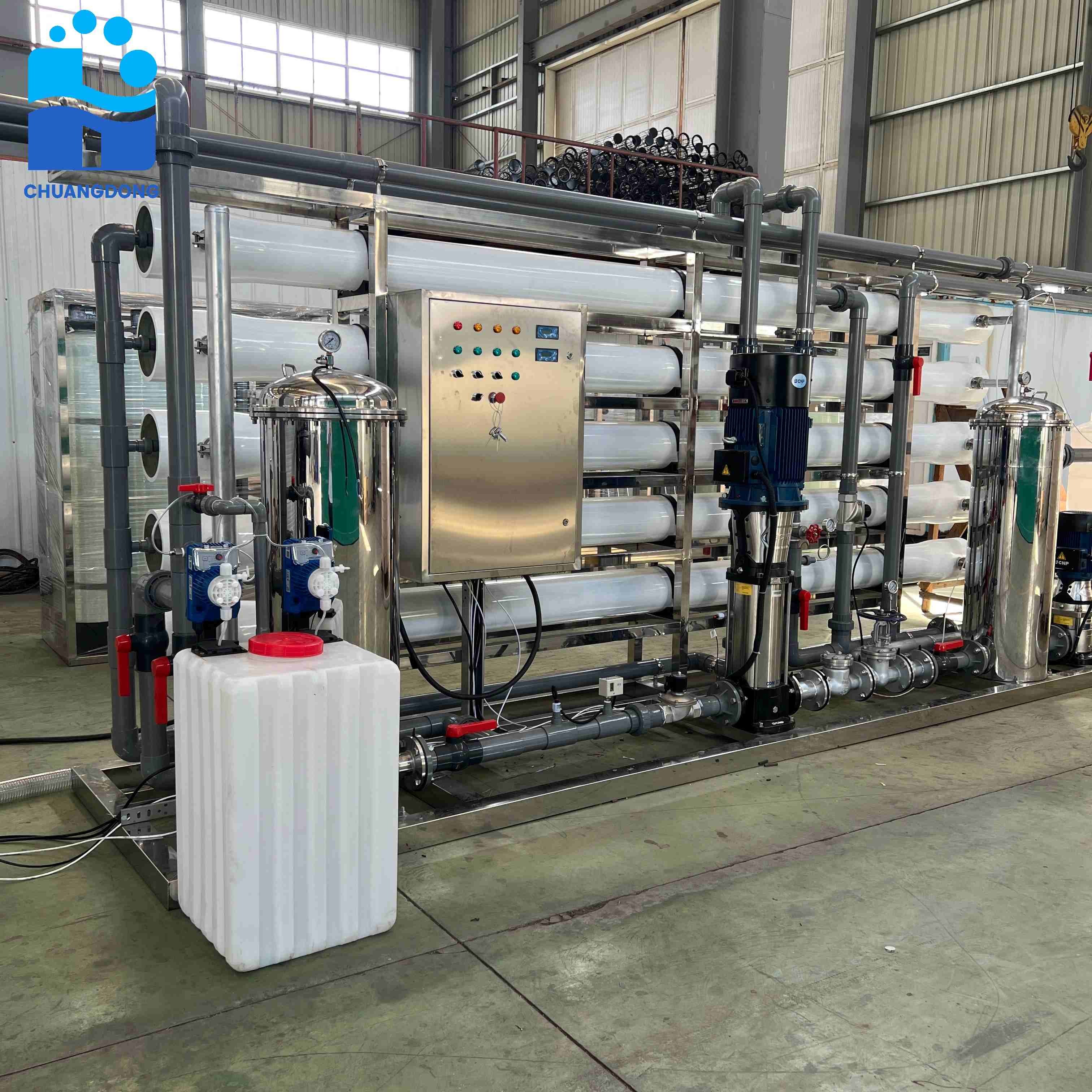
Both a reverse osmosis system and a water filter remove contaminants, but the depth and scope of purification differ significantly. A reverse osmosis system uses a semi-permeable membrane to force water molecules through microscopic pores, rejecting dissolved minerals, salts, and most contaminants. In contrast, a traditional water filter typically uses activated carbon, sediment media, or other absorbent materials to trap particles and some chemical compounds. The choice between these technologies depends on contaminant type, water quality goals, maintenance capacity, and budget constraints.
How Reverse Osmosis Systems and Water Filters Differ in Filtration Technology
Membrane-Based Purification versus Absorbent Media
A reverse osmosis system operates by applying pressure to force water through a semi-permeable membrane with pore sizes around 0.0001 microns. This membrane blocks nearly all dissolved solids, including sodium, calcium, fluoride, and most organic molecules. A reverse osmosis system can remove up to 95 percent of total dissolved solids from feed water. Traditional water filters, by comparison, use granular activated carbon or other porous media that absorb chemicals and trap particles larger than the media pore size, typically between 0.5 and 100 microns. A reverse osmosis system achieves deeper molecular-level purification, while a water filter provides surface-level and mechanical filtration.
Rejection Rates and Contaminant Coverage
The rejection rate of a reverse osmosis system typically exceeds 90 percent for dissolved minerals and salts, making it ideal for desalination and demineralization applications. A reverse osmosis system also removes pesticides, herbicides, and certain pharmaceuticals effectively. Water filters excel at removing chlorine, sediment, and some volatile organic compounds, but they cannot reliably remove dissolved salts or heavy metals at the molecular level. A reverse osmosis system produces permeate water with significantly lower total dissolved solids, while a water filter primarily addresses taste, odor, and visible turbidity. Industries requiring ultra-pure water, such as pharmaceutical manufacturing or semiconductor production, typically require a reverse osmosis system rather than a standard water filter alone.
Advantages and Disadvantages of Reverse Osmosis Systems
Key Strengths of Reverse Osmosis System Technology
A reverse osmosis system delivers superior water purity, making it essential for applications where dissolved solids pose a quality or safety concern. The technology is non-chemical, requiring no additives or regeneration chemicals unlike ion exchange resins. A reverse osmosis system also provides consistent, predictable performance across varying feed water conditions. The compact footprint of modern reverse osmosis system designs fits industrial, agricultural, and residential settings. Perhaps most importantly, a reverse osmosis system can reduce total dissolved solids to levels far below what any standard water filter achieves, making it indispensable for wastewater recycling, farming irrigation, and industrial reuse applications.
Limitations and Operating Considerations
A reverse osmosis system consumes more energy than a water filter because it requires pump pressure to force water through the membrane. Membrane fouling and scaling represent ongoing maintenance challenges; a reverse osmosis system generates reject water (typically 50 to 75 percent of feed water) that requires disposal or treatment. Membrane replacement costs are higher than cartridge replacement for a standard water filter. Pre-filtration is mandatory before a reverse osmosis system, adding equipment and complexity. A reverse osmosis system also works more slowly than a water filter, producing water at rates of 5 to 50 gallons per day depending on membrane size and feed water quality. Initial capital investment for a reverse osmosis system substantially exceeds the cost of a basic water filter installation.
Advantages and Disadvantages of Traditional Water Filters
Practical Benefits of Water Filter Systems
Water filters offer simplicity, affordability, and straightforward maintenance compared to a reverse osmosis system. A standard water filter requires minimal installation complexity and operates without electricity in many designs. Replacement cartridges for a water filter cost significantly less than reverse osmosis system membranes. A water filter produces water on-demand with higher flow rates and zero reject water, improving efficiency in high-volume applications. For removing chlorine, sediment, and improving taste and odor, a water filter delivers rapid results without the energy demands of a reverse osmosis system. Many users prefer a water filter for point-of-use applications like kitchen faucets or shower heads where rapid, affordable filtration suffices.
Performance Limitations Compared to Reverse Osmosis System
Water filters cannot reduce dissolved mineral content, making them unsuitable for desalination or demineralization tasks. A reverse osmosis system outperforms a water filter when feed water contains high levels of total dissolved solids, heavy metals, or salt. Water filters gradually lose effectiveness as activated carbon becomes saturated, often within 6 to 12 months of use. A reverse osmosis system maintains consistent rejection rates throughout its operational life until membrane degradation occurs. Water filters cannot reliably treat highly contaminated or saline water sources where a reverse osmosis system would be necessary. Industries requiring pharmaceutical-grade or ultra-pure water cannot depend on a water filter alone; they must upgrade to a reverse osmosis system for compliance with strict purity standards.
Selecting the Right Solution: Reverse Osmosis System versus Water Filter
Decision Factors and Application Scenarios
Choose a reverse osmosis system when your water contains high dissolved solids, salinity, heavy metals, or when ultra-pure water is a regulatory or operational requirement. Agricultural operations performing wastewater recycling or farming irrigation benefit from a reverse osmosis system's ability to reduce salts that damage crops or soil. Industrial facilities engaged in water reuse, cooling systems, or process water production typically require a reverse osmosis system to meet stringent quality standards. Choose a water filter when budget constraints exist, usage volumes are moderate, and primary concerns involve chlorine removal, sediment, taste, and odor improvement. Residential applications, small offices, and light-duty point-of-use scenarios often suit a water filter adequately. A combined approach—using a water filter for pre-treatment followed by a reverse osmosis system for final polishing—represents best practice in demanding industrial and agricultural water treatment scenarios.
Total Cost of Ownership and Operational Factors
A water filter typically costs $100 to $500 for equipment with cartridge replacement at $50 to $200 annually. A reverse osmosis system ranges from $500 to $5,000+ depending on capacity and complexity, with membrane replacement every 2 to 3 years costing $200 to $800. Energy consumption favors a water filter in most scenarios. However, when calculating the cost of a reverse osmosis system against the value of recycled water, reduced wastewater disposal fees, and compliance savings in industrial applications, a reverse osmosis system often delivers better long-term economics. Facility managers must evaluate reject water disposal costs, pre-filtration requirements, and space availability before committing to either technology. A reverse osmosis system justifies higher upfront investment when water quality demands exceed what a water filter provides.
FAQ
Can a water filter replace a reverse osmosis system?
No, a water filter cannot reliably replace a reverse osmosis system when dissolved solids, salinity, or heavy metals are present. A reverse osmosis system removes dissolved minerals at the molecular level, while a water filter addresses particles and some chemical compounds. For applications requiring ultra-pure water, compliance with pharmaceutical or semiconductor standards, or desalination for agricultural reuse, a reverse osmosis system is necessary. A water filter suits basic chlorine and sediment removal but falls short for industrial or intensive purification demands.
How often do membranes need replacement in a reverse osmosis system?
A reverse osmosis system membrane typically lasts 2 to 3 years under normal operating conditions, though lifespan depends on feed water quality and system maintenance. Frequent pre-filtration cleaning, water quality testing, and adherence to manufacturer guidelines extend a reverse osmosis system's membrane life. Replacing a reverse osmosis system membrane costs between $200 and $800, making regular maintenance planning essential for budgeting. Poor feed water quality or inadequate pre-filtration can reduce a reverse osmosis system membrane lifespan to 12 to 18 months.
Which technology is better for agricultural wastewater recycling?
A reverse osmosis system is superior for agricultural wastewater recycling because it removes salts and dissolved minerals that damage crops and soil structure. A reverse osmosis system enables farmers to recycle treated wastewater for irrigation without accumulating harmful dissolved solids over time. A water filter cannot achieve the salt removal and demineralization necessary for sustainable agricultural water reuse. Industries and farms engaged in water recycling and environmental stewardship universally rely on a reverse osmosis system to ensure recycled water meets crop and soil compatibility standards.