 EN




Designing a small desalination plant requires careful planning, site-specific assessment, and alignment with local water demand and infrastructure constraints. A small desalination plant serves communities, industrial facilities, or agricultural operations where freshwater sources are limited or contaminated. Unlike large municipal installations, a small desalination plant must balance capital efficiency with operational reliability while remaining scalable as demand grows.
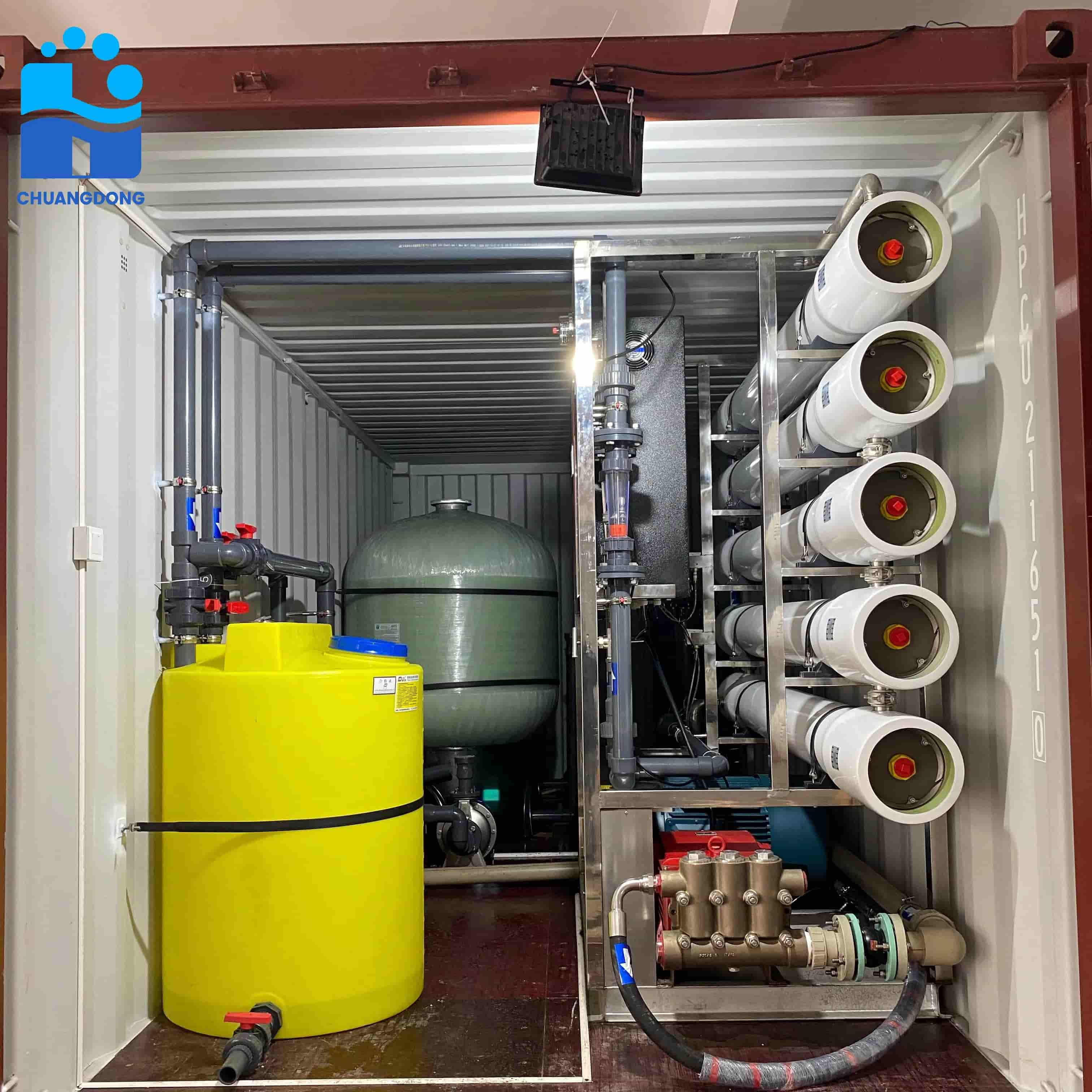
The foundation of any successful small desalination plant begins with understanding feed water quality, available space, power supply, and end-user requirements. A small desalination plant design must integrate proven treatment stages, robust pre-treatment systems, and cost-effective membrane or thermal technology. This guide walks through the essential design phases that transform a conceptual need into an operational facility producing potable or process water reliably.
Conducting Site Assessment and Resource Evaluation
Understanding Feed Water Characteristics
Before designing a small desalination plant, collect comprehensive data on your source water. Test salinity, hardness, turbidity, suspended solids, organic content, and chemical composition. A small desalination plant fed by brackish groundwater differs substantially from one using seawater or wastewater-derived feed. Your small desalination plant's pre-treatment strategy depends entirely on this baseline assessment. High turbidity sources require extensive filtration before reverse osmosis, while low-salinity brackish feeds may use simpler membrane stages or hybrid technologies.
Evaluating Space and Infrastructure Constraints
A small desalination plant footprint must fit available land while maintaining accessibility for maintenance and component replacement. Assess available electrical capacity, as a small desalination plant typically demands 15 to 200 kilowatts depending on capacity and technology choice. Verify water supply connections, discharge locations, and permitting requirements specific to your jurisdiction. A small desalination plant installed in a remote facility faces different infrastructure challenges than one located near municipal infrastructure, influencing decisions on containerized versus modular construction.
Selecting Technology and Capacity Planning
Choosing Between Reverse Osmosis and Thermal Methods
Reverse osmosis dominates small-scale desalination because it delivers energy efficiency and modular scalability. A small desalination plant using reverse osmosis typically recovers 40 to 70 percent of input water as product, with rejected brine requiring proper disposal. Thermal distillation suits applications where waste heat exists or where feed water contains fouling compounds that damage membranes. For a small desalination plant, reverse osmosis generally offers lower operational cost and simpler automation, making it the default choice unless specific process conditions demand thermal separation.
Sizing Capacity to Match Actual Demand
A small desalination plant must be sized to meet peak demand while maintaining economic operation. Undersizing a small desalination plant forces continuous maximum load operation, reducing membrane life and increasing downtime. Oversizing wastes capital and energy on unnecessary capacity. Calculate your small desalination plant's required daily production volume, peak hourly flow, and future growth scenarios over ten to fifteen years. A small desalination plant designed for 50 cubic meters per day differs fundamentally from one targeting 200 cubic meters per day in membrane count, pump selection, and storage strategy.
Designing Pre-Treatment and Membrane System Architecture
Building Effective Pre-Treatment Stages
Pre-treatment protects membrane integrity and extends a small desalination plant's operational life. Implement coarse filtration, cartridge filtration, and activated carbon treatment appropriate to your feed water profile. A small desalination plant serving brackish well water may use multimedia filters and micron cartridges, while seawater-fed systems add sand filters and additional coagulation stages. Install pressure gauges and differential pressure monitors so operators detect filter clogging before it damages membranes. A small desalination plant with inadequate pre-treatment experiences rapid membrane fouling, soaring maintenance costs, and extended downtime.
Configuring Reverse Osmosis Membrane Arrays
A small desalination plant membrane system architecture balances feed flow, membrane count, and staging strategy. Single-stage configurations suit low-salinity feeds and higher allowable brine discharge. Multi-stage systems with concentrate recirculation increase recovery rates when brine disposal costs are high. A small desalination plant handling saline groundwater typically uses one or two membrane stages with pressure vessels containing four to twelve individual elements. Select membrane materials matching your feed water temperature, pH range, and chemical composition. A small desalination plant that mismatch membrane materials risks accelerated degradation and failure.
Planning Post-Treatment and System Integration
Adding Remineralization and Stabilization
Reverse osmosis produces very pure water that lacks minerals and stabilization compounds. A small desalination plant must add post-treatment to achieve pH balance and mineral content meeting drinking water standards. Remineralization filters containing limestone or alkaline minerals increase pH and hardness to acceptable ranges. A small desalination plant's post-treatment stage typically includes degassing, aeration, or carbon dioxide injection to achieve target pH and eliminate corrosion risk. This step prevents pipe damage and improves water palatability for end users.
Integrating Storage, Disinfection, and Brine Management
A small desalination plant requires storage capacity to buffer production against variable demand and maintenance downtime. Size storage tanks for two to eight hours of production, depending on demand volatility and operating schedule. Incorporate ultraviolet disinfection or chlorination appropriate to your water quality and regulatory requirements. A small desalination plant also demands responsible brine disposal or recovery. Options include evaporation ponds, deep-well injection, or crystallization for mineral recovery. A small desalination plant operator must verify compliance with local discharge regulations before selecting disposal methods, as environmental constraints often drive this decision.
FAQ
What is the typical capacity range for a small desalination plant?
A small desalination plant typically produces between 10 and 500 cubic meters of potable water daily. Capacity varies by application, from rural communities requiring 50 to 100 cubic meters daily to industrial facilities or larger municipalities requiring 300 to 500 cubic meters daily. Within this range, a small desalination plant remains economically viable and operationally manageable by local or regional operators without requiring massive centralized infrastructure.
How long does it take to design and build a small desalination plant?
Design and construction timelines for a small desalination plant typically span six to eighteen months. Initial site assessment and feasibility study require two to four months. Engineering design for a small desalination plant takes another two to four months. Manufacturing, procurement, and installation of a small desalination plant occupy four to eight months depending on complexity and component availability. Containerized or modular a small desalination plant units can compress timelines to four to six months total, while custom integrated systems require longer lead times.
What are the primary operating costs for a small desalination plant?
Operating costs for a small desalination plant include energy consumption, membrane replacement, chemical treatment, labor, and maintenance supplies. Energy typically represents 35 to 50 percent of operational expenses in a small desalination plant. Membrane replacement every three to seven years adds significant periodic costs. A small desalination plant serving 100 cubic meters daily generally costs between 0.50 to 2.00 dollars per cubic meter to operate, with variations based on feed water salinity, technology choice, and local energy prices.