EN


- Overview
- Recommended Products
-
Collect your raw water quality report, required flow rate, and water quality standards
2. Customize the process layout and send a formal quotation
3. Confirm drawings, technical parameters, and contract details
4. Arrange production and complete factory pre-assembly and testing
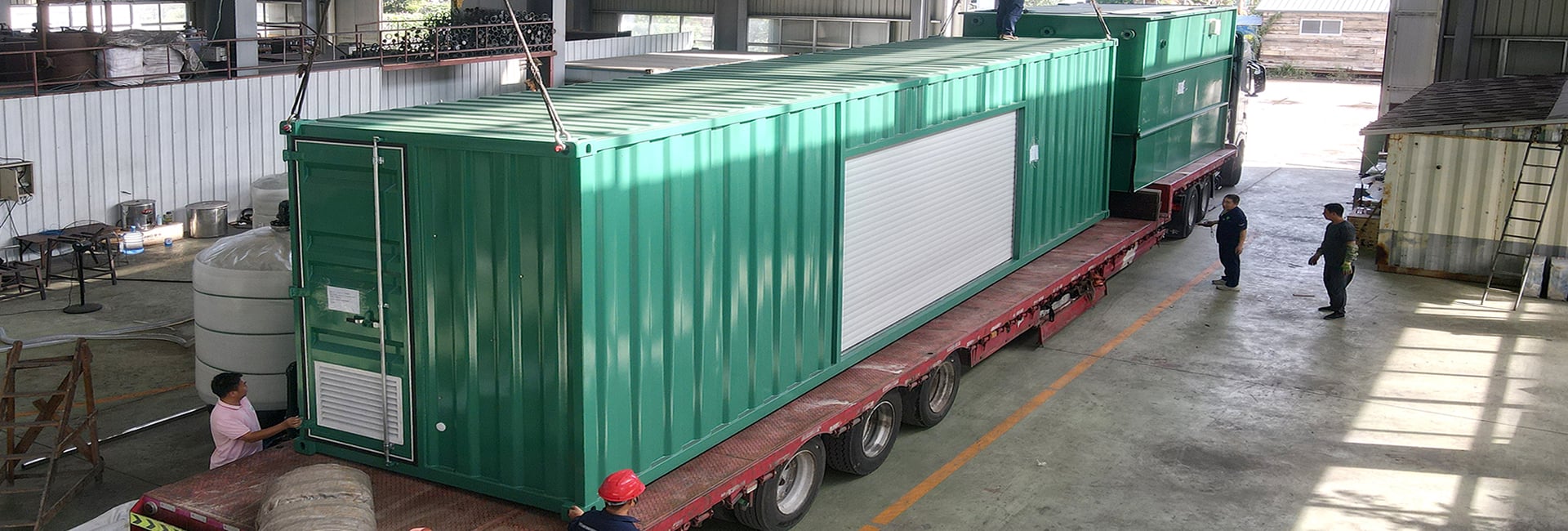
5. Pack and ship, with installation drawings included
6. Provide remote guidance; optional on-site commissioning by overseas engineers
7. Provide long-term after-sales service and spare parts supply
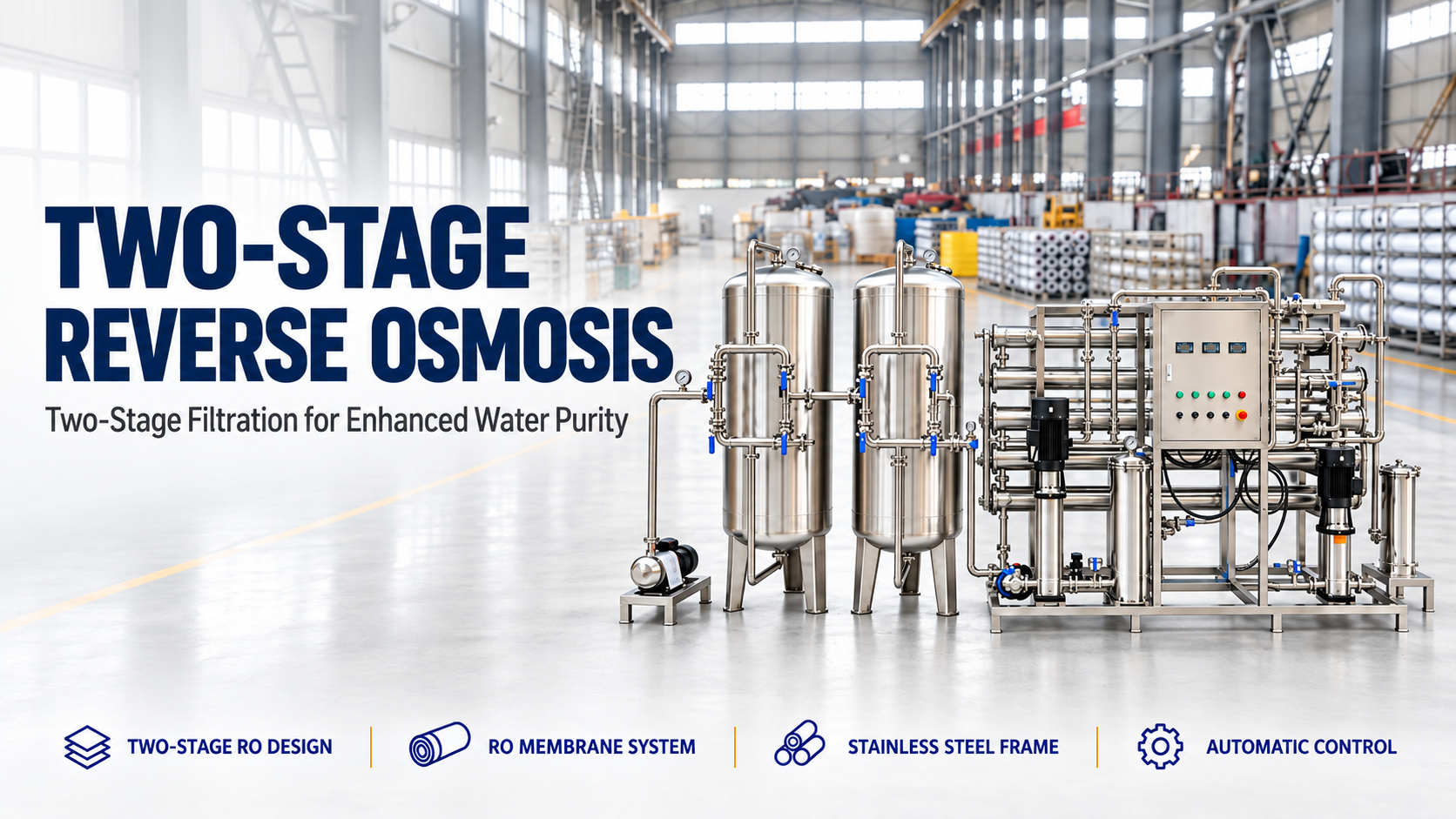
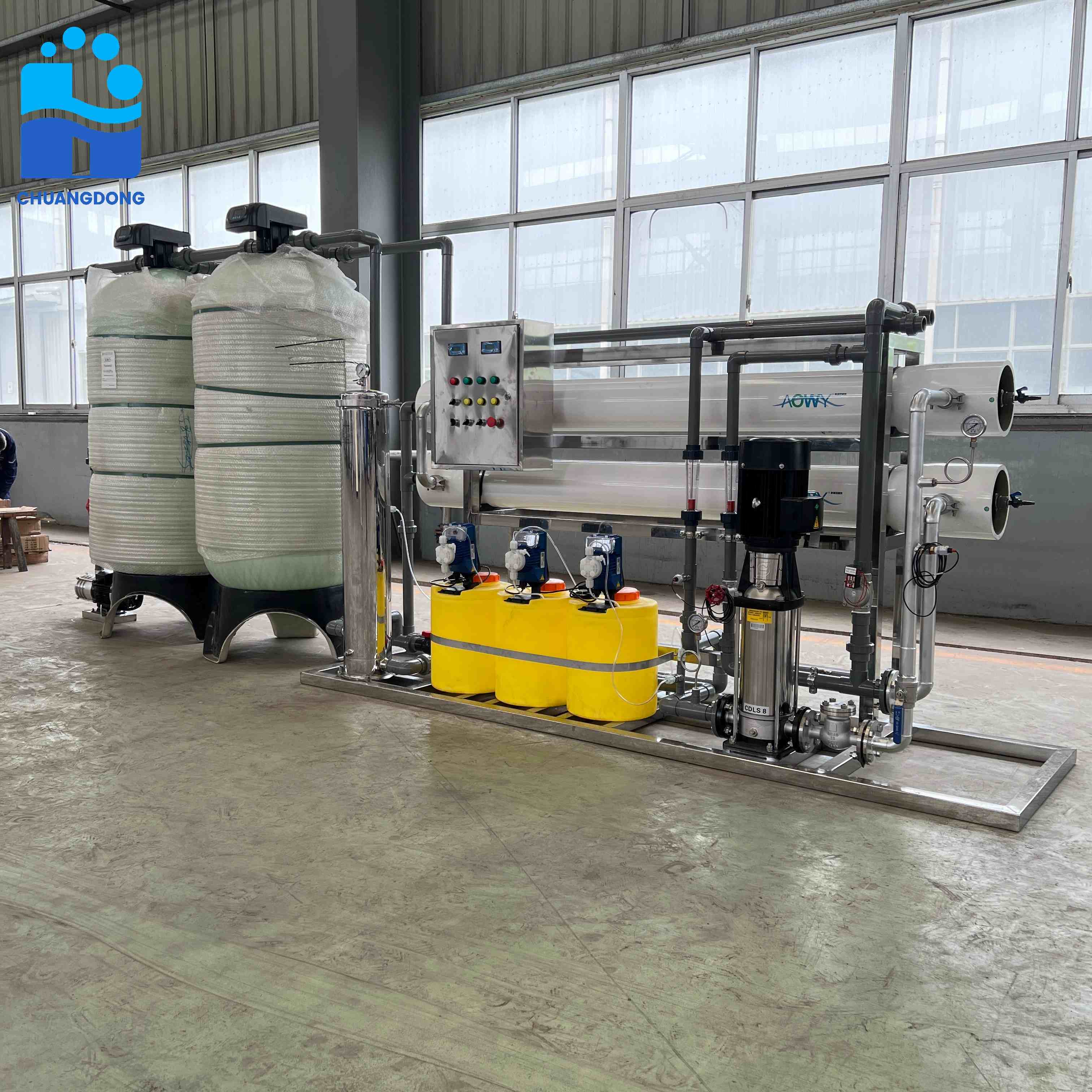
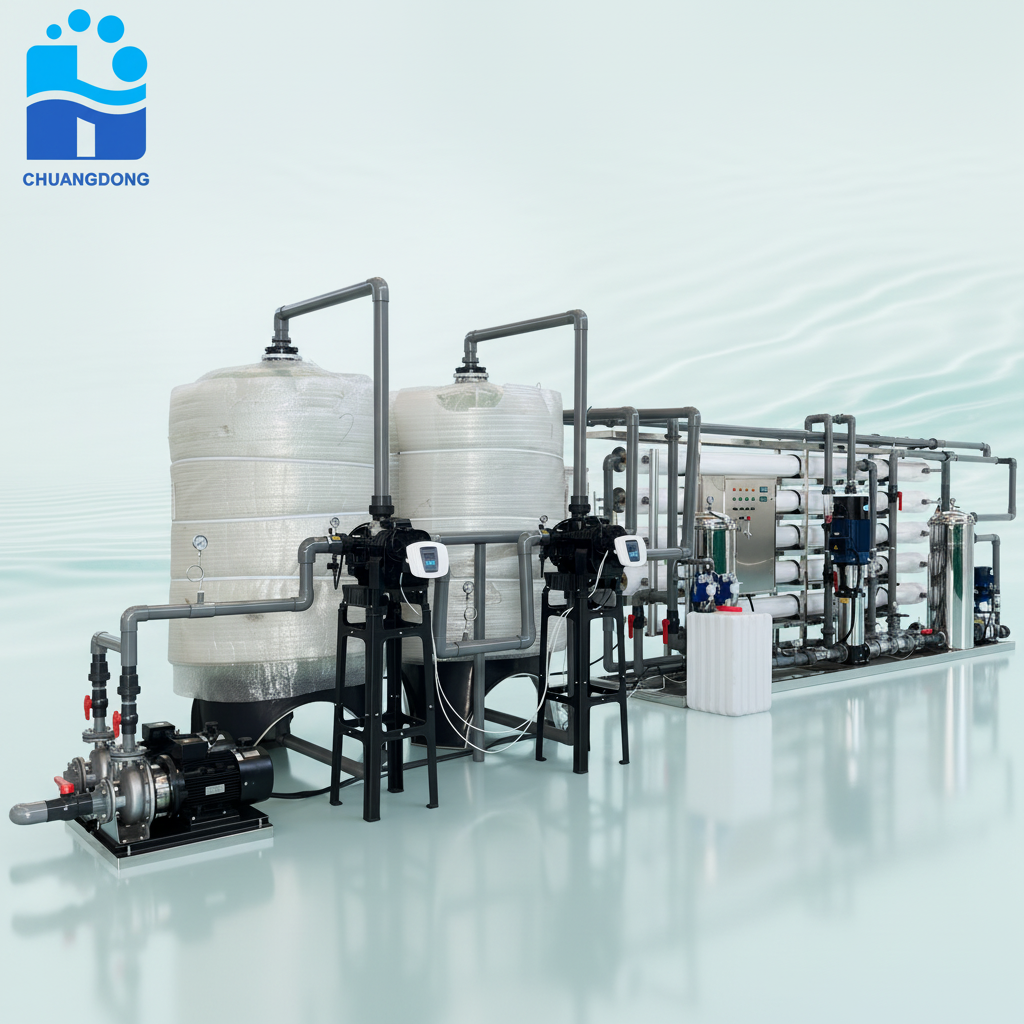
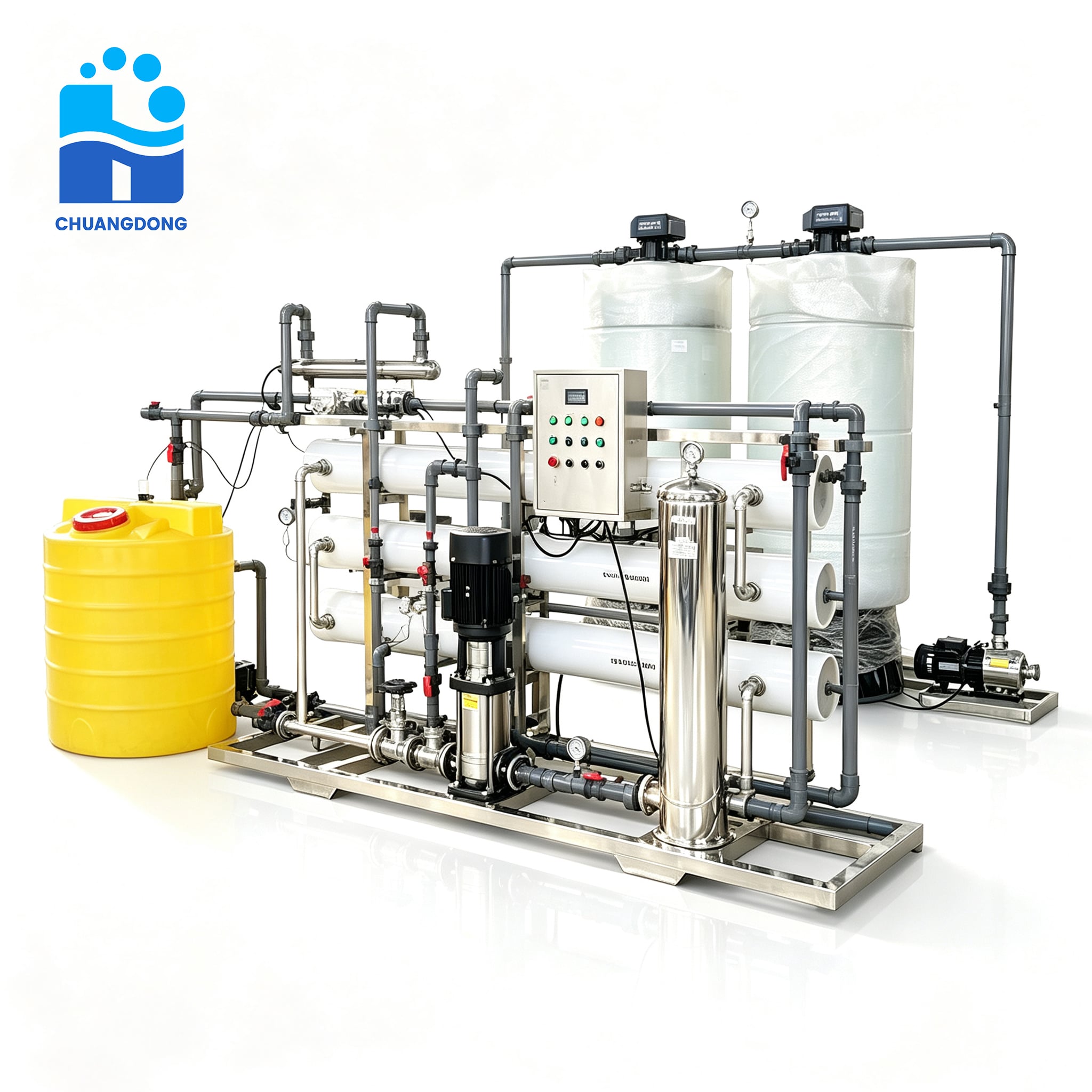
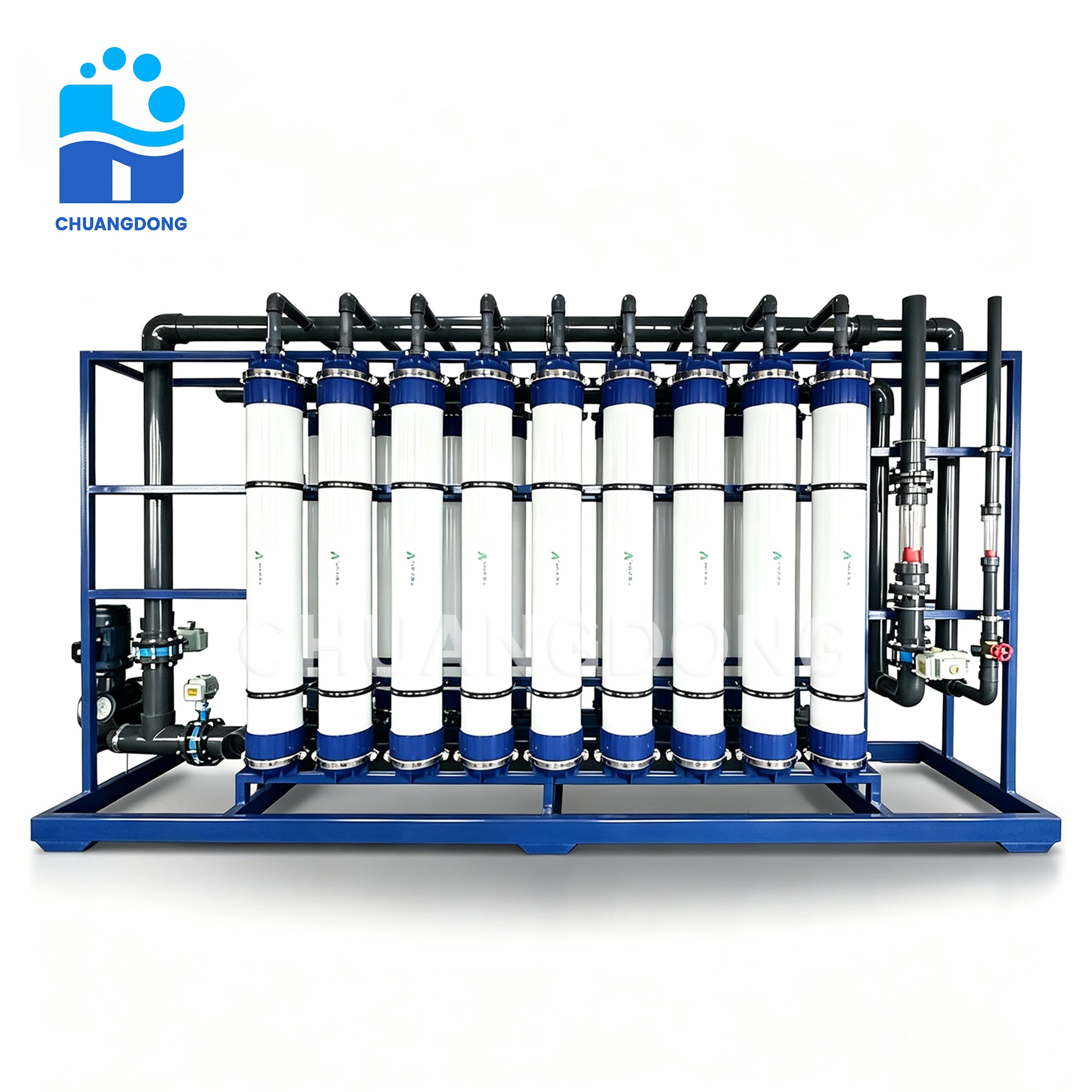
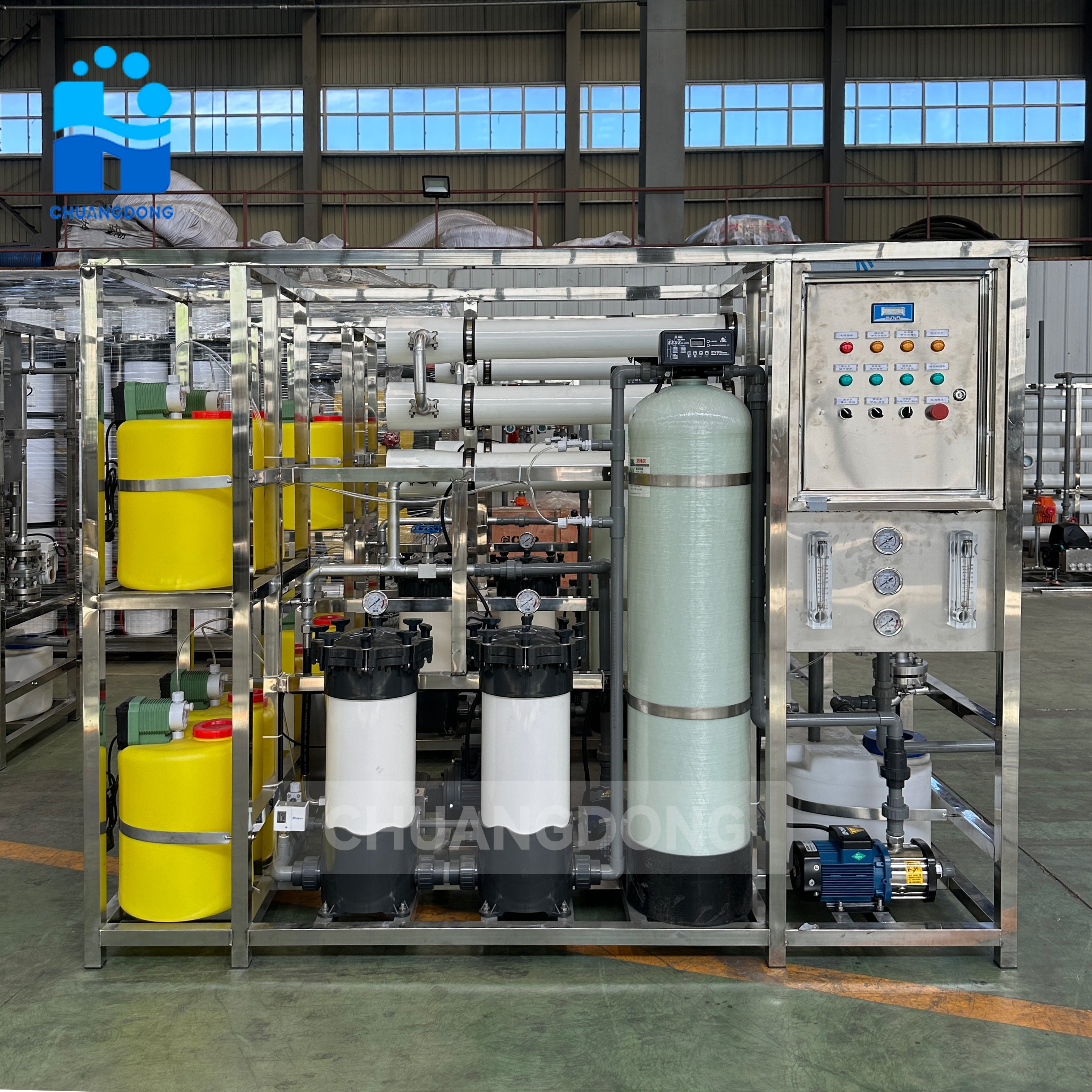
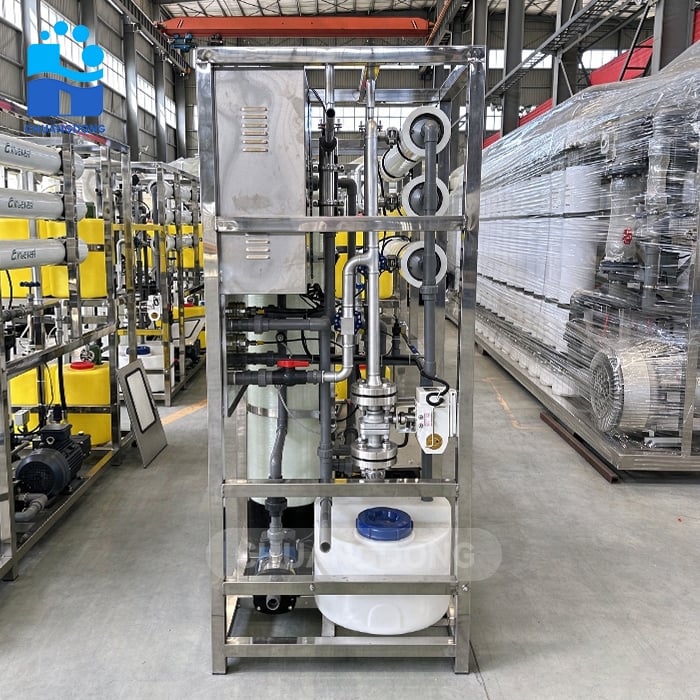
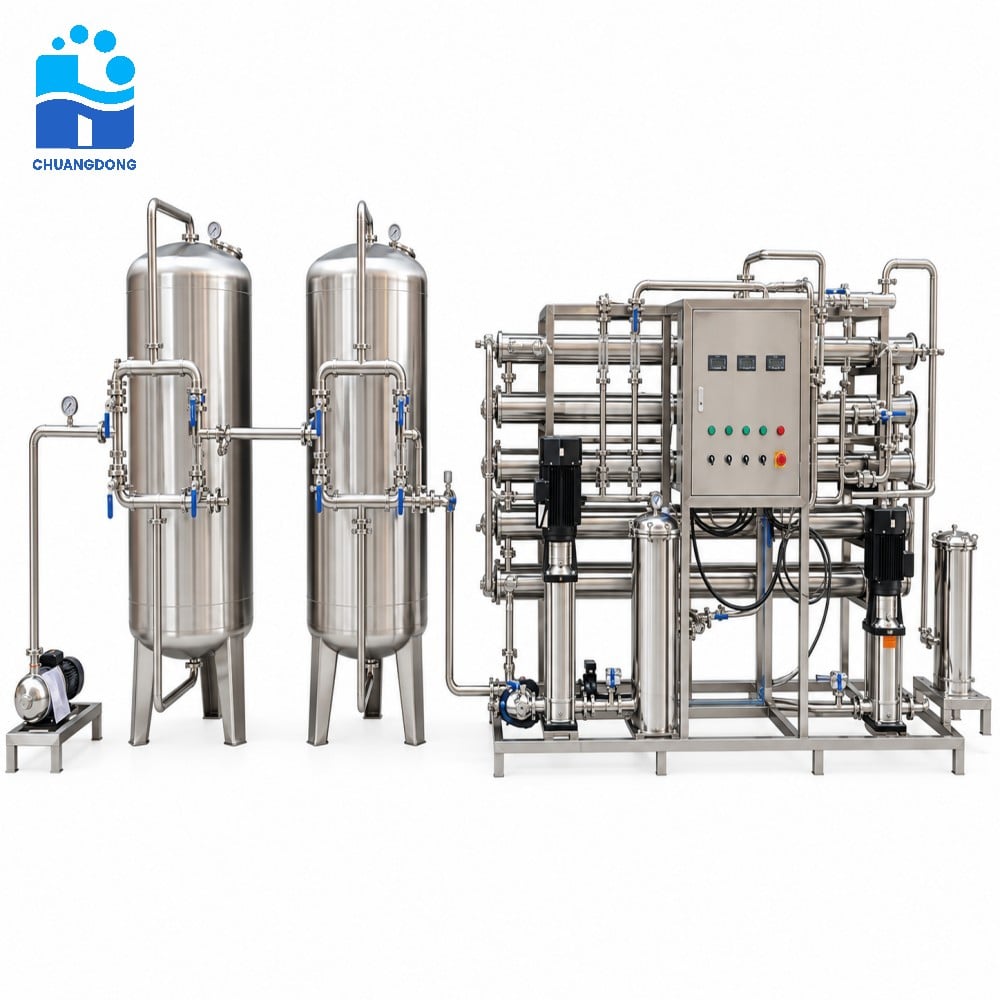
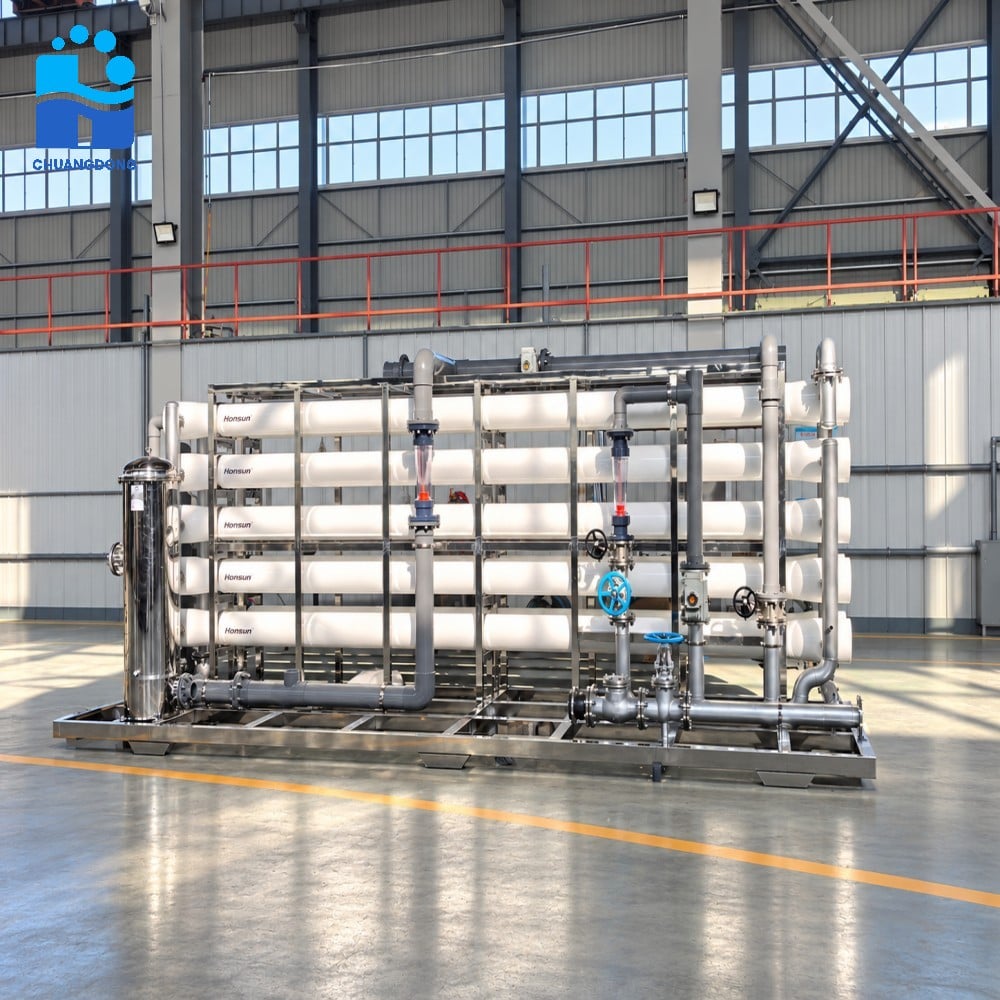
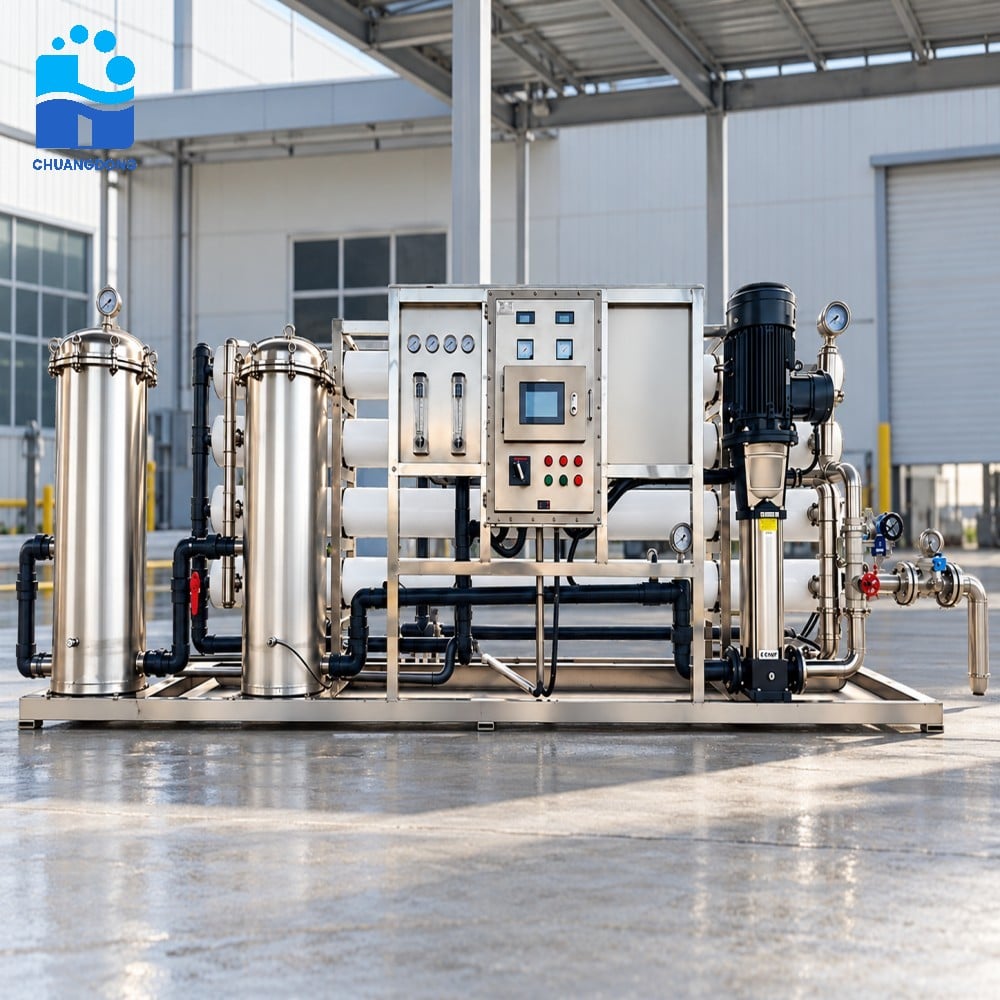
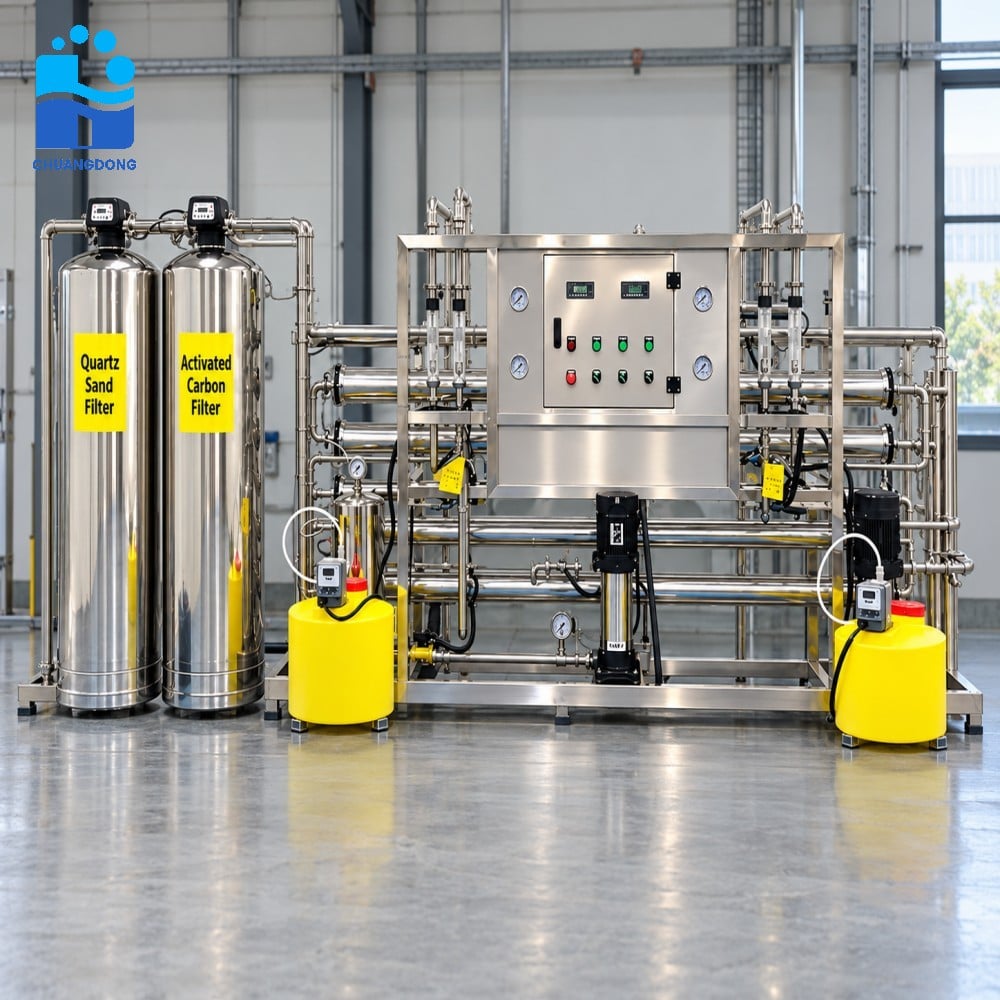
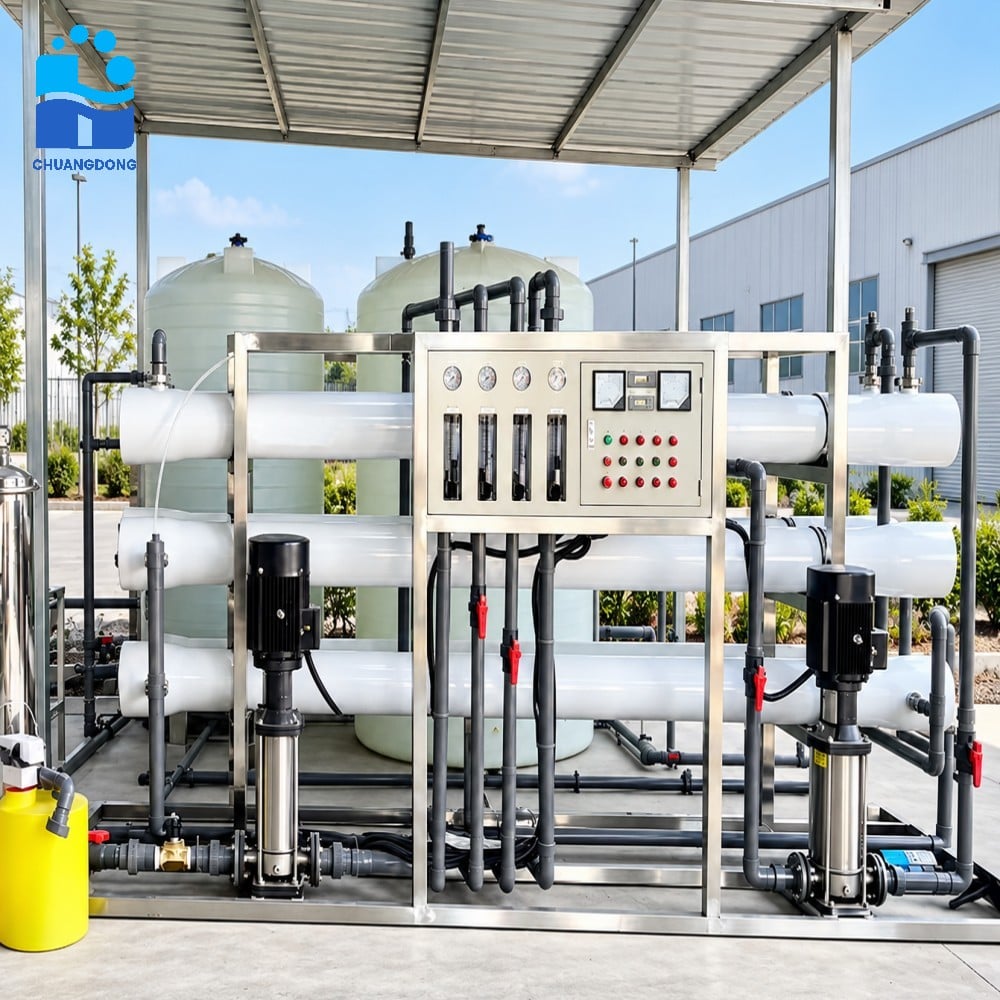
Chuangdong's two-pass reverse osmosis systems feature a modular design and flexible customization to meet different high-purity water requirements. Available capacities include:
Small-Capacity Systems: 0.25–2 m³/h, suitable for laboratories, small workshops, and pilot-scale production.
Standard Industrial Systems: 3–20 m³/h, commonly used in medium-sized industrial plants.
Large-Scale Integrated Systems: 25–100 m³/h and above, featuring multiple membrane units connected in parallel to support large-scale, continuous production.
Working Principle:
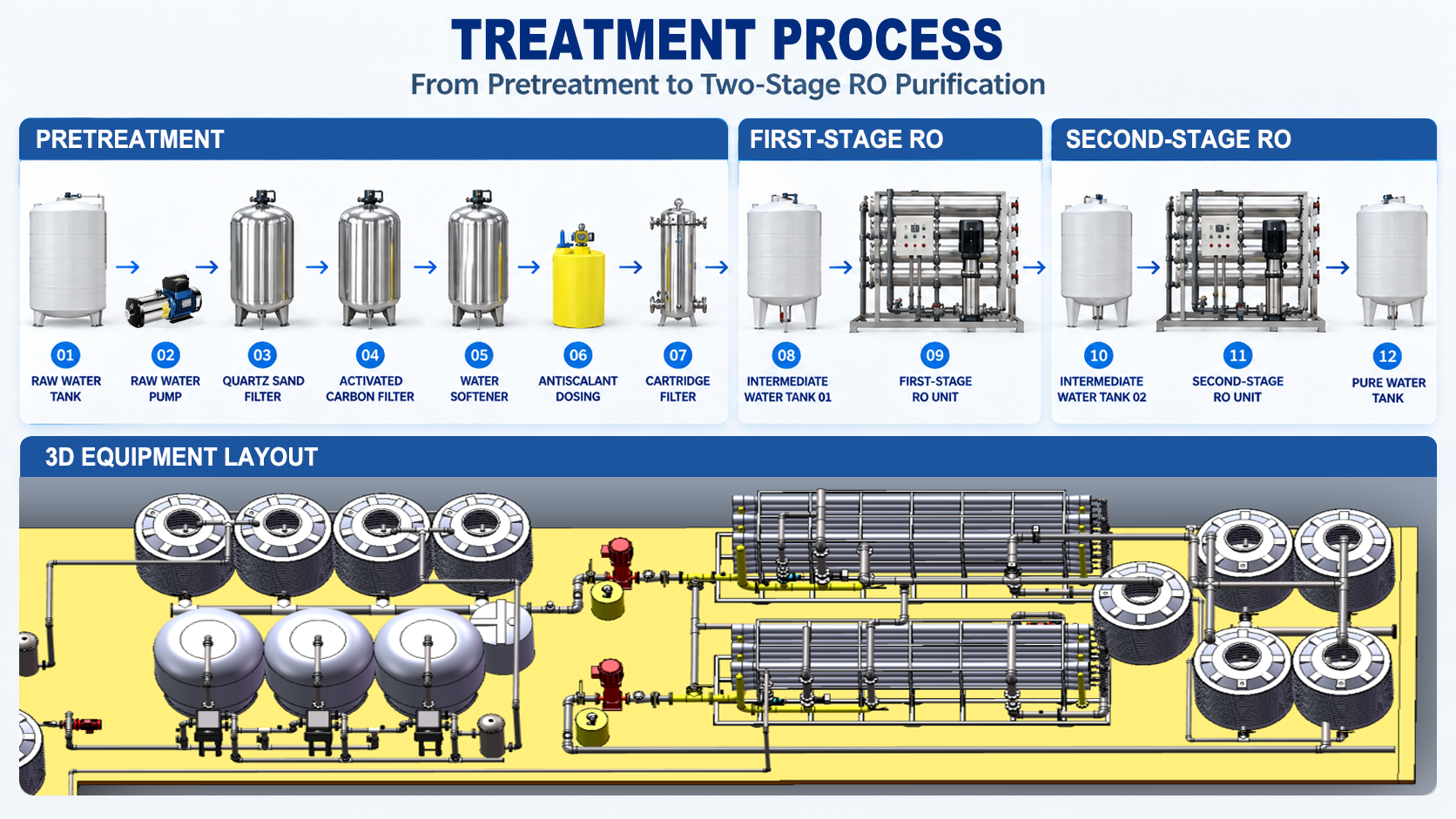
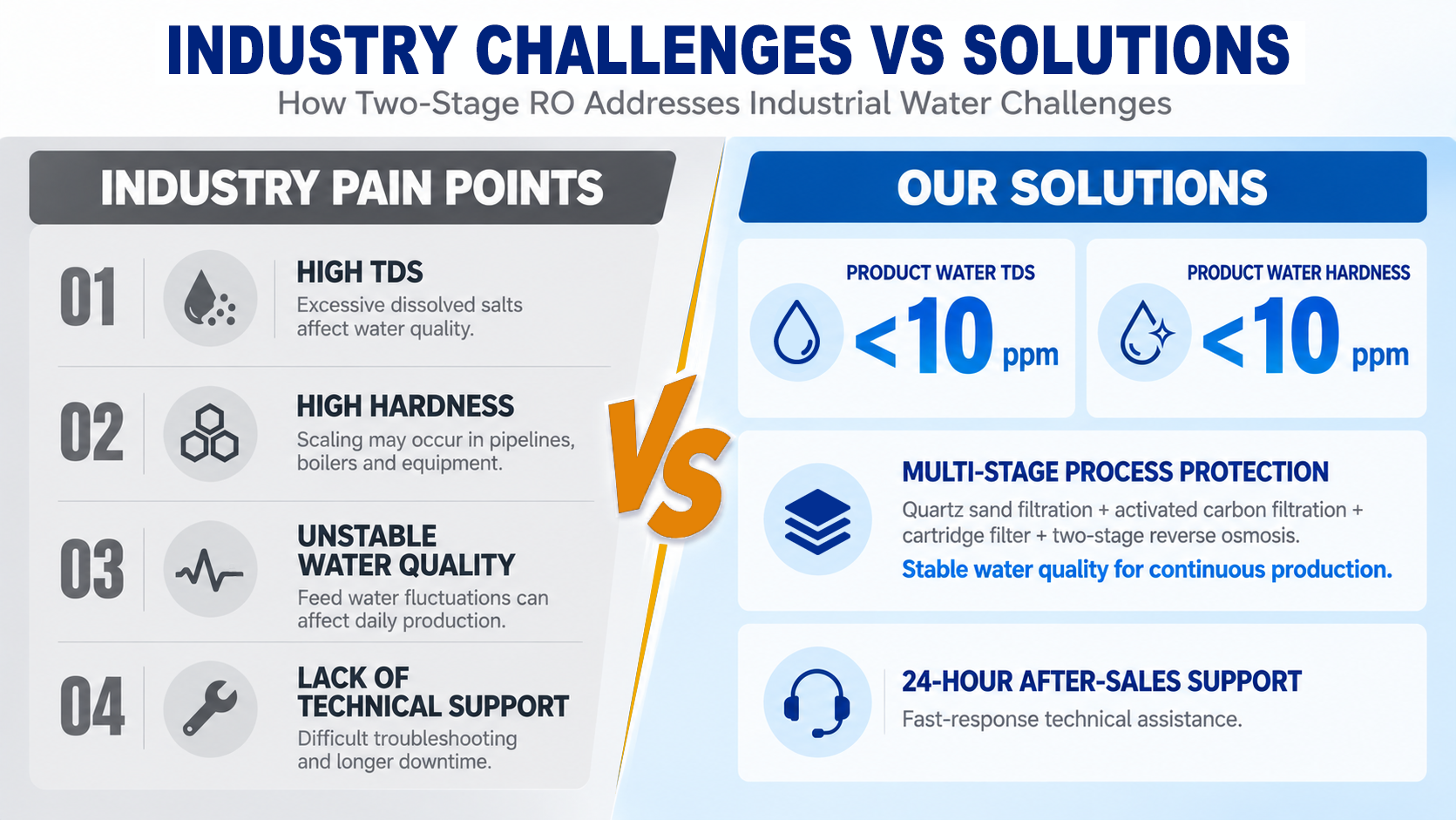
Raw water first passes through a pretreatment system to remove suspended solids, residual chlorine, hardness, and colloids. It then enters the first-stage reverse osmosis unit, where most dissolved salts and impurities are removed. The permeate from the first stage flows into the second-stage RO unit for further desalination. Finally, the system provides a stable supply of high-purity water. The concentrated brine can be recycled or discharged as required.
Key Benefits
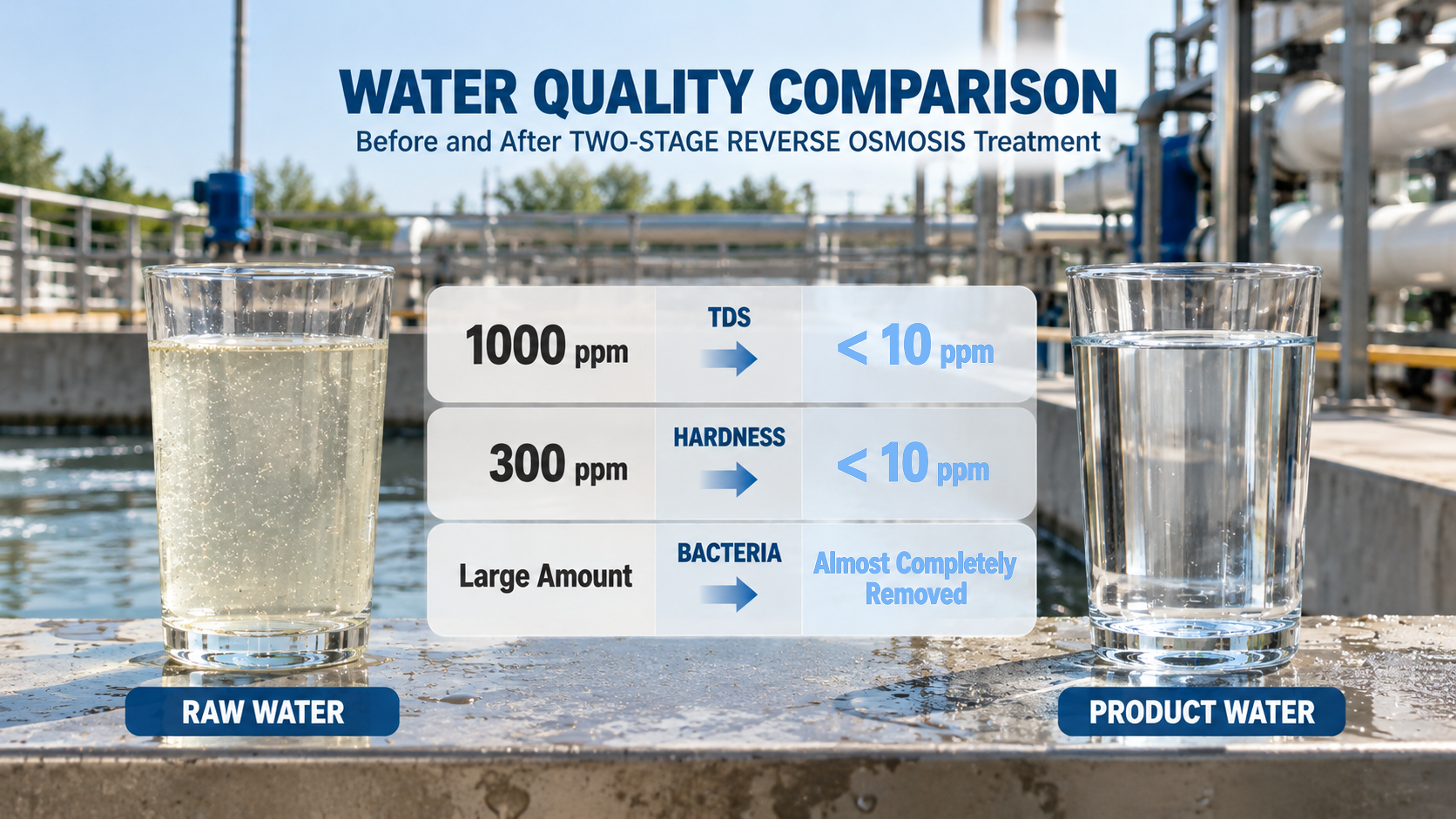
Far lower conductivity than single‑pass RO, keeps your product quality stable and reduces rejects
Less burden for follow‑up polishing equipment like EDI, cutting chemical and running costs
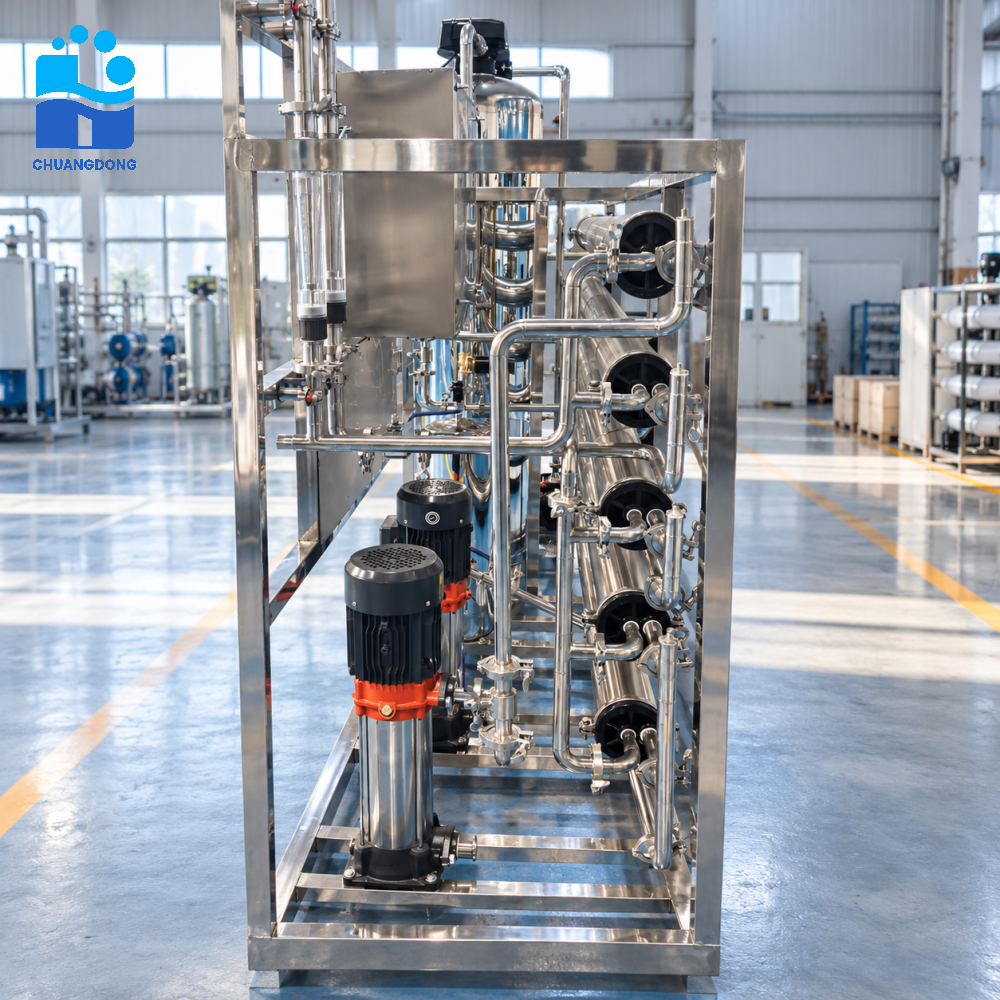
Customizable sanitary design available for food, cosmetic and pharma production
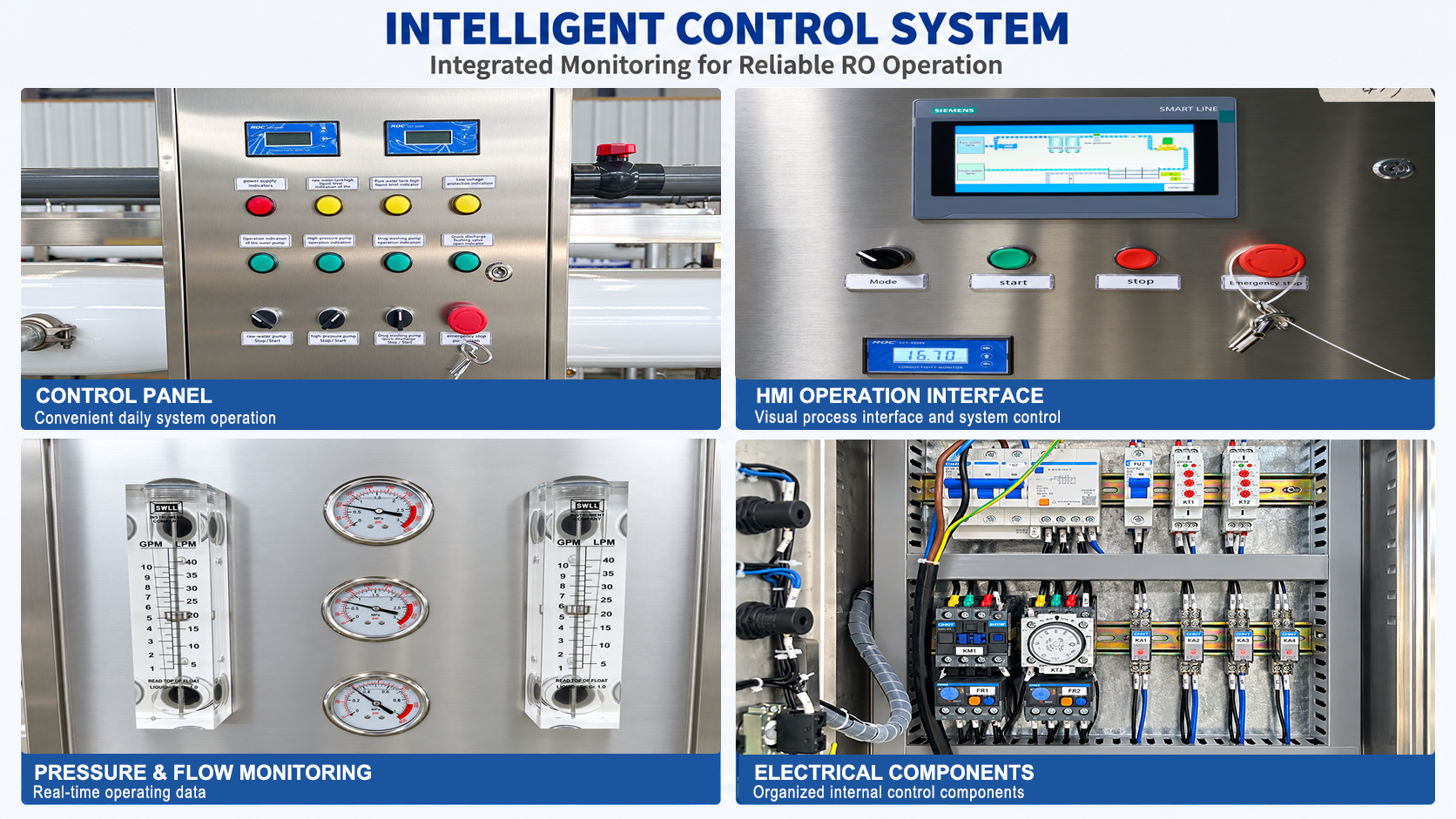
Automated monitoring and early warning help avoid unexpected downtime
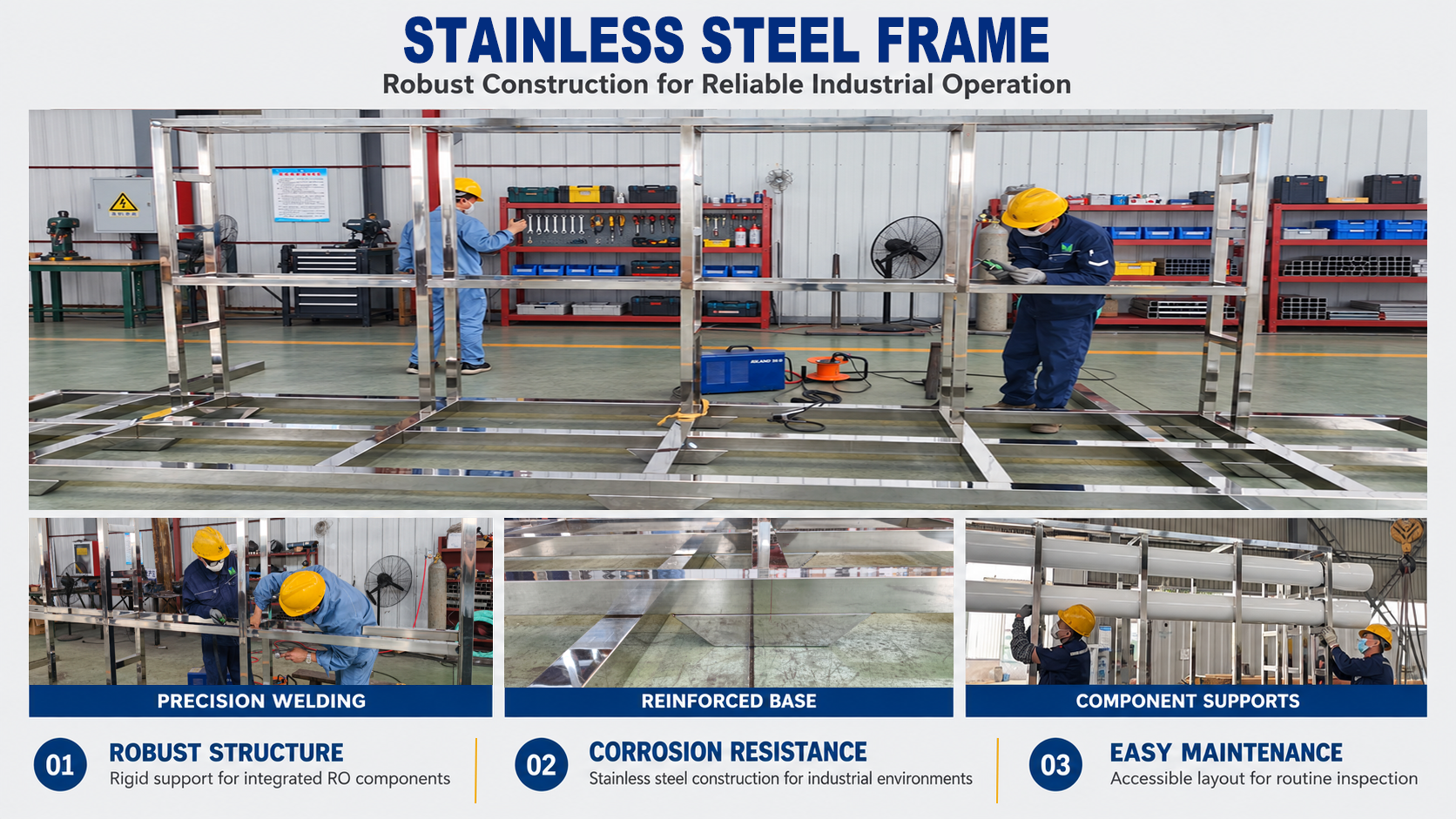
Skid‑mounted modular structure, easy to ship, install and expand production later
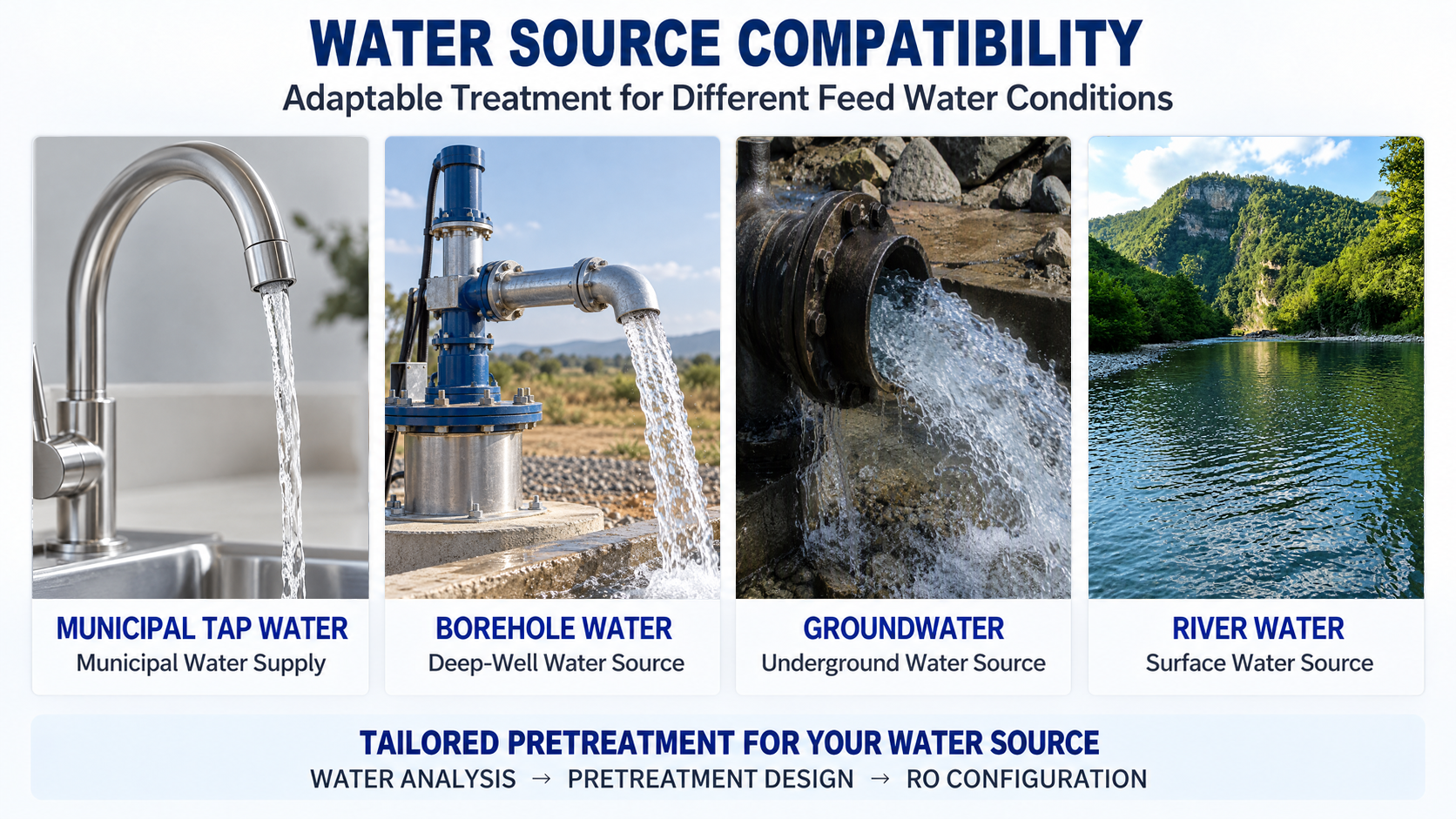
Flexible design for different raw water, whether tap water, well water or brackish water
Helps you meet local industrial and food water compliance standards
Materials and Certifications:
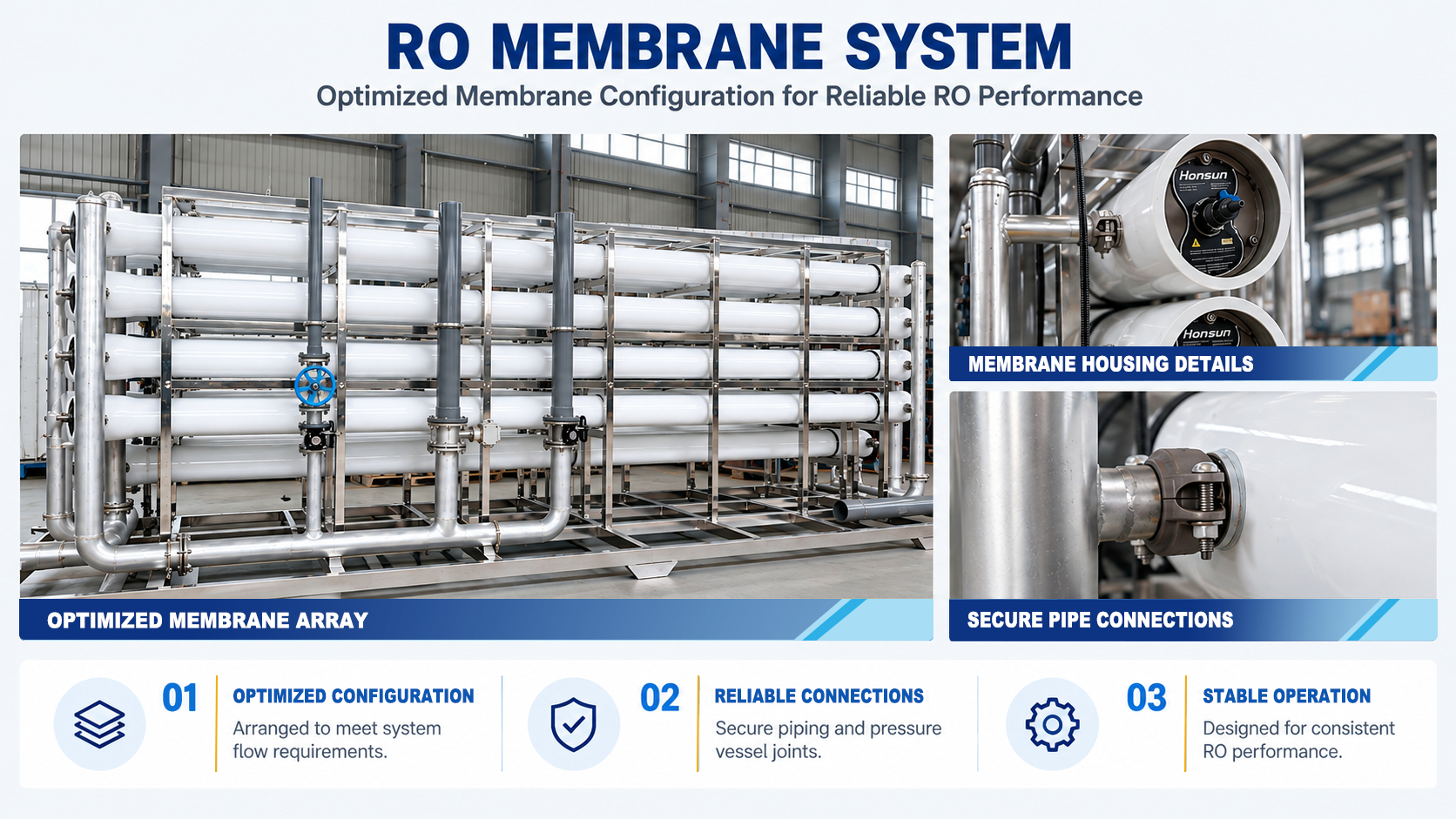
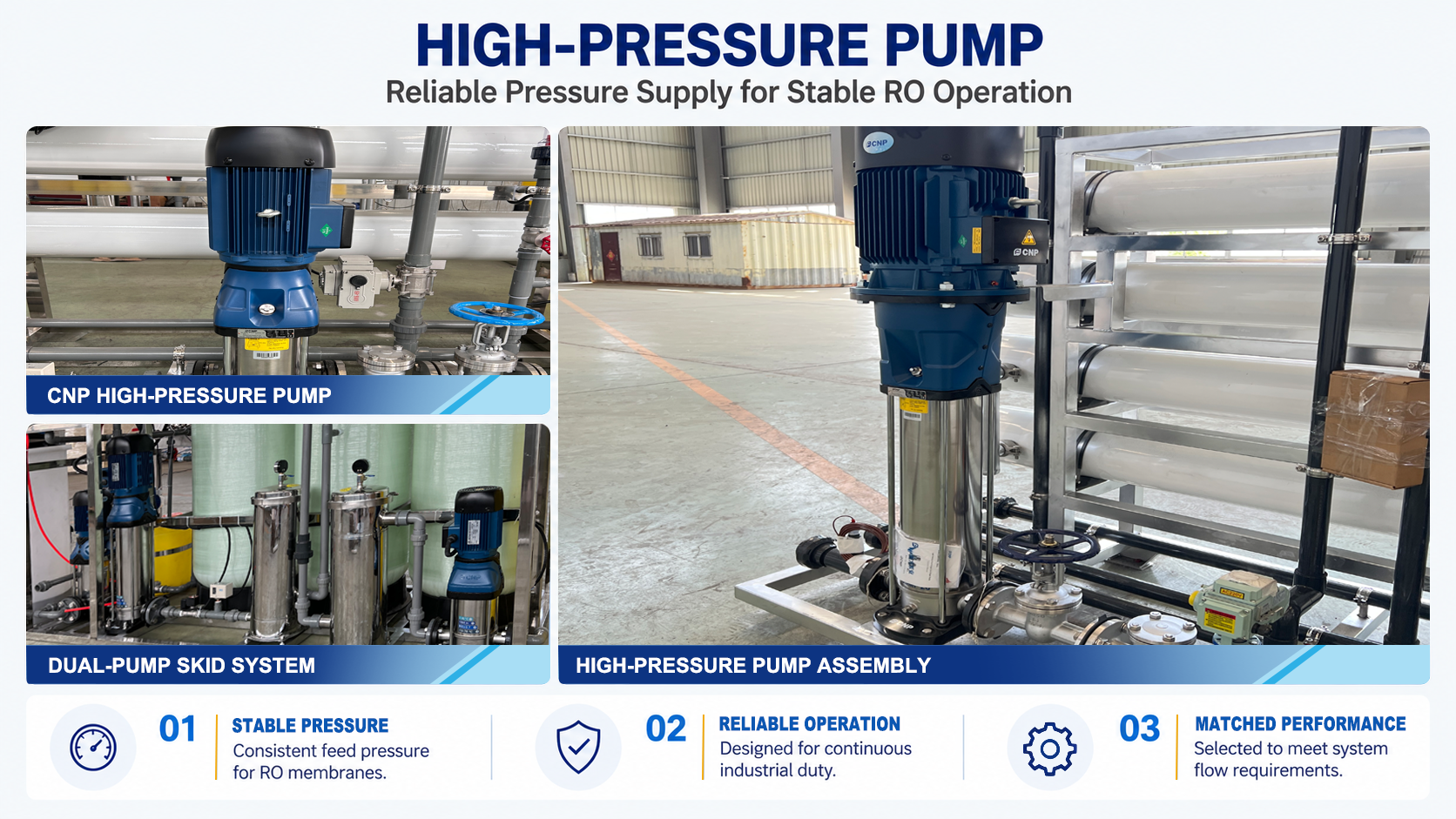
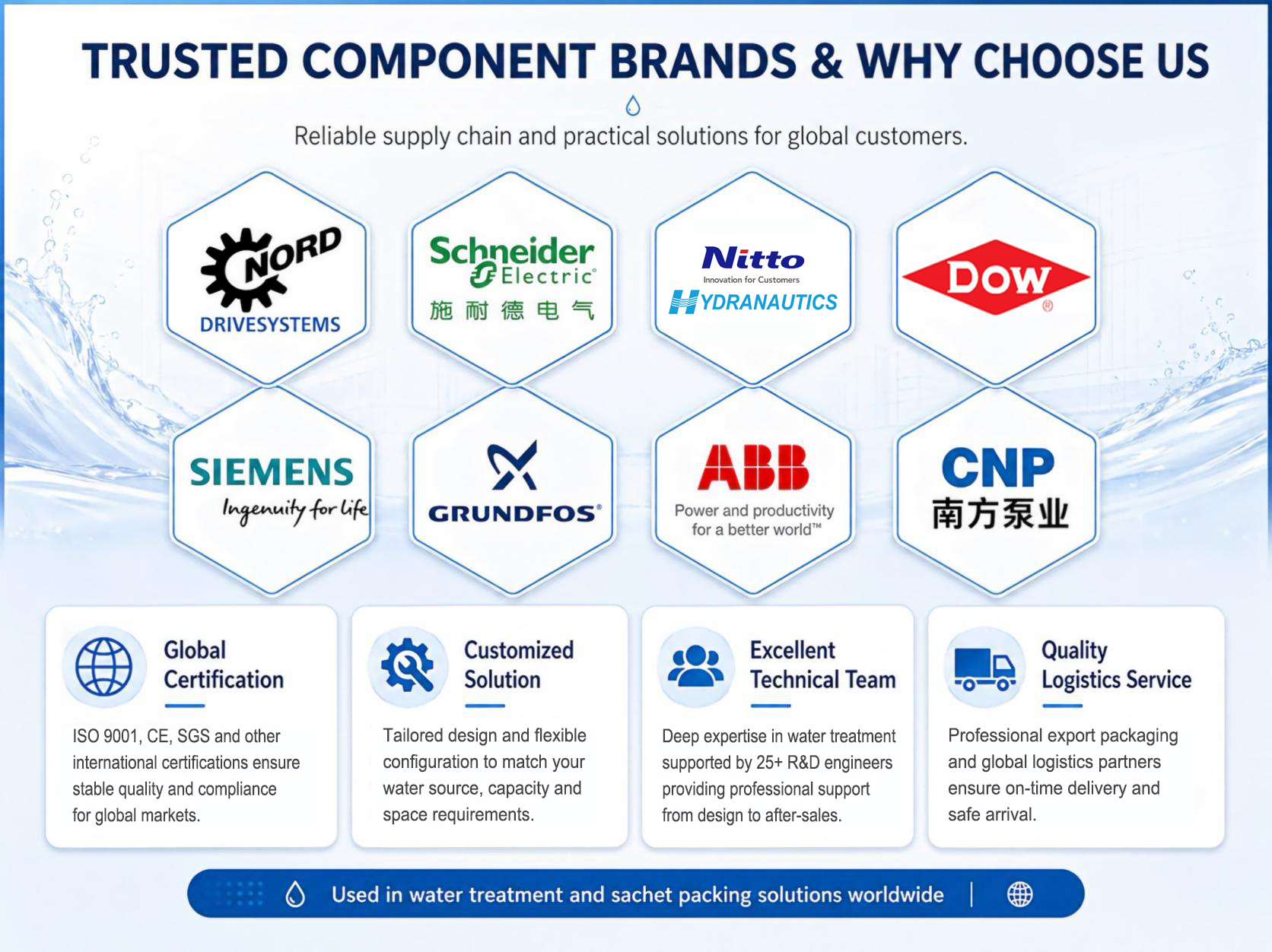
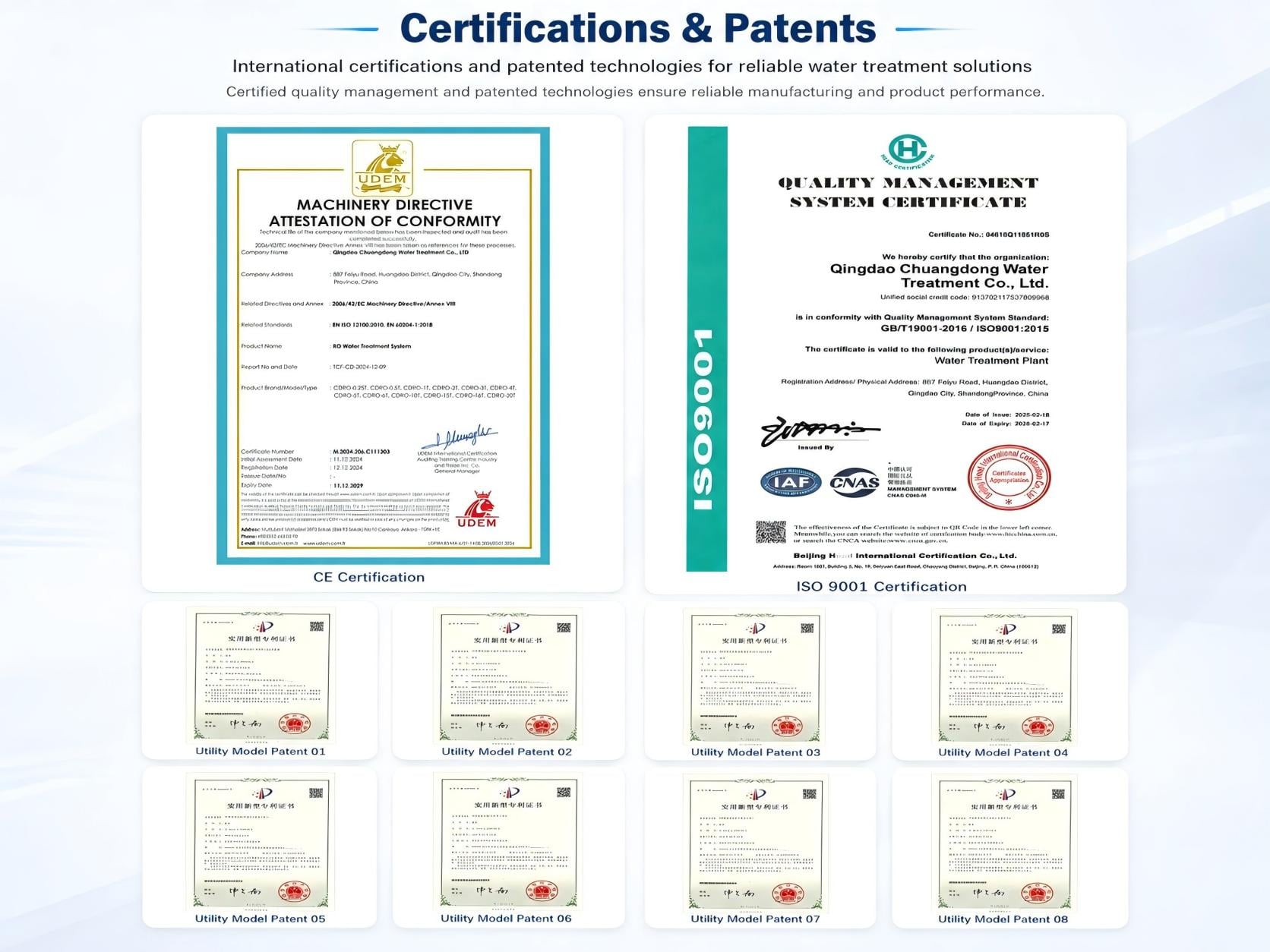
All water-contact parts are available in 304/316L stainless steel or food-grade UPVC. Pressure vessels, sensors, and valves are sourced from reputable partner brands and meet industrial-grade requirements. CE and ISO certifications are available to support local project approvals and inspections.
Applications of Two-Pass Reverse Osmosis Systems:
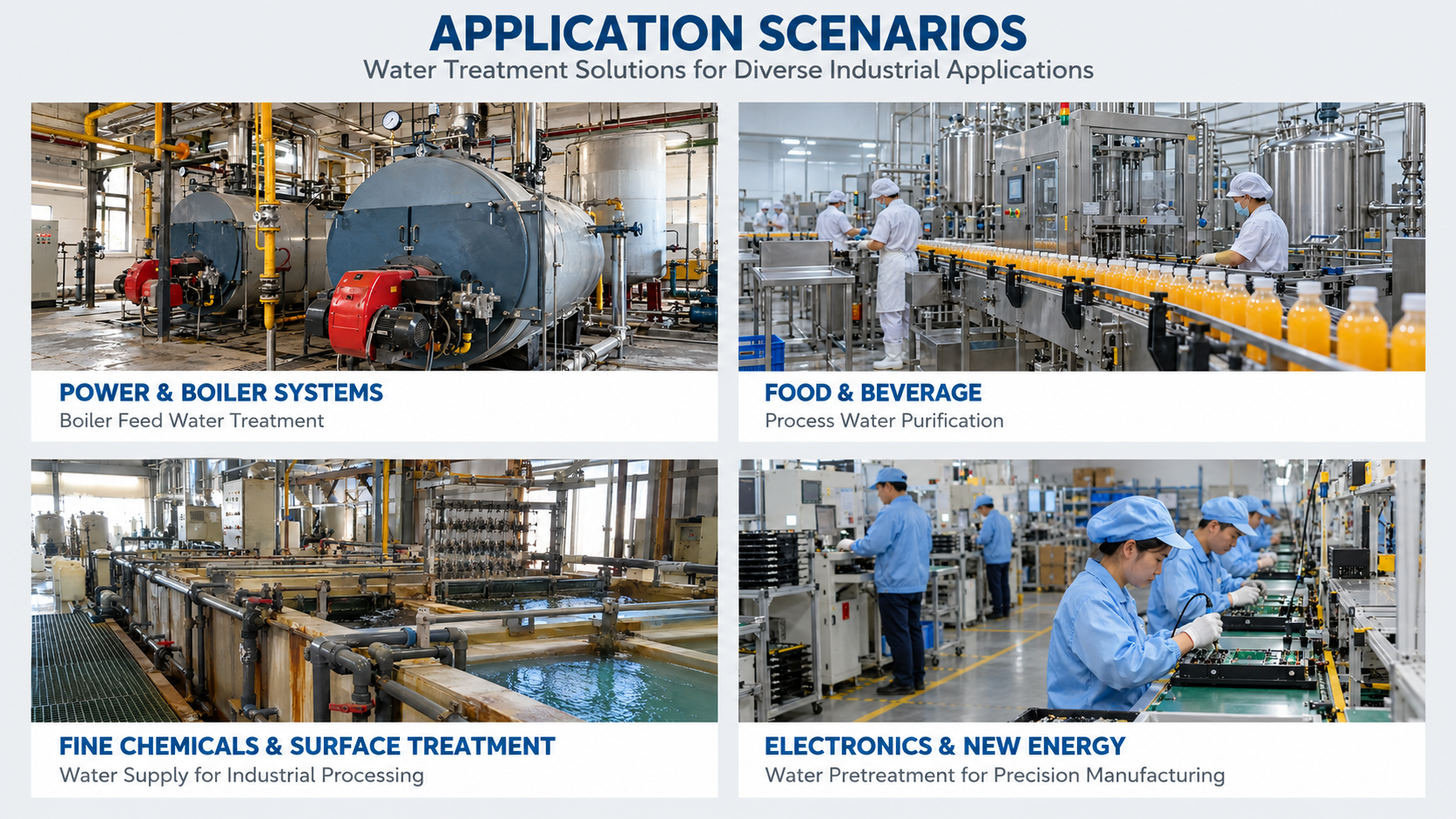
Two-pass reverse osmosis (RO) systems produce water with significantly lower conductivity than single-pass RO systems, resulting in higher water purity. They are widely used in industries with strict water quality requirements, including cosmetics, pharmaceuticals and biotechnology, electronics, boiler systems, power generation, and high-purity feedwater supply for high-pressure boilers.
Our Collaboration Process
Chuangdong's standardized collaboration process aims to reduce risks and ensure the smooth progress of your project. Before the project begins, we will clarify the following requirements:
Partnering with a Reliable Water Treatment Manufacturer
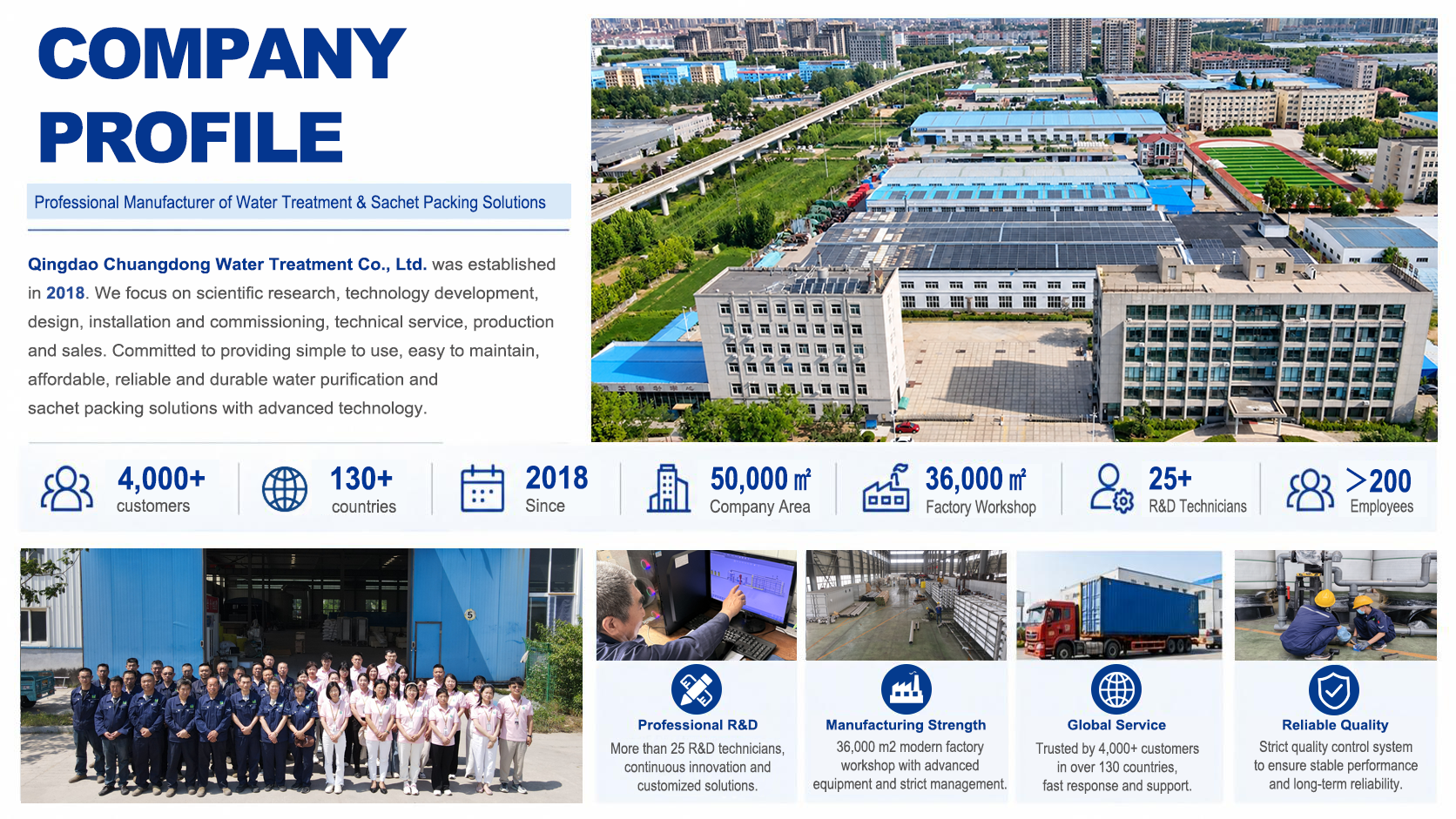
Choosing a reliable water treatment manufacturer is about much more than simply purchasing equipment. At Chuangdong, we are not just an equipment supplier but also your long-term technical partner for pure water treatment projects.
We focus on practical engineering and real on-site requirements. We take the time to understand your raw water conditions, local water quality regulations, and production plans instead of simply offering standardized solutions.
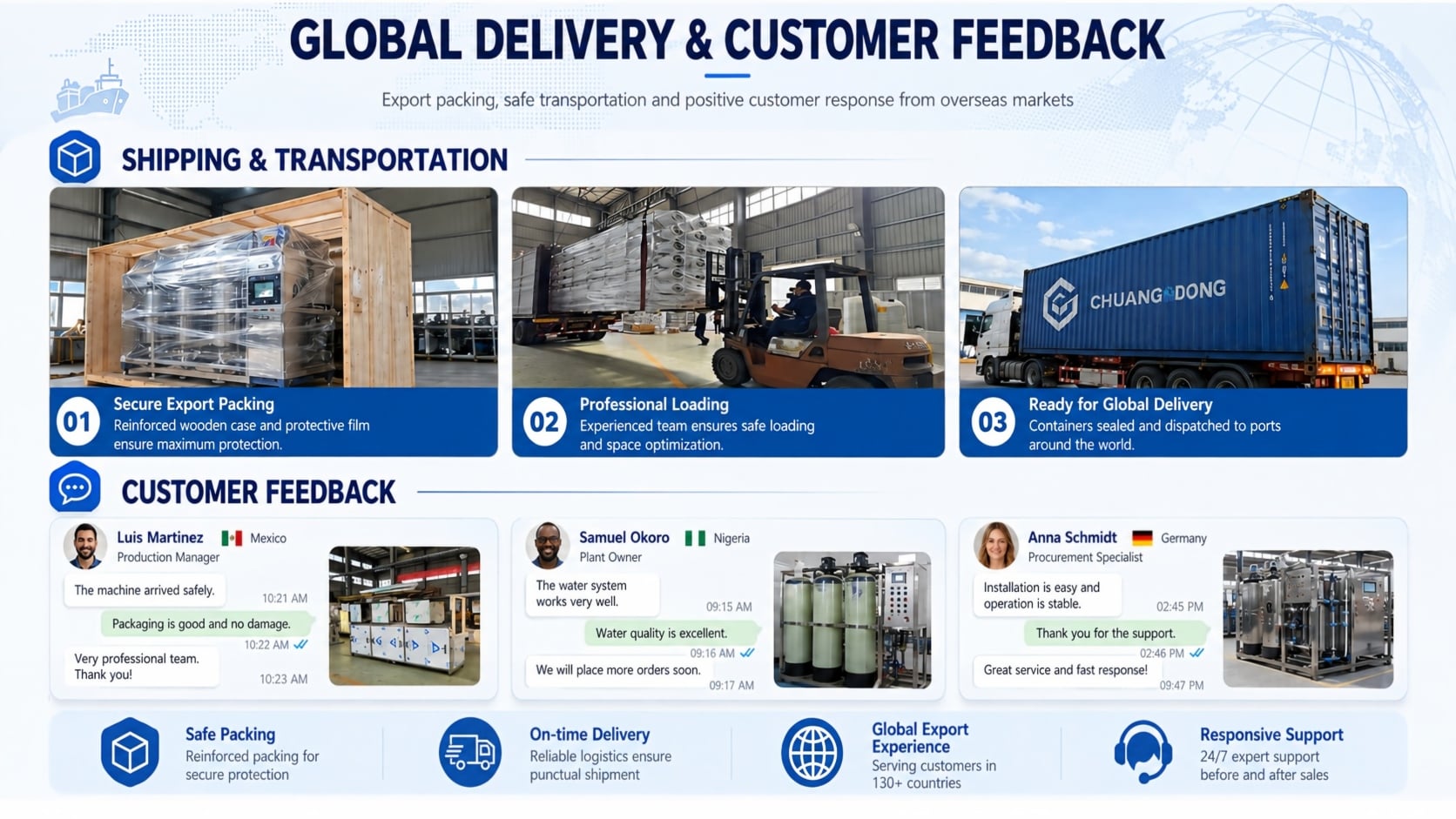
Every system undergoes strict factory assembly and testing, with inspection records completed before shipment. Our team provides ongoing support throughout the entire project lifecycle, from system design and manufacturing to installation, commissioning, maintenance, and future upgrades.
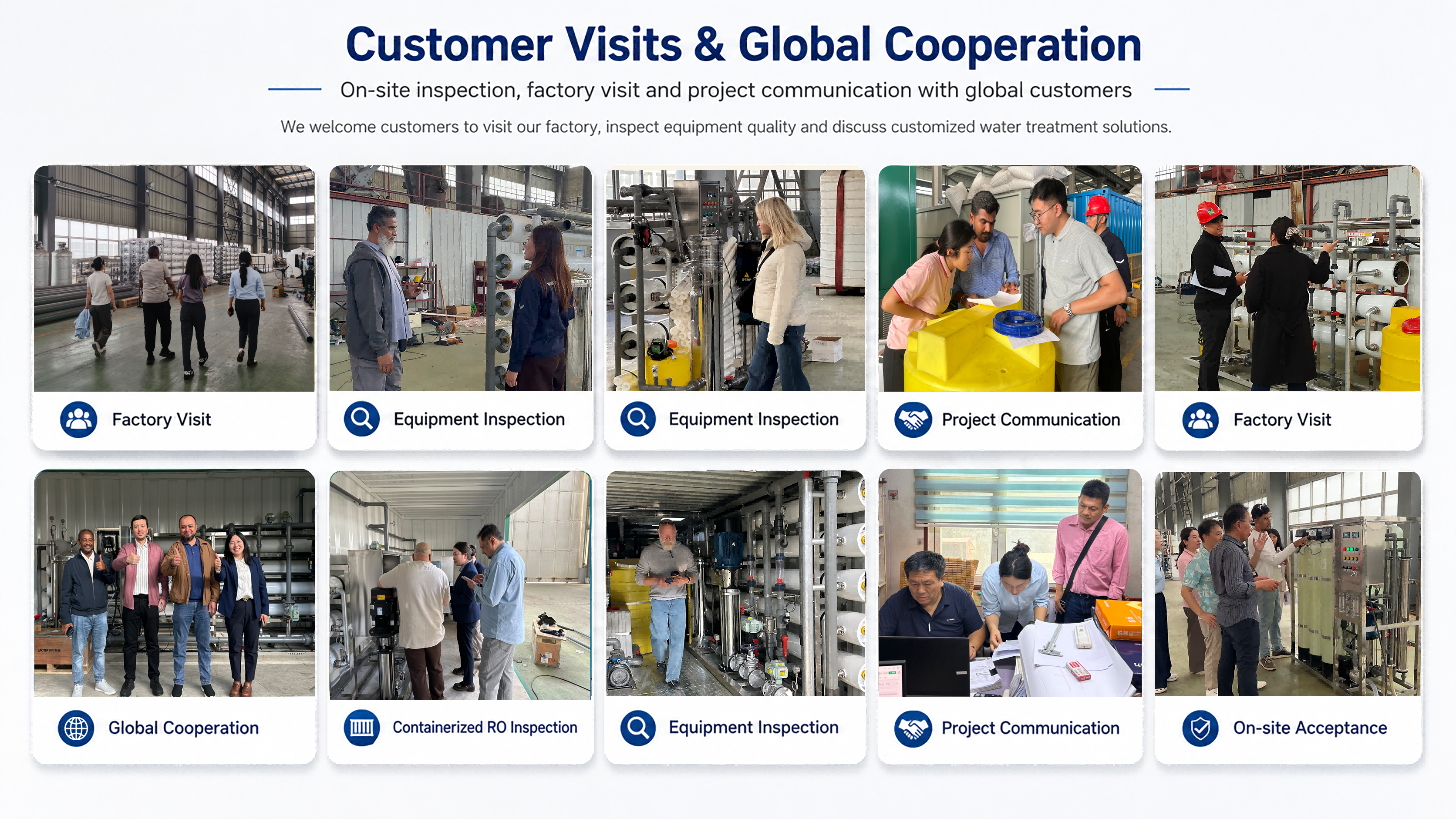
Looking for a reliable manufacturer for your next water treatment project? Feel free to send us your raw water quality data and project requirements. Our team is ready to help.
Frequently Asked Questions
1. What is an RO water treatment system used for in food processing?
It removes dissolved salts, heavy metals, and other impurities to provide purified water for food and beverage production.
2. Can an RO system be customized for different food factories?
Yes. We customize RO systems based on raw water quality, required water capacity, and production needs.
3. Is RO purified water suitable for beverage production?
Yes. RO water is widely used for juice blending, bottled water, tea drinks, and other beverage production processes.
4. What pretreatment is required for an industrial RO system?
Common pretreatment includes sand filtration, activated carbon filtration, and cartridge filtration. The configuration depends on the raw water quality.
5. How often should RO membranes be cleaned or replaced?
Cleaning frequency depends on water quality and operating conditions. Membrane replacement depends on performance and maintenance history.
6. Does Chuangdong provide installation and technical support?
Yes. We provide system design, equipment installation guidance, commissioning support, and technical assistance.